


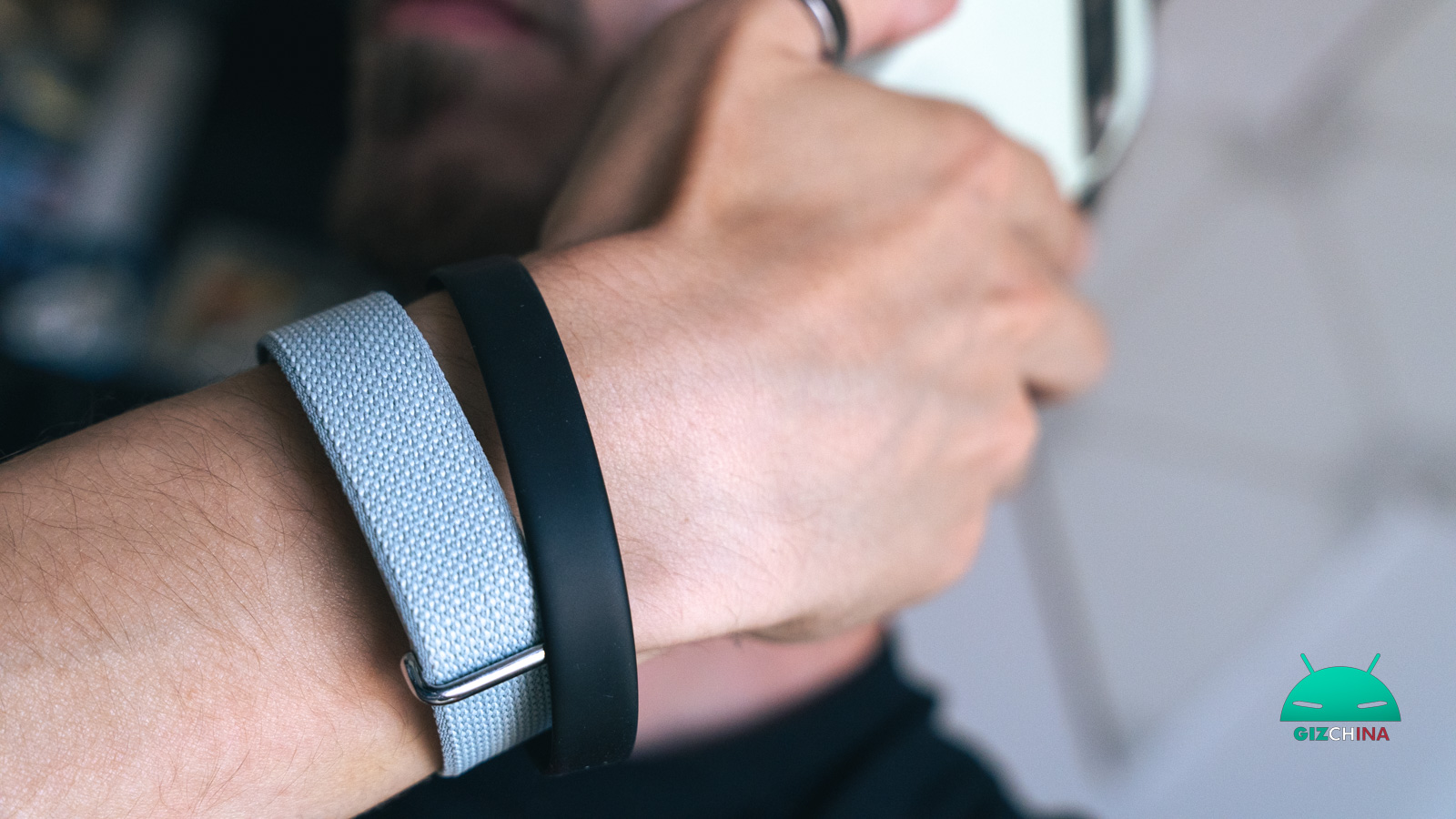
Google has introduced to the market Fitbit Air, a fitness-focused wearable device with no screen that competes directly with established products like Whoop.
Although the device works perfectly from the very first use, without imposing any constraint or lock on the basic features, users can choose to activate the optional subscription Google Health Premium.
This service provides an in-depth analysis of physical measurements, offering advanced tools such as the Health Coach feature.
However, many consumers are seeking viable alternatives to access these detailed evaluations without having to bear a recurring fixed cost.
Fitbit Air, Premium features free with an Italian open-source app

The answer to this need comes from our country, thanks to the work of developer Flavio Adamo, who created a desktop open-source application named OpenFit. This completely free software is able to largely replicate the analytical capabilities offered by Google’s paid plan.
The system architecture is based on a continuous interaction between the data collected from the wristband and the artificial intelligence models.
In practice, Google Health continues to perform its essential task of recording the user’s vital metrics throughout the day. Subsequently, the information is transferred locally to the desktop application, where a comprehensive control panel clearly organizes and displays all accumulated statistics.
During demonstrations of the software, Adamo explained how his system leverages ChatGPT Codex to intelligently interpret the enormous amount of parameters processed and sent to OpenFit.
Upcoming collaborations and historical precedents
A particularly curious aspect of this story concerns another Italian programmer, Francesco Oddo, who, by a peculiar coincidence, presented on the same days an independent project named with the same name.
The two developers have publicly acknowledged their respective works and have even hinted at the possibility of joining forces to build a joint product. Such an alliance represents excellent news for the wide community of users interested in keeping full control over monitoring their health.
The idea of creating independent software capable of processing parameters extracted from commercial devices is not a new dynamic for the sector. In recent years, similar solutions have emerged designed for autonomous management of data coming from devices such as the Oura Ring and the same Whoop.
It remains to be seen whether the Mountain View company will intervene in the matter or whether it will decide to implement specific restrictions to make exporting information from Google Health to third-party platforms more complex.
Official alternatives and free trials
Anyone who has recently purchased a Fitbit Air may still be entitled to a free 3-month trial to test the Health Premium service directly from official channels.
Additionally, access to these advanced features is included at no extra cost for users already subscribed to the Google AI Pro and AI Ultra plans, effectively waiving the monthly expense for a specific customer tier subscribed to the company’s AI services.
For everyone else, the existence of OpenFit represents a valuable resource to download and experiment with on your own computer.
It should be noted that Google’s wearable still does a superb job in providing useful health insights even in its base version, delivering a fully autonomous and satisfying experience even for those who prefer to avoid installing additional programs.