


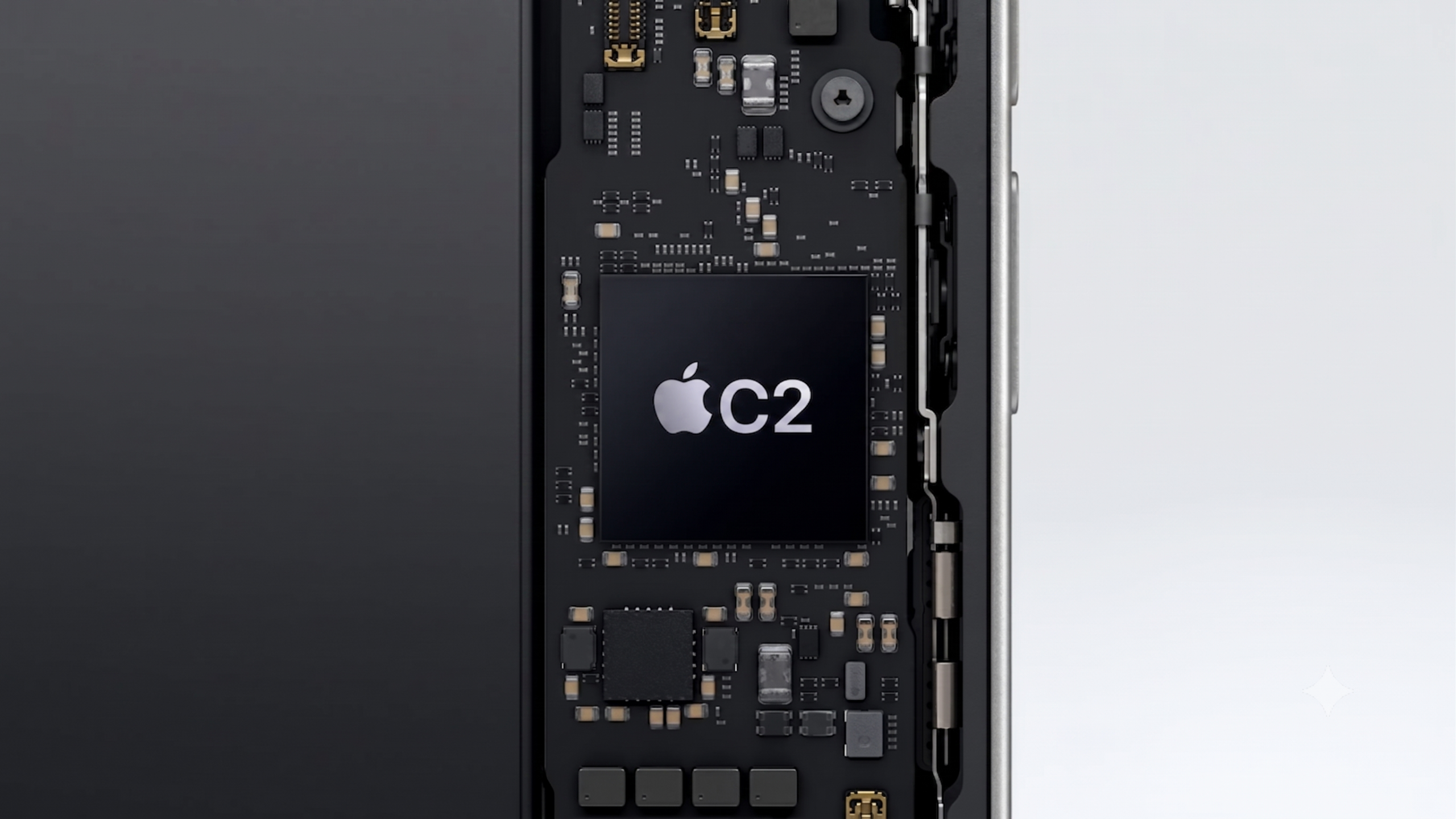
The latest rumors indicate that Apple is about to take an important step in the evolution of its high-end devices.
With the arrival of iPhone 18 Pro and the variant Pro Max, the Cupertino company intends to drop Qualcomm-supplied 5G connectivity components to introduce the next-generation proprietary chip, named Apple C2.
This transition promises to bring benefits in everyday use of the devices, optimizing the user experience across several key aspects.
Apple C2: 3 concrete advantages of the new iPhone 18 Pro modem
Efficiency and increased battery life
The first major benefit of adopting the C2 modem concerns power management. Apple’s in-house cellular modem line, already appreciated in the previous C1 and C1X generations, has demonstrated excellent energy efficiency in power consumption.
Thanks to the deep integration between iOS and the architecture of Apple Silicon, the new C2 chip will enable longer battery life during data-network use, surpassing the performance achievable with standard third-party components.
Although there are not yet official numerical data released by the company, the combined effect of the new modem with the larger battery planned for the iPhone 18 Pro will allow maximizing the smartphone’s autonomy.
Greater control over privacy
Another notable aspect is the introduction of an exclusive feature related to the security of personal data, named “Limit Precise Location“.
This option, available only on devices equipped with Apple’s proprietary modem, allows reducing the precision of location information shared with mobile operators through network cells.
When the feature is active, the operator will not be able to determine the user’s exact address, but will receive a generic indication, limited to, for example, the neighborhood where the device is located.
This privacy safeguard does not affect signal quality or penalize the user experience.
Superior performance at congested network nodes
Finally, the proprietary architecture guarantees an improvement in the phone’s reactivity in places where coverage is unstable or the network is particularly busy.
Through direct communication between the main processor and the C2 modem, the smartphone is able to recognize data flows that are higher priority and more time-sensitive and place them at the front of the transmission queue compared to other transfers less urgent.
This immediate coordination reduces the impact of heavy traffic on the cell site, ensuring smooth and responsive browsing even in critical network congestions.