


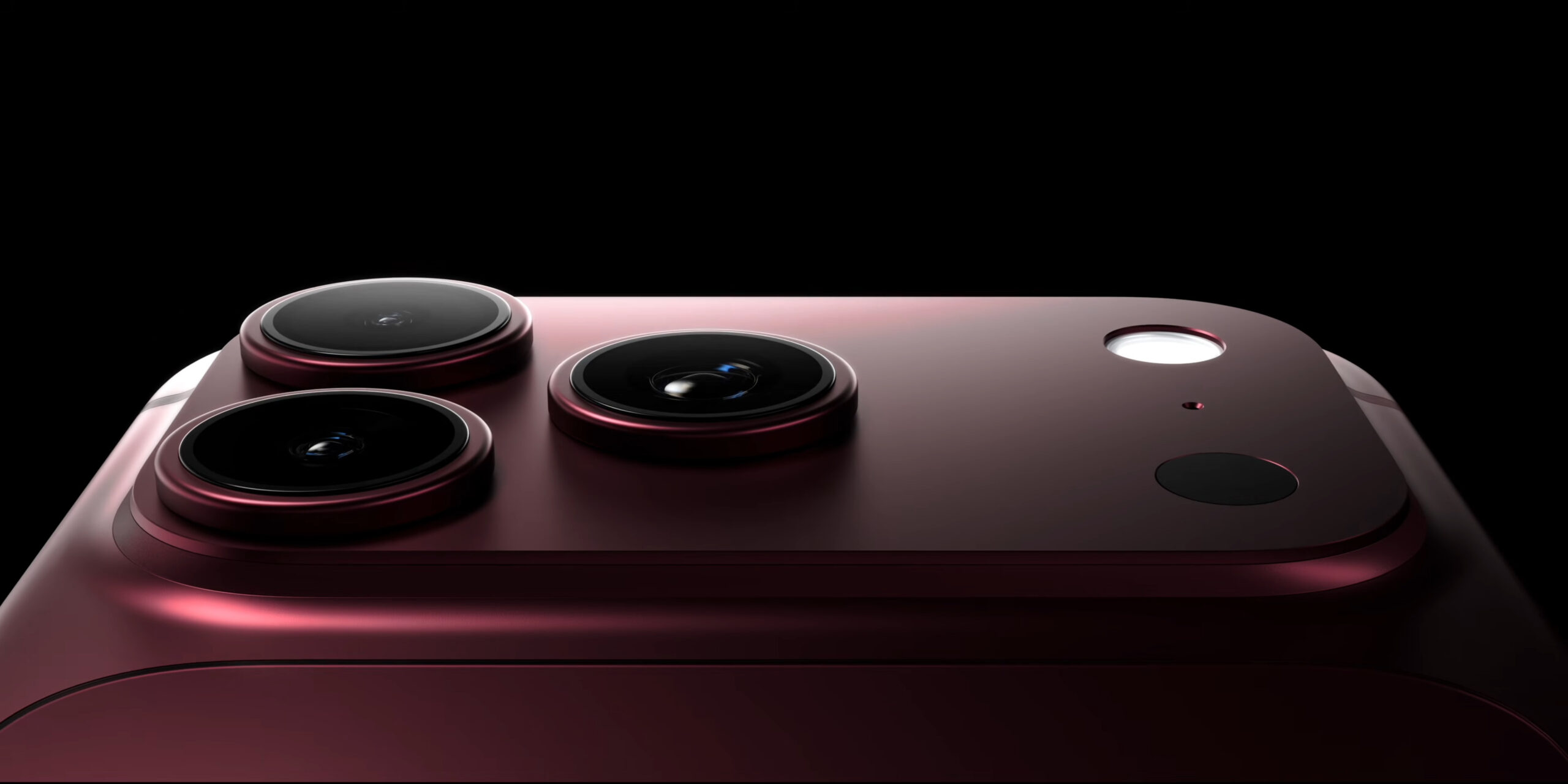
There has been discussion for some time about Apple’s next moves regarding the camera capabilities of its iPhone.
According to the latest information coming from the production districts and initially spread by the well-known informant Digital Chat Station, the California company is hard at work developing a 200 MP photographic module.
However, the timing isn’t fully mature yet.
iPhone with a 200 MP camera, still to come

Although in the past there have been conflicting rumors about the exact timing of this upgrade, sometimes pointing to 2027 and other times to 2028, today there seems to be a general consensus on the farthest date.
In an investor note published earlier this year, Morgan Stanley analysts also argued that the launch will occur in two years.
Recently, the same Asian informant has confirmed that the most likely launch window for integrating this ultra-high-resolution module into the production line is precisely in 2028.
A larger sensor, but not for the main camera
Drastically increasing the number of megapixels within a compact space entails significant challenges. When pixel density grows on a limited surface, the main risk is increased digital noise, a defect that compromises images captured in low-light conditions.
To overcome this obstacle, Apple plans to adopt a component with substantially larger dimensions.
The main sensors of current base devices, such as the iPhone 17 and iPhone Air, measure 1/1,56″, occupying an area of 48 mm². Moving up to the flagship Pro and Pro Max models, the surface increases to 71,5 mm² with a format of 1/1,28″.
The future 200-megapixel component should instead make another leap, reaching the format of 1/1,12″ and extending over a total area of 93,2 mm².
Rumors suggest that the 200 MP sensor will be used exclusively for the telephoto lens camera.
This choice seems highly sensible from a technical standpoint. Telephoto lenses are primarily used to capture distant subjects in outdoor environments and during daylight hours, where ambient light is abundant. In such contexts, the risk of noise due to high pixel density is significantly mitigated compared to night shots or dark indoor settings.
The competition to physically produce the hardware for the Cupertino company remains open. At the moment, estimates lean toward Samsung securing the orders, but internal information indicates that Sony is also actively vying to win the contract, trying to demonstrate the efficiency of its production lines for future Californian smartphones.