


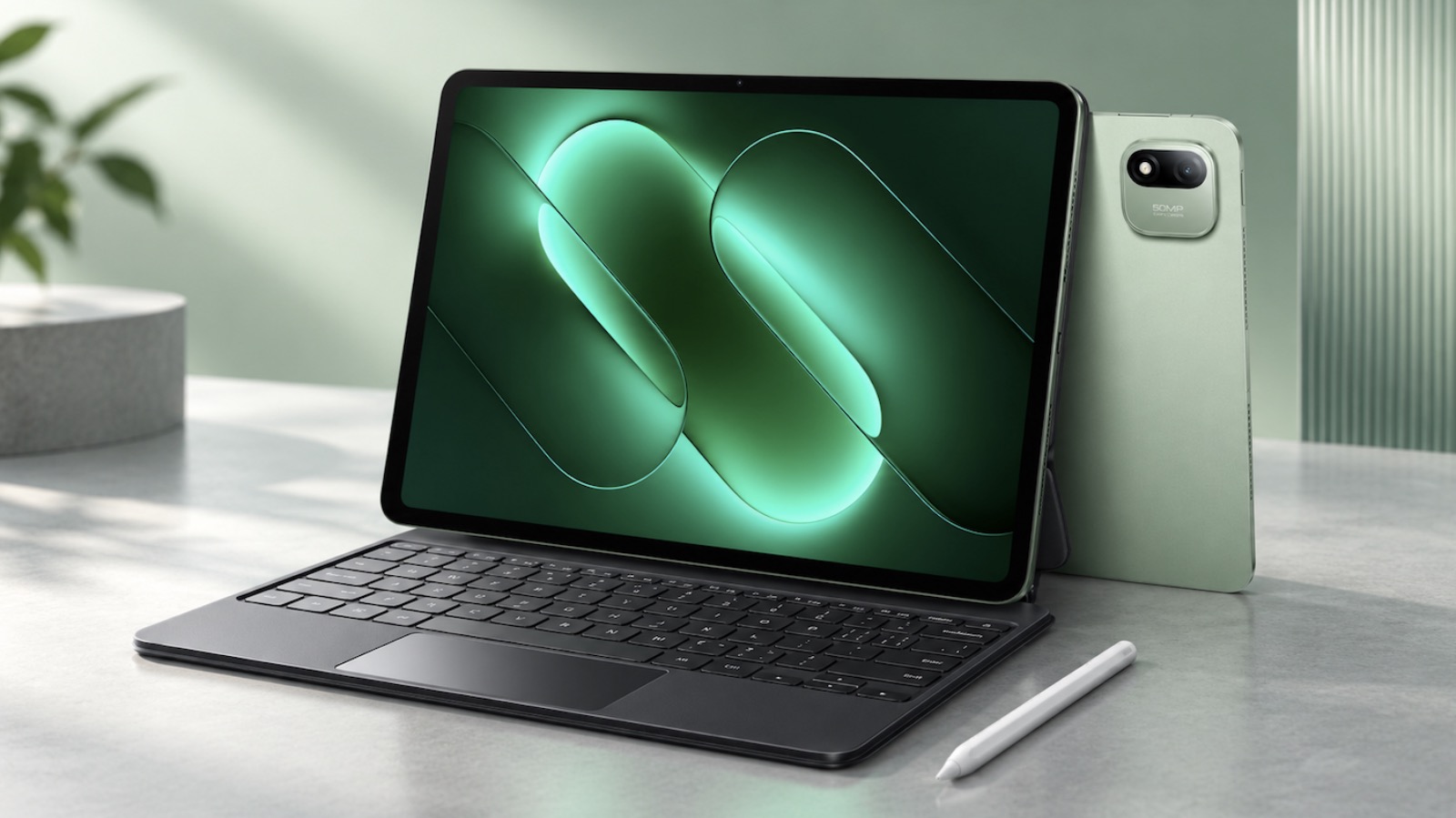
Lei Jun’s company has officially unveiled in China Xiaomi Pad 9 and Xiaomi Pad 9 Pro, the two new tablets that accompany the more capable Pad 9 Pro Max in the new generation of the lineup. Both models focus on high-refresh-rate displays, generous batteries and a software suite designed for productivity, differing mainly in size, chipset power and camera quality.
Xiaomi Pad 9: 11.2″ display and Snapdragon 8s Gen 4

Xiaomi Pad 9 features an 11.2″ LCD display with a 3.2K resolution (3,200 x 2,136 pixels), 345 PPI, a 3:2 aspect ratio, a refresh rate up to 144 Hz, and a maximum brightness of 800 nits. The panel carries TÜV Rheinland certifications for visual comfort (circadian rhythm, absence of flicker and low blue light emission at the hardware level), as well as support for HDR10, HDR Vivid, Dolby Vision and touch input even with wet hands.
The onboard chipset is the Snapdragon 8s Gen 4, the same as the previous Xiaomi Pad 8: a 4 nm SoC from TSMC, with an octa-core CPU up to 3.21 GHz and an Adreno 825 GPU. Memory configurations available are 8/128 GB, 8/256 GB and 12/256 GB, with LPDDR5X or LPDDR5T RAM and storage UFS3.1 or UFS4.1.
On the photography front, the tablet offers a rear 13 MP sensor (video up to 4K at 30 fps), and an 8 MP ultra-wide front camera for video calls and front-facing shots.
The battery has a capacity of 9,720 mAh, with 45W wired fast charging and 22.5W reverse charging. The device is only 5.75 mm thick (5.8 mm in the matte display variant) and weighs 485 g (494 g in the matte variant), for overall dimensions of 251.2 x 173.42 mm. It is available in black, silver, fir green and ice peach pink.
Xiaomi Pad 9 Pro: larger display and fifth-generation Snapdragon

Xiaomi Pad 9 Pro grows with a 12.5″ LCD display, still with a 3.2K resolution (3,200 x 2,136 pixels) and a refresh rate up to 144 Hz, but with 308 PPI and higher maximum brightness (up to 1,000 nits). Present are the same TÜV Rheinland certifications as the base model.
The chipset moves to the Snapdragon 8 Gen 5, manufactured at 3 nm by TSMC, with an octa-core CPU up to 3.8 GHz and an Adreno 829 GPU.
Memory configurations go up to 16/256 GB, with intermediate options of 8/128 GB, 8/256 GB and 12/256 GB. The camera system significantly improves over the base model, with a 50 MP rear camera (4K video at 60 fps) and a 32 MP ultra-wide front sensor, which also supports the dual front/rear recording mode.
The battery rises to 11,000 mAh, with 67W wired fast charging. Security for both tablets is provided by a side-mounted fingerprint reader, while the larger model offers a more refined audio system with 6 speakers compared to the 4 on the Xiaomi Pad 9.
The tablet measures 279.14 x 191.96 mm, with a thickness of 5.8 mm (5.85 mm in the matte variant) and a weight of 580 g (589 g in the matte variant). It is available in silver, black and fir green.
Software, price and availability
Both models ship with HyperOS 4.0: to be precise, Xiaomi Pad 9 leaves the factory with HyperOS 3 and requires a manual update, while Pad 9 Pro comes with the new version of the UI already by default.
On both devices, pre-installed apps include WPS for Pad and CapCut Pro, along with the new Super XiaoAI 2.0 assistant designed for productivity.
In China, the Xiaomi Pad 9 starts from around €387 at the exchange rate in the 8/128 GB configuration, up to around €490 for the 12/256 GB variant, with a matte display version priced at around €452.
Xiaomi Pad 9 Pro starts from around €490 (8/128 GB) and goes up to around €645 for the 16/256 GB configuration, with the matte 12/256 GB variant priced at around €619: these are prices from the Chinese market, indicative and not yet confirmed for Italy or the rest of Europe.
The two models complete the new Pad 9 lineup, after the debut of Xiaomi Pad 9 Pro Max, the flagship model of the family with the XRING O3 proprietary chipset and a 13.3″ display.
For all the latest news on the brand’s ecosystem, you can find our most recent articles in the Xiaomi section of GizChina.it.