


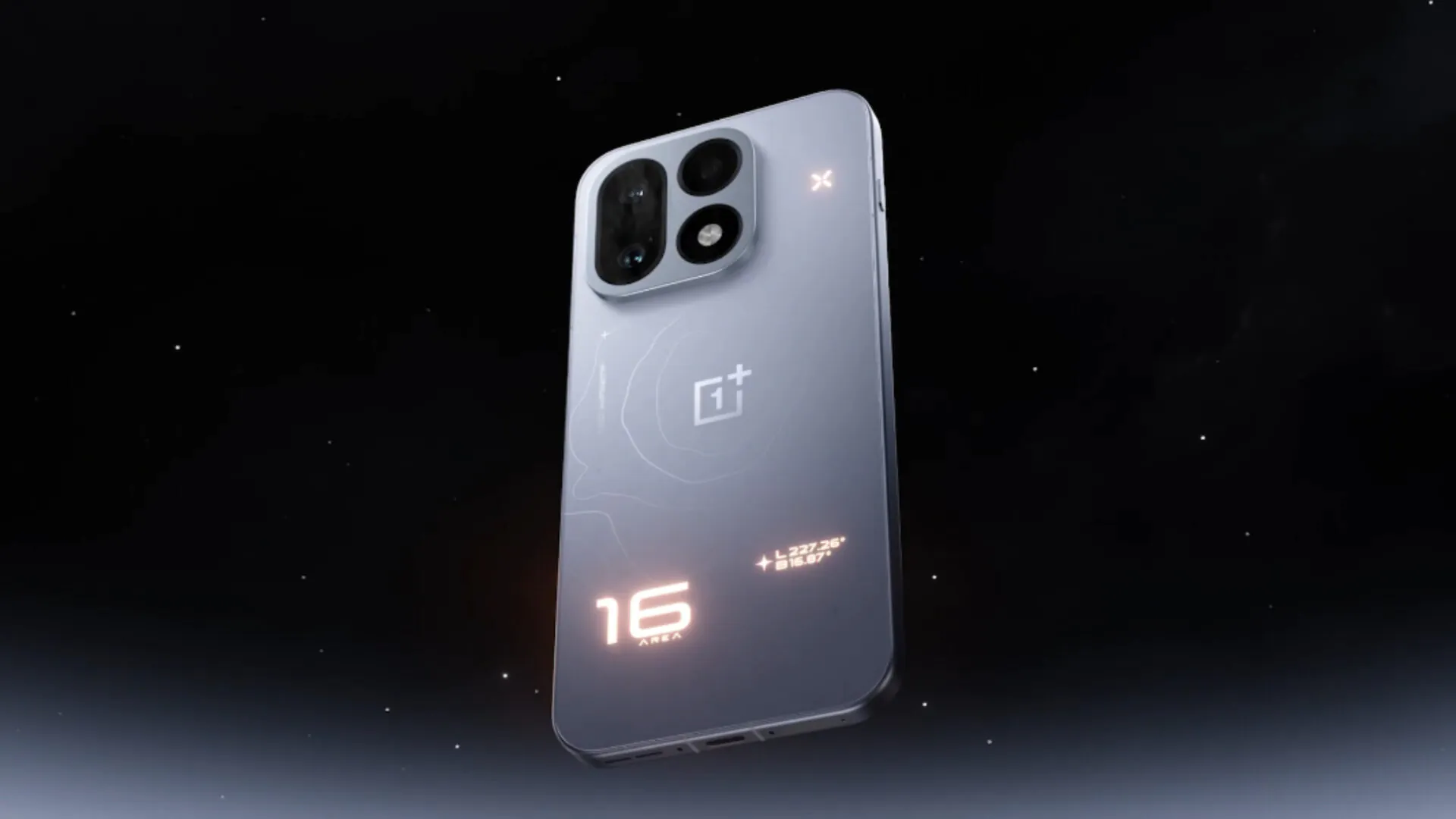
The most interesting design feature of OnePlus 16 is undoubtedly the LED system integrated on the back panel, which appears completely hidden until it receives input from the operating system.
The smartphone is expected to debut soon in China with the latest processor from the Snapdragon family on board.
OnePlus 16: “Interstellar Lighting Effect” invisible when off

OnePlus’s direct response to Nothing’s Glyph system and Google’s HiLight feature is officially named Interstellar Lighting Effect.
Thanks to the first videos that emerged on the Chinese platform Weibo, it is possible to observe in detail how this technology works, which appears to be an exclusive of the variant called Tomorrow’s Starlight.
The back panel of the smartphone is decorated with an intricate topographic pattern formed by slender white lines, which have a purely aesthetic purpose and remain constantly off.
The three zones destined for real illumination light up on notification arrival and, probably, during gaming: an X-shaped symbol located in the top-right corner, the label “16 AREA” in the bottom-left corner, and a sequence of coordinates placed in the bottom-right.
When the system is idle, these specific elements blend perfectly with the rest of the back panel, effectively rendering them imperceptible to the eye.
The images confirm that the lights emit a bright and intense yellow-orange color. The absence of other colors suggests the use of fixed-color LEDs rather than more complex RGB solutions.
The maximum brightness reached is high enough to ensure clear readability of alerts even under sunlight, while power consumption should have a negligible impact on the overall battery life of the smartphone.
Depending on the type of alert—whether it’s incoming calls, text messages, or highlight moments of gameplay—the light can stay steady or flash, following different rhythms.
It remains to clarify what degree of control will actually be granted to users at the software level: the ability to assign specific lighting patterns for individual applications or for contacts in the address book would be a major advantage.
If these options are not officially available, enthusiasts might have to resort to third-party applications, such as HiLight Studio, to manage and customize the visual experience.
Technical specifications and market availability
In addition to the distinctive LED system, the new device boasts a specification sheet designed for top performance. Inside the chassis sits the processor Snapdragon 8 Elite Gen 6 Pro, accompanied by a smooth display with a refresh rate of 165 Hz.
The main camera setup relies on a robust 200 MP sensor, capable of capturing ultra high-definition images, while the device’s power is entrusted to a massive 9,000 mAh battery.
Currently, the smartphone is available for pre-order in the Chinese market. European consumers, however, will not see an official product launch. This choice will leave direct import as the only viable route for fans.