


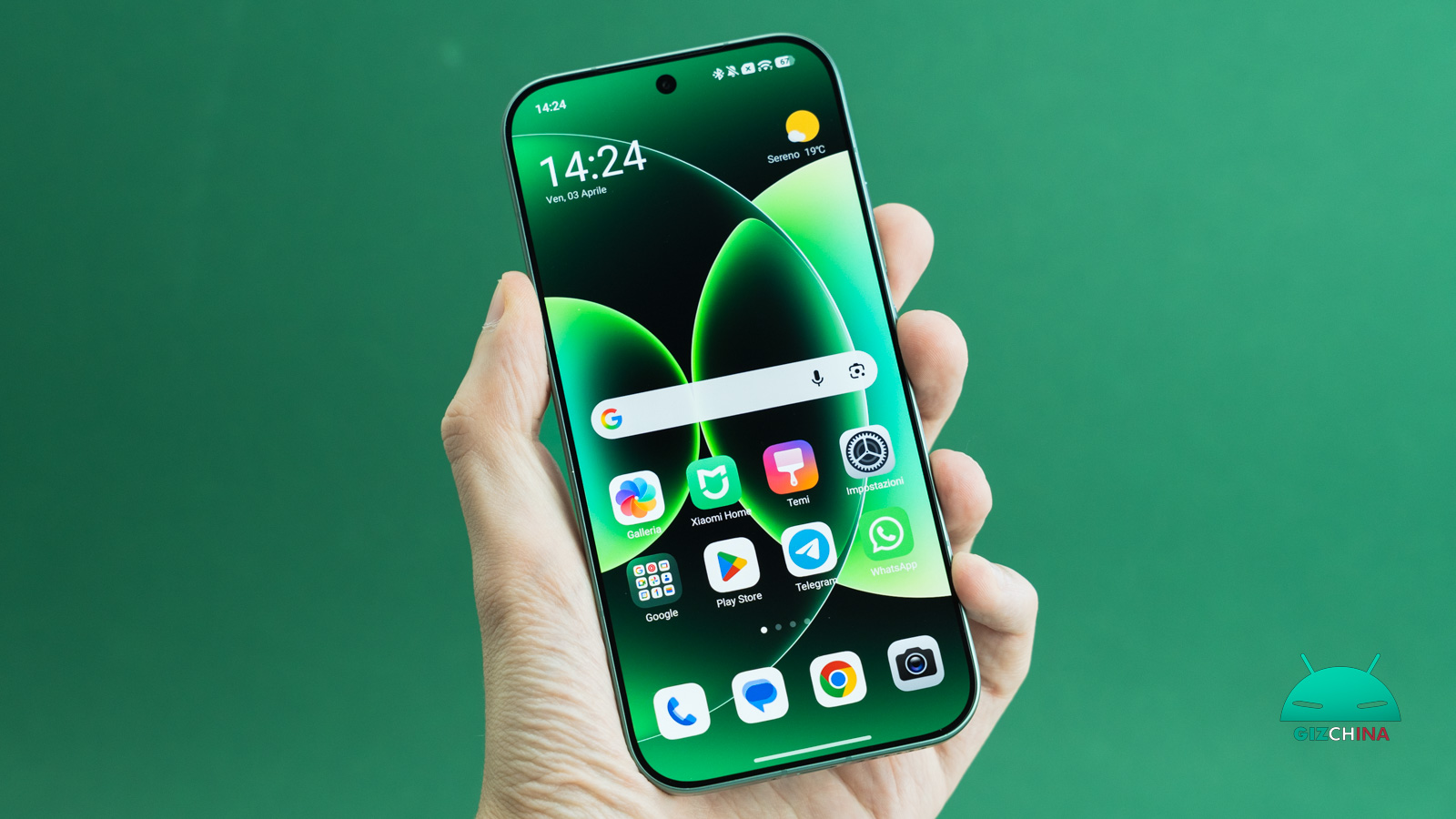
Xiaomi continues to lay the groundwork for the debut of HyperOS 4. Online, the first build of the new launcher has appeared, a preview that reveals some of the aesthetic and functional novelties.
The most evident change concerns the design, which introduces more pronounced transparency effects, new animations, and an interface designed to offer greater visual continuity among the various elements of the system.
Xiaomi HyperOS 4 changes appearance: the new launcher previews a smoother interface and more transparency

The identified build belongs to the development branch HyperOS 4 V8, it is based on the Rust language and is identified by the suffix “-R”, intended for internal ROMs and future versions based on Android 17.
The most evident novelty of the new launcher is the adoption of blur and transparency effects in the Liquid blur style. The search bar in the app drawer and the category tabs now use a translucent background that blends with the wallpaper and the icons on the screen, creating a more modern and uniform effect.
The top part of the App Drawer has also been completely redesigned: the classic opaque background gives way to a semi-transparent layer that adds more depth to the interface and improves the visual continuity of the entire system.
More polished animations, redesigned menus and customizable folders
Xiaomi has also worked on animations and contextual menus. The popup panels adopt more rounded corners and greater internal spacing, while opening is no longer instantaneous: each menu is accompanied by a transition that combines scale and fade effects, making the interaction smoother.
Animation speed management has also been simplified. The modes Relaxed, Balanced and Fast are now visible directly on the Home settings main screen, avoiding the need to navigate to secondary menus.
Additionally, new options have emerged dedicated to folder management, with more in-depth control over layout, sizes and dynamic behaviors.
In the launcher, new permissions related to contextual search and AI-based features also appear, signaling that HyperOS 4 could integrate AI services more deeply directly on the system’s home screen.
Better not to install this build
As interesting as they are, these novelties still belong to an internal development version.
The launcher build relies on framework and system components not present in the current versions of HyperOS 2 and HyperOS 3. For this reason, manual installation is discouraged, as it could cause crashes, bootloops or the malfunctioning of the Home screen.
To try all the new features, you will need to wait for the official HyperOS 4 releases, when the launcher will be fully compatible with supported devices. The debut of the new Xiaomi interface version is expected for August, at least as far as the unveiling in China is concerned.