


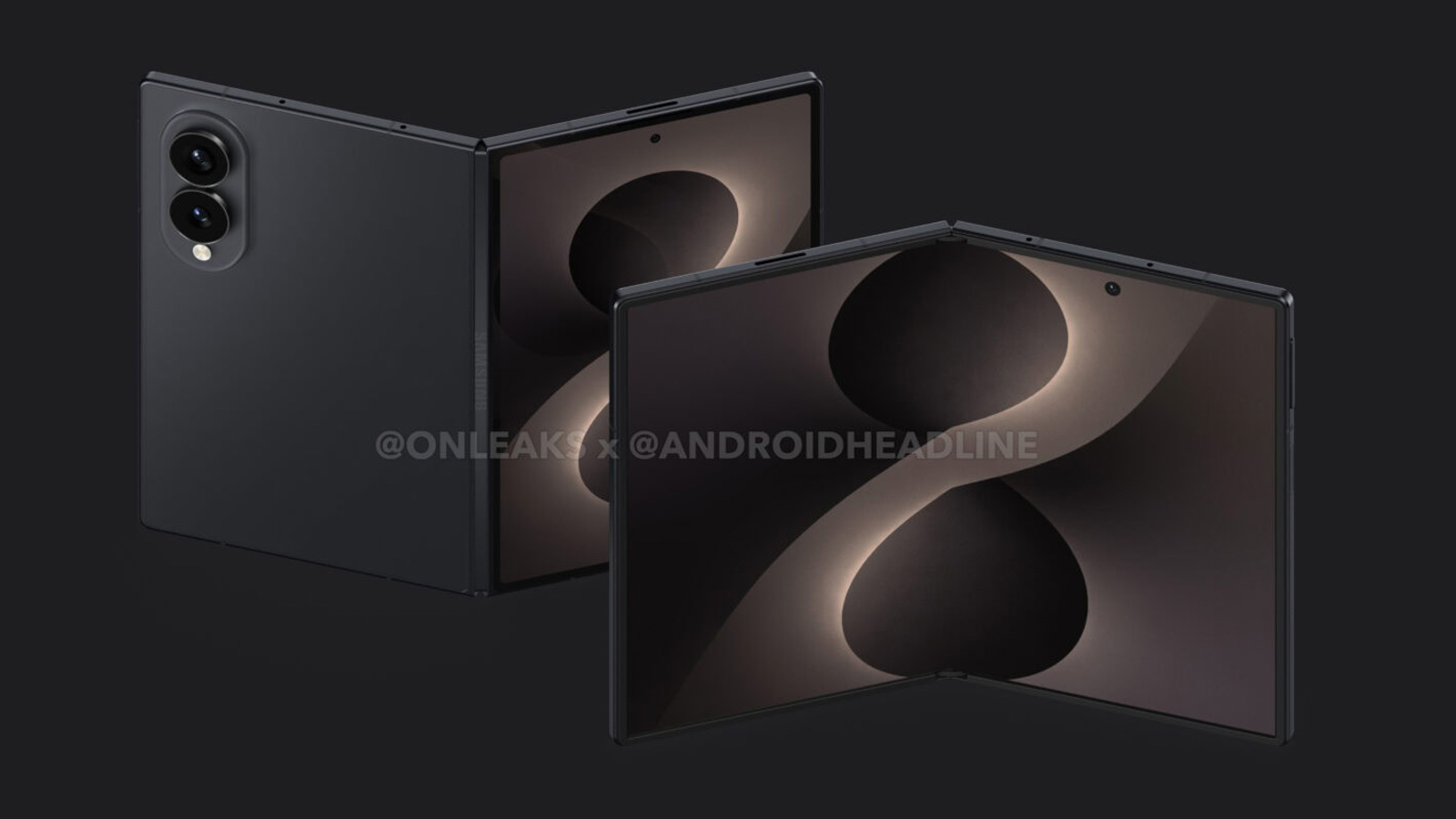
A few days ahead of the highly anticipated July 22 Unpacked event, rumors about Samsung ’s plans reveal an unexpected move.
The South Korean company has decided to focus its efforts on the Galaxy Z Fold 8, effectively reducing the sales estimates for the more expensive Galaxy Z Fold 8 Ultra, which until a few months ago was traveling at very similar numbers.
Samsung gears up for the Apple challenge, with Galaxy Z Fold 8 “Wide” in production

The most recent information, coming from reliable sources such as Ice Universe, sketches a clear picture of the company’s priorities. Initial production stands at 2.8 million units for the Wide model, paired with 2 million units for the Ultra version. Completing the lineup will be roughly 1.5 million units of the Galaxy Z Flip 8.
This division appears particularly interesting, especially since the most advanced specifications, the camera-related innovations, and the larger-capacity batteries would theoretically belong to the Ultra model. Despite the strong media interest in the longer, traditional-format version, production line numbers confirm that the company harbors greater confidence in the success of the new Wide format.
Behind this clear production preference lies likely a purely economic factor. Projections indicate the Galaxy Z Fold 8 Wide could debut with a starting price of a starting price of €1,999, leaving the Ultra variant with an even higher positioning.
Even in a segment dominated by users willing to invest substantial sums in the latest technologies, Samsung seems to have understood that premium foldables no longer sell themselves. Favoring the cheaper option represents a kind of preventive hedge, a strong signal that Apple will also have to take seriously as it prepares to launch its own foldable smartphone in a market that is now mature.
The materials and durability challenge
Beyond financial considerations, the real battleground between brands is shifting toward structural rigidity and display quality. Samsung has recently confirmed the integration of the Flex Titanium technology, based on a ultra-thin titanium alloy film paired with a supporting plate.
This solution ensures 20 times greater rigidity than the old polymer layers, drastically reducing the visibility of the central crease.
On the other hand, Apple is testing ultra-thin glass with variable thickness and hinges produced with 3D printing. Both companies know that the durability perception, more than an extra camera, will be the decisive factor in convincing consumers to buy.
This internal reorganization does not imply the disappearance of the Ultra variant in the short term. Building two million units for a device with these characteristics represents a substantial investment.
However, if Galaxy Z Fold 8 Wide sales were to actually far surpass those of the larger sibling, it is reasonable to assume that future Ultra editions may take on a more secondary role, being treated as limited-edition releases, leaving the Wide model to lead the market.
All that remains is to await definitive confirmations from the stage of the imminent Unpacked.