


The chipmaker historically associated with mobile devices has taken an aggressive step into the AI infrastructure market, securing Meta as its first major customer for its new server processor.
During the recent investor meeting held in New York, Qualcomm unveiled the commercial details of the chip Dragonfly C1000, a general-purpose CPU designed to complement AI accelerators inside data centers.
Qualcomm-Meta Agreement to Expand Data Centers

The agreement envisions the Zuckerberg-led company adopting the C1000 and its subsequent iterations in all its facilities. Since the release of these components is not expected before 2028, the handshake represents a long-term commitment rather than an immediate implementation.
This move clearly signals Meta’s willingness to diversify its supply chains, adding alternative options to Nvidia GPUs and its own MTIA proprietary chips, without interrupting the strategic collaborations already in place.
In addition to the central CPU, the Dragonfly product family, introduced to the public in June during Computex, has taken on a much more defined silhouette. The company has indeed added the new AI300 accelerator within a range that already included the AI200 and AI250 models.
The entire hardware strategy focuses rigorously on inference, i.e., the process that allows AI models to operate at scale on already trained data.
The AI200 chip, equipped with liquid cooling, 768 GB of LPDDR memory and based on the Hexagon NPU, will begin shipping to customers by the end of this year, while the AI250 is expected to arrive in 2027.
The Californian company’s commercial thesis rests on the idea that its decades-long experience in designing processors for smartphones can ensure energy efficiency far superior to the average. This is a critical feature at a time when global power grids struggle to support the energy demands of modern data centers.
Not just hardware
But brute force alone from electronic components requires a software ecosystem capable of attracting developers. To fill this gap, Qualcomm completed the acquisition of the startup Modular, through a fully equity-based transaction valued at about $3.9 billion.
The operation, which will close in the second half of the year through the issuance of around 19 million shares, brings with it the Mojo programming language and the MAX inference engine. These tools enable AI models to operate smoothly on different architectures, including Nvidia, AMD, Intel hardware, and Qualcomm’s own, avoiding the need to rewrite programming code for each specific processor.
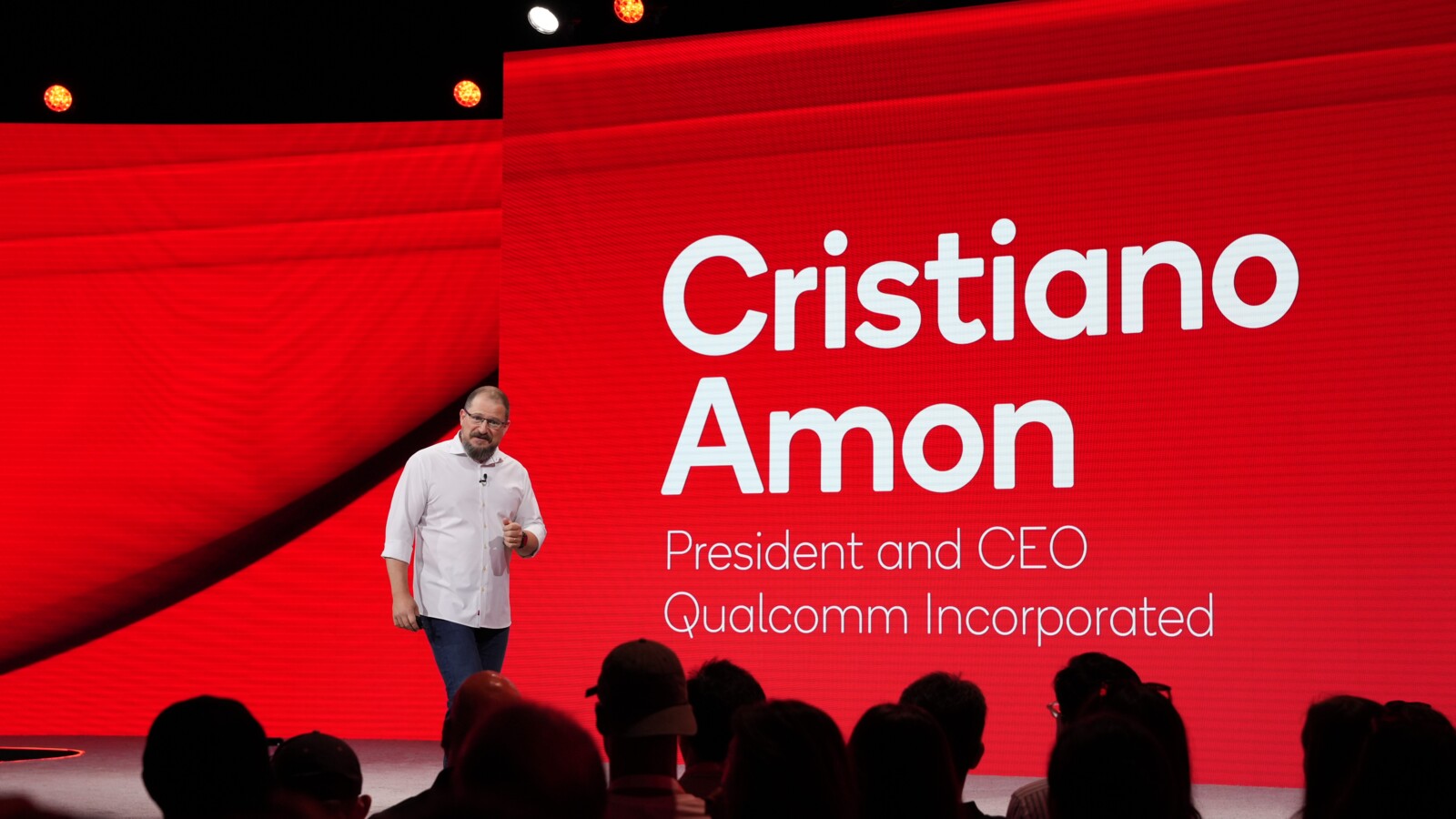
CEO Cristiano Amon described this strategy as a decisive step toward open and multi-vendor architectures, positioning itself as the main alternative to the rigidity of Nvidia’s proprietary CUDA platform.
Investors have reacted very positively in recent months, driving the company’s shares up by about 30%, driven by the expectation that the AI sector could provide a second vital growth engine for business beyond mobile and network infrastructure.