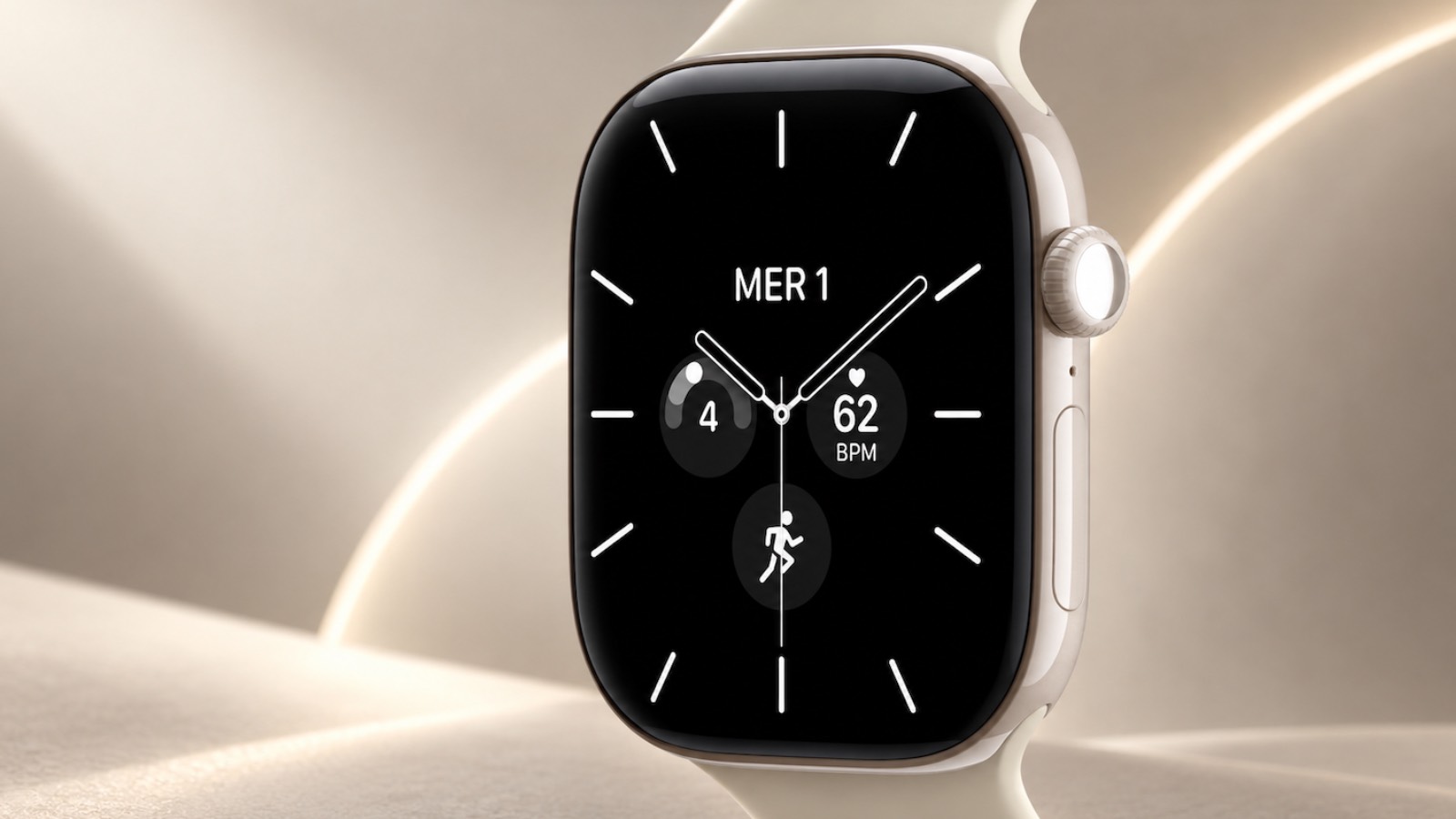
With Apple Watch Series 12 and Watch Ultra 4, Cupertino has introduced Audio Intelligence, a suite of features based on Apple Intelligence that also includes two tools designed to keep track of conversations: Live Rewind and Siri Recap.
These two functions are precisely raising legal questions that could require a new legal precedent on the privacy of audio recordings, with non-negligible differences between the United States and Europe.
Apple Watch, Live Rewind and Siri Recap: how they work and why privacy is under discussion

Live Rewind allows you to recover the last 15 seconds of speech in the form of a short textual excerpt, simply by double-pressing the Digital Crown. Siri Recap, instead, generates concise summaries of daily conversations, which are automatically deleted after 7 days if not saved manually.
Both features require Apple Watch Series 12 or Ultra 4 paired with an iPhone 16 or newer, and will be available in beta by the end of the year, in English.
The legal issue: consent of all parties in a conversation
The issue concerns American states that apply the principle of “two-party consent”, according to which all people involved in a conversation must be aware of it and give their consent before it is recorded.
The question to which no court has yet answered is whether processing the audio to generate a transcript, even if it is never saved in an accessible way, could still constitute a violation of recording laws.
Lawyers consulted on the topic in California, Massachusetts, Pennsylvania and Washington agree that the technology is moving in a territory still largely uncharted: there are those who call it very close to legality, while acknowledging that “one could argue that it is illegal”, since the device still intercepts and interprets the audio of the conversation.
Apple’s technical protection measures and who risks legal liability
On the technical front, Apple has adopted several protection measures: Live Rewind never activates automatically and must be invoked manually each time, while the processed audio is handled exclusively inside the Secure Enclave of the S11 chip, an area hardware-isolated and inaccessible to the user, the operating system, apps, and Apple itself, with immediate deletion after processing.
A notable detail, however, concerns legal responsibility: as reported, in the event of an adverse ruling, it would be the Apple Watch users who would be held responsible for a violation of the recording laws, not Apple as the device maker.
The situation in Europe and Italy is different
For European users, at least initially, the issue won’t arise: Apple will not make Live Rewind and Siri Recap available at launch in either the European Union or China, with a beta arrival expected by the end of 2026.
When the two features make their appearance in Europe as well, the regulatory framework will still differ from the U.S.: the GDPR excludes from its scope processing carried out by a natural person in the context of activities strictly personal or domestic, while other national data protection rules regarding communications may potentially apply.
In Italy, on the traditional recording front, there is already a fairly consolidated jurisprudential stance: recording a conversation you participate in does not, per se, equal interception, even if the other party is not aware, provided that the content is not subsequently disseminated.
However, the same question remains open, even in Italy, as in the United States: whether a temporary processing of the audio, which does not produce any stored or accessible recording as in Live Rewind and Siri Recap, can be legally equated to a real recording.
For all the latest updates on the brand’s ecosystem, you can find our most recent articles in GizChina.it’s Apple section.