


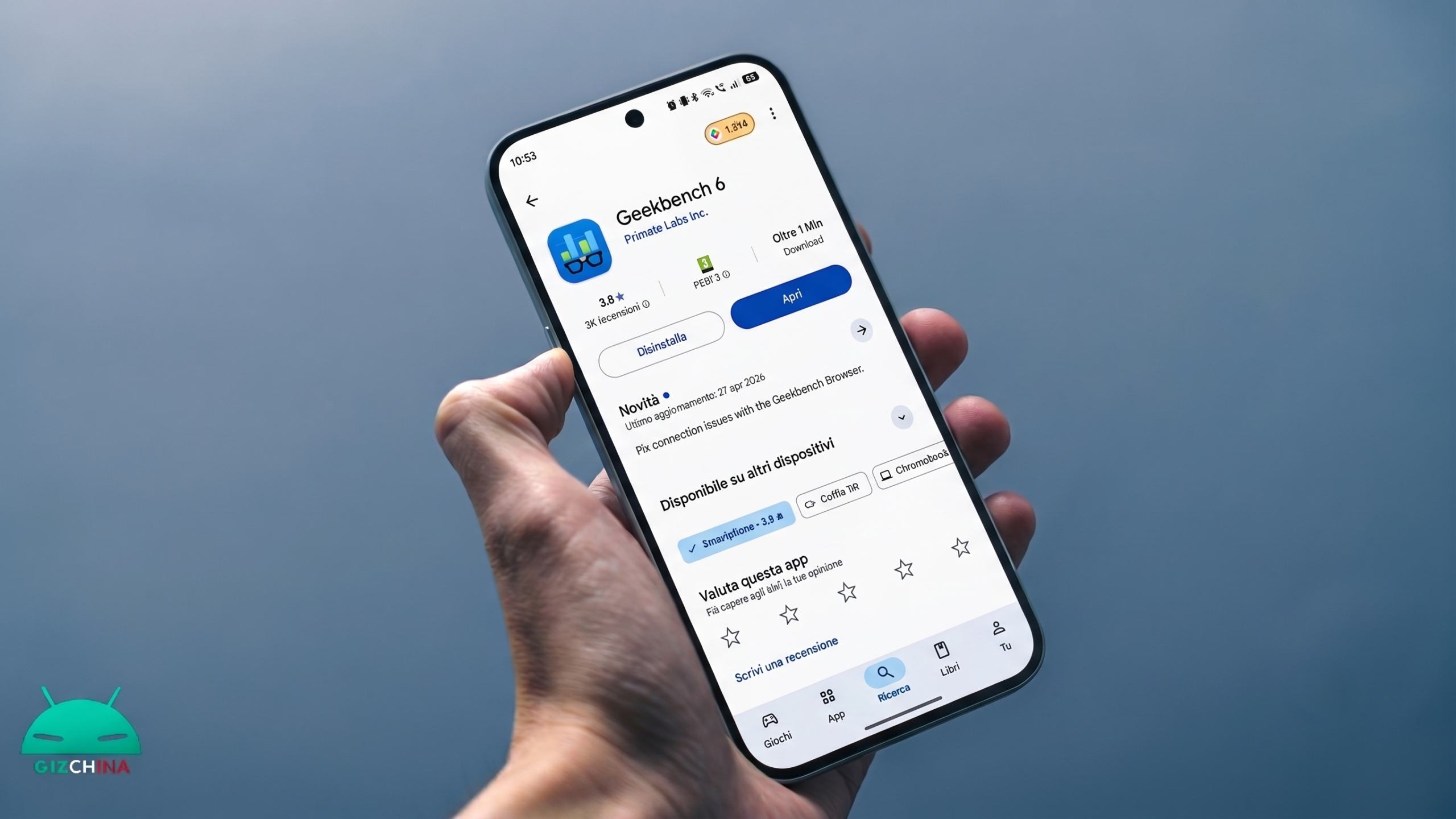
The well-known performance benchmarking tool developed by Primate Labs takes a significant step with the release of its new version.
Available right away for the operating systems Android, iOS, Windows, macOS, and Linux, Geekbench 7 introduces a number of new features designed to provide a much more faithful picture of how devices operate on a daily basis.
This update to the benchmark shifts the focus from mere theoretical calculations toward practical scenario simulations, offering users an assessment closer to the real-world performance of CPUs and GPUs during everyday tasks.
Geekbench 7 evaluates your devices more realistically

Analyzing the changes made to the CPU tests, there is a clear focus on the most common multimedia habits. The software now includes simulations that faithfully reproduce video conferences or listening to podcasts, measuring, for example, Opus compression for voice messages or the encoding required for screen sharing.
The device’s ability to generate real-time subtitles using the Whisper speech recognition model during video decoding is also measured.
The gaming sector also receives an updated treatment, thanks to the inclusion of a test based on the Jolt Physics engine, widely used in video games. In terms of image handling, the system evaluates complex photo edits and supports newer formats such as JPEG XL and DNG.
One of the changes involves the multi-core benchmark optimization, made noticeably more precise and aligned with how the software actually operates.
Rather than forcing every single workload onto multiple threads artificially, Geekbench 7 runs operations in multi-core mode exclusively if real applications actually behave that way.
To cite a practical example, the test for the HTML5 browser excludes the entire multi-core suite, as normal web browsing largely depends on single-thread processes.
This choice avoids inflated scores and yields a result perfectly aligned with the device’s real capabilities.
Greater emphasis on machine learning and CUDA compatibility
The graphics subsystem measurement also receives a significant improvement, focusing in particular on machine learning and on content creation.
The GPU tests now include facial tracking with the application of filters, image upscaling via machine learning, and the addition of background blur during video calls.
Additionally, complex checks such as RAW image processing, color correction based on LUT, path tracing and fluid simulations. One of the most notable additions is certainly the official support for the NVIDIA CUDA API, which sits alongside OpenCL, Vulkan and Metal, finally allowing users to test their hardware with the same tools used by the most demanding software.
To complete the work, Primate Labs has renewed the entire database used for tests, introducing larger archives and a broader variety of PDF documents and image files.
This diversification ensures that smartphones and computers are tested with elements very similar to those processed daily. Geekbench 7 remains completely free for personal use, while the Pro edition is offered with a 20% discount valid until August.