


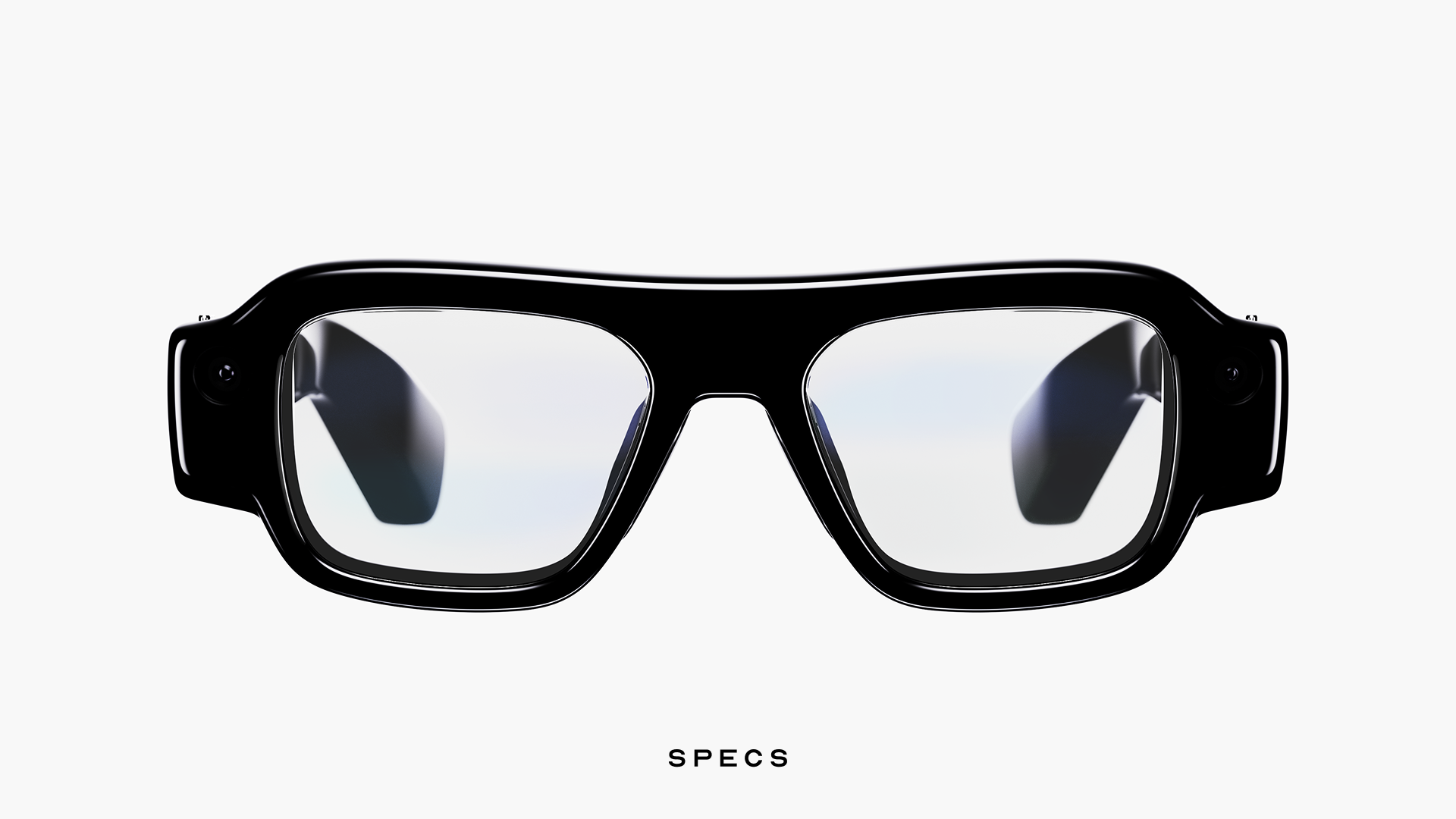
Snap officially unveiled the consumer version of its new augmented reality glasses during the Augmented World Expo in California.
The company emphasizes the product’s completely autonomous nature: the glasses do not require any wired connection, no external processing unit and no supporting smartphone, clearly distinguishing themselves from traditional headsets.
Snap Official Specs, everything you need to know about the new AR glasses


Built in high-performance Swiss TR90 polymer, the glasses come in two sizes designed for everyday use. The 47 mm variant weighs only 132 g, while the 52 mm model reaches 136 g.
While heavier than traditional prescription glasses, they are nonetheless significantly lighter than most headsets in this category.
The technical processing is entrusted to two Qualcomm Snapdragon processors: one is entirely dedicated to managing the operating system and applications, while the other exclusively handles the complex computer vision.
The proprietary display, based on liquid crystal on silicon technology, offers a diagonal field of view of 51° capable of rendering 16 million colors.
The integrated electrochromic lenses, inspired by the Boeing 787 Dreamliner window engineering, can transition from maximum transparency to full darkness in just 10 seconds, adapting to ambient light.
The declared battery life is 4 hours of mixed continuous use, extendable to 20 hours overall by using the charging case supplied with the package.


Despite premium materials and advanced features, some gaps in the technical sheet are evident. Snap has indeed chosen not to disclose crucial hardware details such as the exact display resolution, brightness, refresh rate, RAM, storage, and camera specifications.
For a device marketed at a price that attracts performance-conscious consumers, these omissions raise questions about the real competitiveness of the component specifications compared to market alternatives.
Intelligent software and shared interactions
The true differentiating element of the Specs lies in its software ecosystem. An AI-powered assistant, developed thanks to direct collaborations with OpenAI and Google, guarantees a deep contextual understanding.
The system can answer questions about what the user is looking at, translate texts and conversations in real time, and surface relevant information without forcing the wearer to pick up their phone. We tested a prototype of the glasses a few months ago, and we were quite impressed.
A novel AR feature is EyeConnect: when two users wear the Specs and establish eye contact, the system automatically activates shared multiplayer experiences, overlaying digital content in their respective fields of view in perfect synchrony.
All of this happens with a motion-to-photon latency of only 7 ms, ensuring extremely precise and natural anchoring of virtual elements to the physical world.
Snap unveils the new Specs at €2,295; are they the most advanced consumer AR glasses to date?