


Anyone who has spent hours in class trying to escape the boredom of math lessons remembers well the attempts to transform their calculator into a source of entertainment.
From simple messages formed by flipping the numbers on the display to the rudimentary games programmed on scientific devices, students’ ingenuity has never known limits.
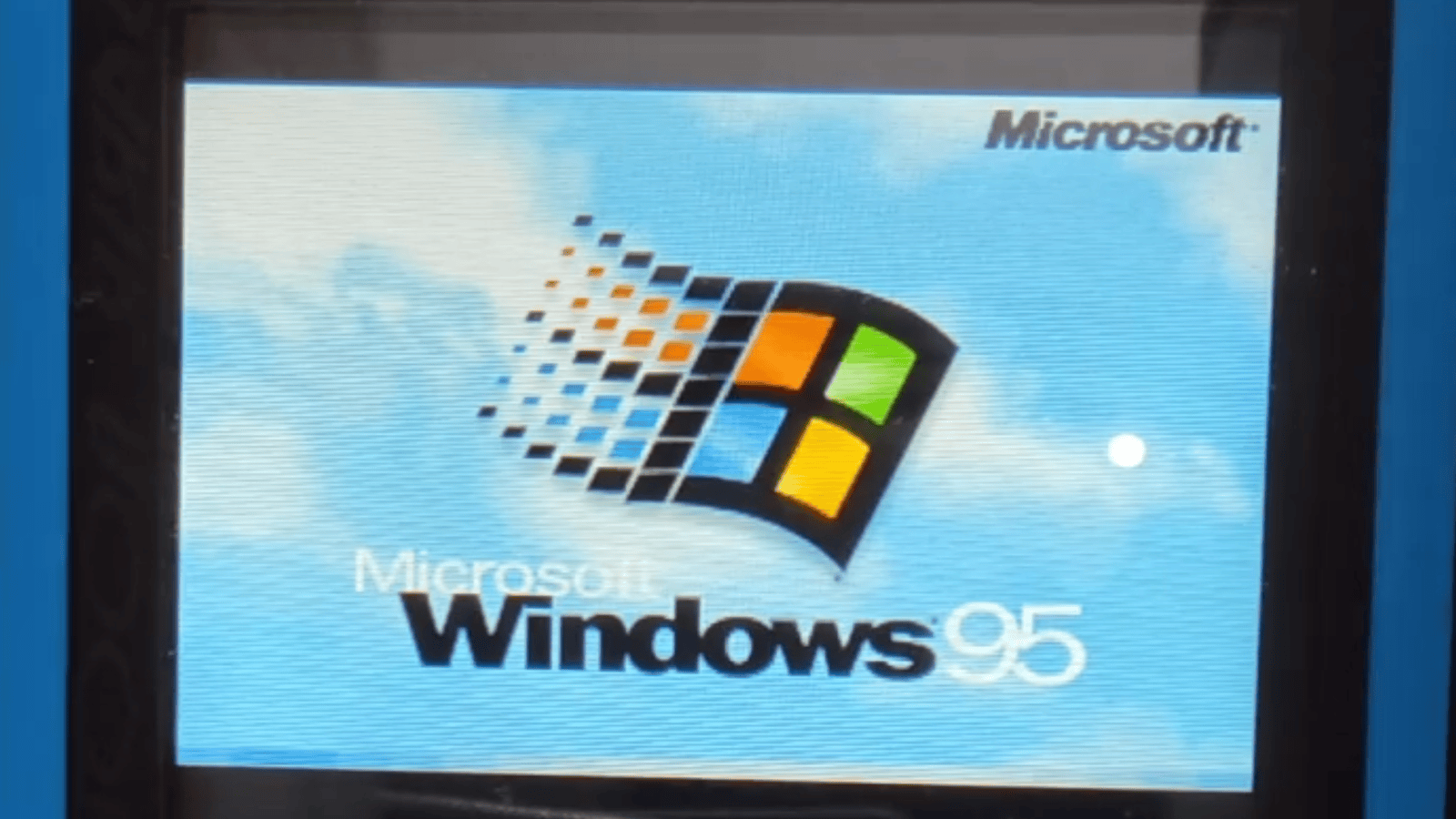
However, there are those who decided to push this form of entertainment to a completely unexpected level, managing to install and run the operating system Windows 95 on a portable device designed exclusively for complex calculations and equations.
Windows 95 on a calculator takes 7 minutes to boot
The strangest thing you’ll see today: Windows 95 running on a calculatorThe initiative, which recently emerged on Reddit, was shared by the user known as Far-Temperature3580 within the community dedicated to fans of Microsoft’s home systems.
The device chosen for this unusual experiment is a Texas Instruments TI-Nspire CX II, an advanced graphing tool that boasts impressive technical specifications for its class.
To compress and run an entire desktop operating system within the limited space of a calculator, the author relied on Tiny386, an emulation software capable of replicating the architecture necessary to boot the now-legendary software from Redmond.
Although the visual result is undoubtedly fascinating, the practical execution requires a massive dose of patience. In the video posted by the user, the system boot appears fairly quick, but it is an illusion caused by the video’s accelerated playback.
It takes a lot of patience
In reality, the actual boot process to reach the famous Windows 95 desktop takes about seven long minutes. This timespan, already considerable in itself, is the result of meticulous prior optimization work, without which the interface would not even manage to appear on screen.
As of now, the video stops once the boot is complete, leaving the impression that folder navigation and program execution are still in development and refinement.
Despite the evident initial slowness, the idea of actually using the desktop environment on this particular calculator is not entirely impractical. The TI-Nspire CX II is indeed equipped with a small integrated trackpad, a crucial detail that could make cursor movement substantially more natural and intuitive than other porting attempts on unconventional devices.
All that remains is to understand whether, once the system is stabilized and the controls are smooth, the next step of this experiment will be to launch the Start menu, select Accessories, and open the Windows 95 Calculator application, closing thus a technological circle as ironic as it is brilliant.