


During the Google I/O 2026, the Mountain View company pulled back the curtain on the next iteration of its smartwatch operating system.
The new version brings with it a series of aesthetic and functional changes designed to align the user experience more closely with that of smartphones Android 17.
The final release is expected by the end of the year, although the Canary version of Wear OS 7 is already available to developers.
Wear OS 7 is official: here are all the innovations


One of the most interesting figures announced concerns energy efficiency: the new software will guarantee a 10% battery savings compared to Wear OS 6 with identical hardware, an improvement that addresses one of users’ primary needs.
The focus inevitably shifts to advanced capabilities, with the introduction of AI features reserved for specific watch models.
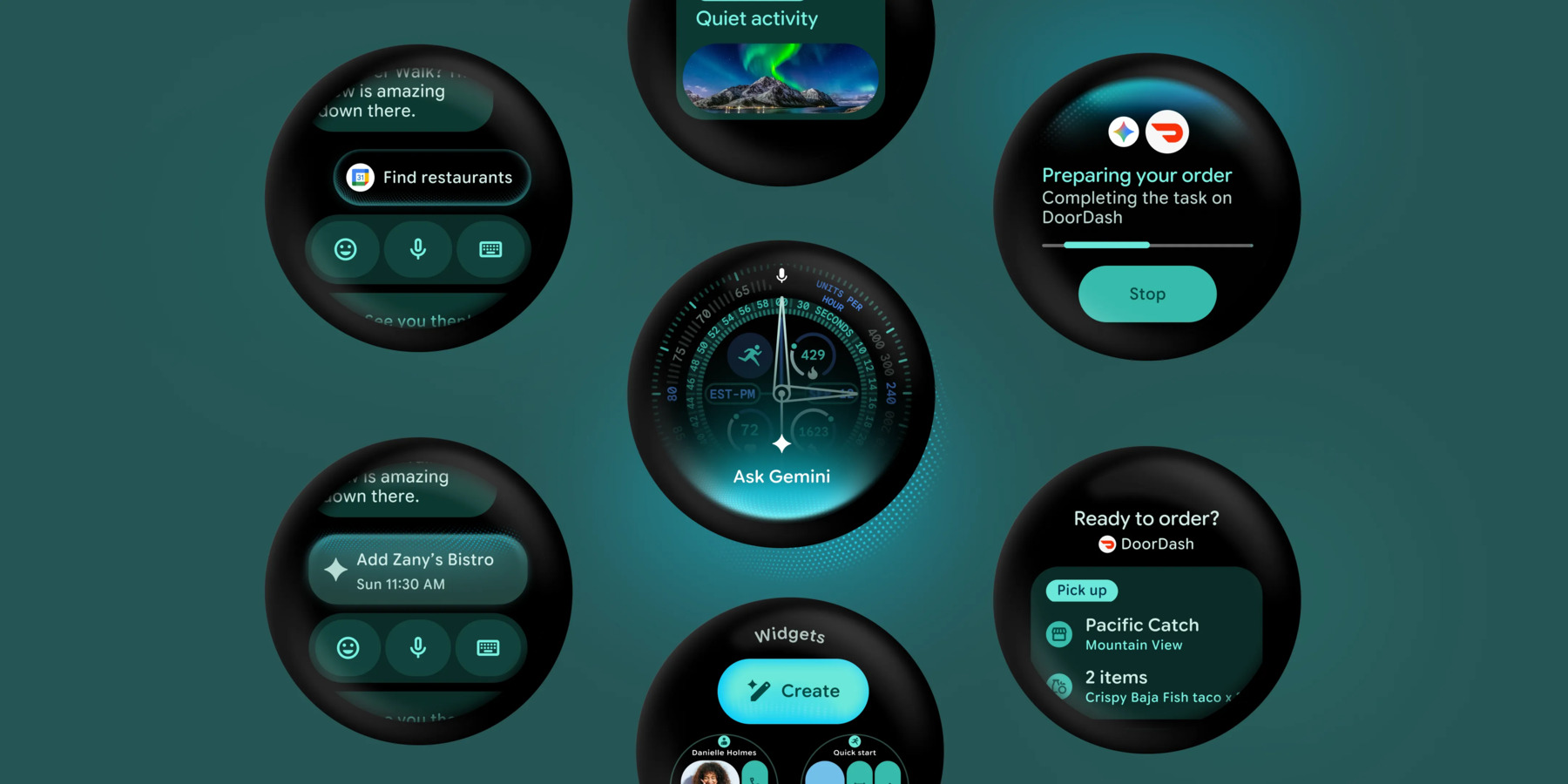
Google provided some previews of the potential of the new API AppFunctions, designed to enable developers to have their software communicate directly with Gemini Intelligence.
This will enable much smoother task automation. Users will be able to summon the virtual assistant to perform complex operations via third-party applications, such as placing orders for home food delivery, handling everything instantly via direct commands.
An interactive and dynamic interface
From a graphical standpoint, the update introduces Live Updates, i.e., dynamic notifications that will appear on the home screen via a discreet indicator.
Accessing the dedicated page, the cards will display information that continually evolves, such as the countdown to the arrival of a delivery, offering further details by expanding the view.
At the same time, the traditional full-screen card management will give way to real widgets. These elements, rendered in visual formats 2×1 or 2×2, will adopt the graphical style introduced with Android 16.
Unlike what Samsung has implemented on its Galaxy Watch devices, Google’s current design does not appear to allow stacking multiple widgets in the same visual space.
Sports, multimedia content and development
The update also deeply affects fitness tracking and entertainment. The company announced the creation of a universal and standardized workout-tracking experience, natively integrated into the system.
Developers will be able to adopt this module, including heart-rate monitoring and music controls, avoiding having to create a proprietary one from scratch.
On the audio front, automatic startup of the media player will become optional at the user’s discretion, while a new output selector will allow routing the audio stream not only to traditional Bluetooth earbuds but also to systems compatible with the Google Cast technology.
The combination of these novelties, together with tools optimized for watch-face programming and navigation, outlines a final user interface that will be noticeably cleaner and more intuitive.