


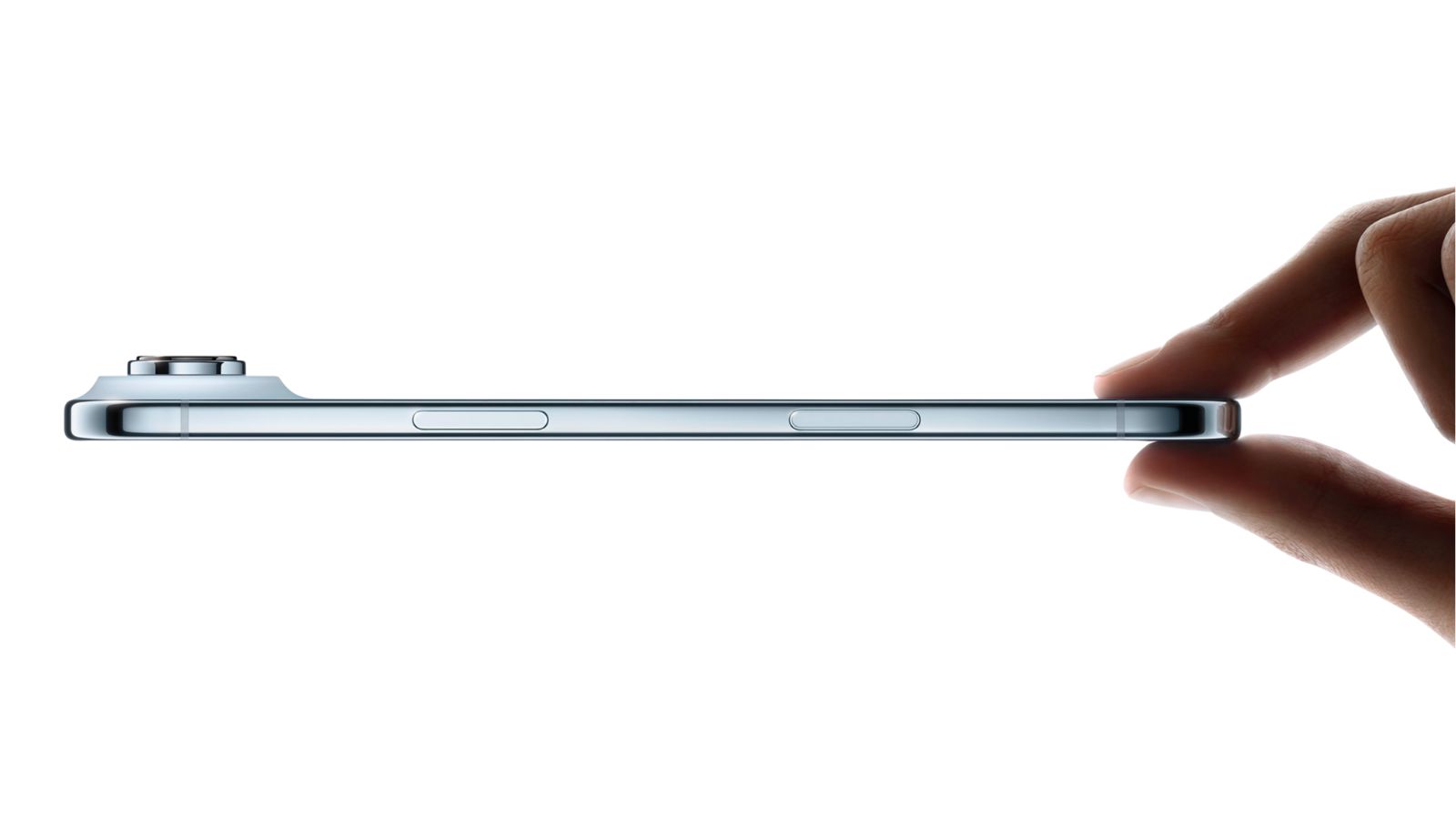
Very shortly after the launch of Apple’s ultra-thin smartphone, the first rumors about Xiaomi’s response have begun circulating. From rumors to a prototype, and yet, to this day this mysterious device has not yet seen the light of day. The current president of the Chinese company, Lu Weibing, has answered users’ questions confirming the fate of the alleged Xiaomi 17 Air: the slim flagship will not be made and the executive explains the reason behind this decision.
No Xiaomi 17 Air: the company explains why we won’t have an ultra-thin flagship

It’s no secret that iPhone Air sales have not been exciting: Apple’s ultra-thin could have a successor, but it still wouldn’t be a priority at the moment. The device has recorded sales volumes significantly lower than market expectations, even though the iPhone 17 series sits at the top of the world’s best-selling smartphones.
Things don’t seem to be going better for the rival Samsung Galaxy S25 Edge: even in this case, the second flagship would not be a priority, at least according to rumors. It remains to be seen if there will be a summer surprise, but for now we feel confident in ruling it out — given the lack of rumors and leaks on the matter.
In recent months there has been talk of the alleged Xiaomi 17 Air, a device spotted in prototype form: the phone was supposed to have a design similar to Apple’s rival, with a horizontal capsule camera, a thickness of 5.5 mm and a 6.59″ screen.
Yet the rumors suddenly stopped, and we haven’t heard more about this model. Now Lu Weibing, head of Xiaomi, reveals the mystery: the ultra-thin flagship has been canceled and the reason concerns the user experience. According to the executive, the phone would have required too many compromises: the main advantage would have been maneuverability, with a slim and light body; the other side of the coin would have been the lack of battery capacity and performance.
Despite the attractive design, Xiaomi deemed that the final product would not meet its user experience standards. The ultra-thin format does not allow the use of large batteries, and the same goes for the cooling system. Too many compromises, according to Lei Jun’s company, so better to abandon the idea and move on to something else.
And by “something else” they mean Xiaomi 17 Max, the exact opposite of the Air model: a larger device, with a big display, a top-class camera and an extra-large battery (a full 8,000 mAh).