


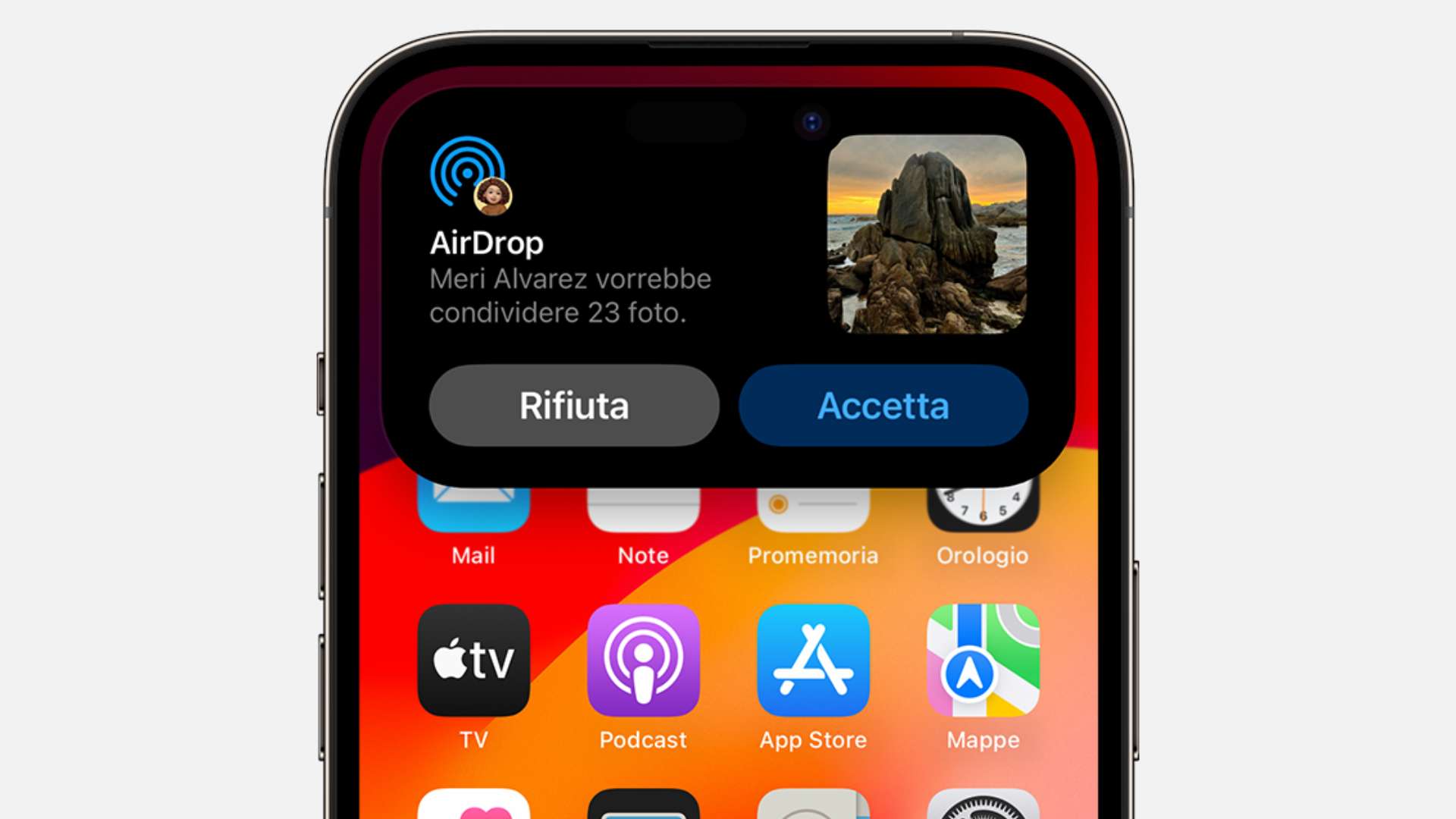
Google has recently confirmed that support for AirDrop, integrated directly into Android’s native Quick Share feature, will be extended to a growing number of devices.
This is not simply a rumor, but an official communication that outlines a clear path for the coming months, specifying which hardware will benefit from this interoperability.
AirDrop on Android, an updated list of compatible models

The direct link with Apple’s iPhones is already a reality for a range of high-end devices. Currently, the integration is active on the entire Pixel 10 family and on the previous Pixel 9 series.
On the South Korean front, interoperability already works on the entire Samsung Galaxy S26 lineup. Looking at the Asian market, the connection is fully supported on the recent vivo X300 Pro and vivo X300 Ultra, as well as on the entire OPPO Find X9 series, which includes the base variants, Pro and Ultra. In addition, the foldable device OPPO Find N6 is added and, somewhat surprisingly confirmed by Google in recent days, also the Pixel 8a.
The Mountain View company has outlined the schedule for the upcoming updates, revealing a substantial lineup of phones that will receive support soon.
The update will cover the entire Samsung Galaxy S25 and Galaxy S24 families, including the standard, Plus and Ultra models, with a high likelihood that compatibility will also extend to the FE variants. Also for Samsung, the feature will arrive on a wide range of foldable devices: the Galaxy Z TriFold, the Galaxy Z Fold 7 and the Z Flip 7, as well as the previous generation consisting of Z Fold 6 and Z Flip 6.
OPPO will see the activation of the feature on the Find X8 and Find X8 Pro models, while the Find X8 Ultra version will probably remain excluded since its release was limited to the Chinese market. The update will also reach the OnePlus 15 and Honor’s flagship devices, specifically the foldable Magic V6 and the Magic 8 Pro.
An interesting detail concerns Google’s proprietary devices management: while the Pixel 8a is already enabled, the Pixel 8 and Pixel 8 Pro do not yet appear in the official list. Sharing the same internal architecture, it is highly unlikely that there will be differences in network capabilities in favor of the cheaper model; it is much more plausible that this is a pure matter of timing in the software release for the higher-end models.
The hardware requirements
The reason Google has not activated the feature on all Android smartphones in circulation is strictly technical. Analyst Max Weinbach has clarified that the connection requires a specific network modification at the chipset and wireless modem level.
This configuration enables the Apple Wireless Direct Link, usually indicated by the acronym AWDL, which forms the basic infrastructure on which AirDrop operates.
While in the past open-source projects like OpenDrop had demonstrated the theoretical possibility of devices communicating, the engineered implementation by Google in Quick Share is far more complex. The Android device must therefore keep communications open to simultaneously scan compatible devices both on the AirDrop network and on the Quick Share network.
This level of management of network protocols requires specific radio components, which is why the function will primarily reach high-end processors, almost certainly excluding low- and mid-range phones that do not possess the appropriate technical specifications.