


In the current public debate, attention is almost entirely focused on the impact of digital devices on adolescents.
There is constant talk of a “stolen childhood“, of schools that ban cell phones and of global parent movements preaching digital abstinence. Emblematic is Australia, which has recently introduced the ban on access to social media for minors under 16.
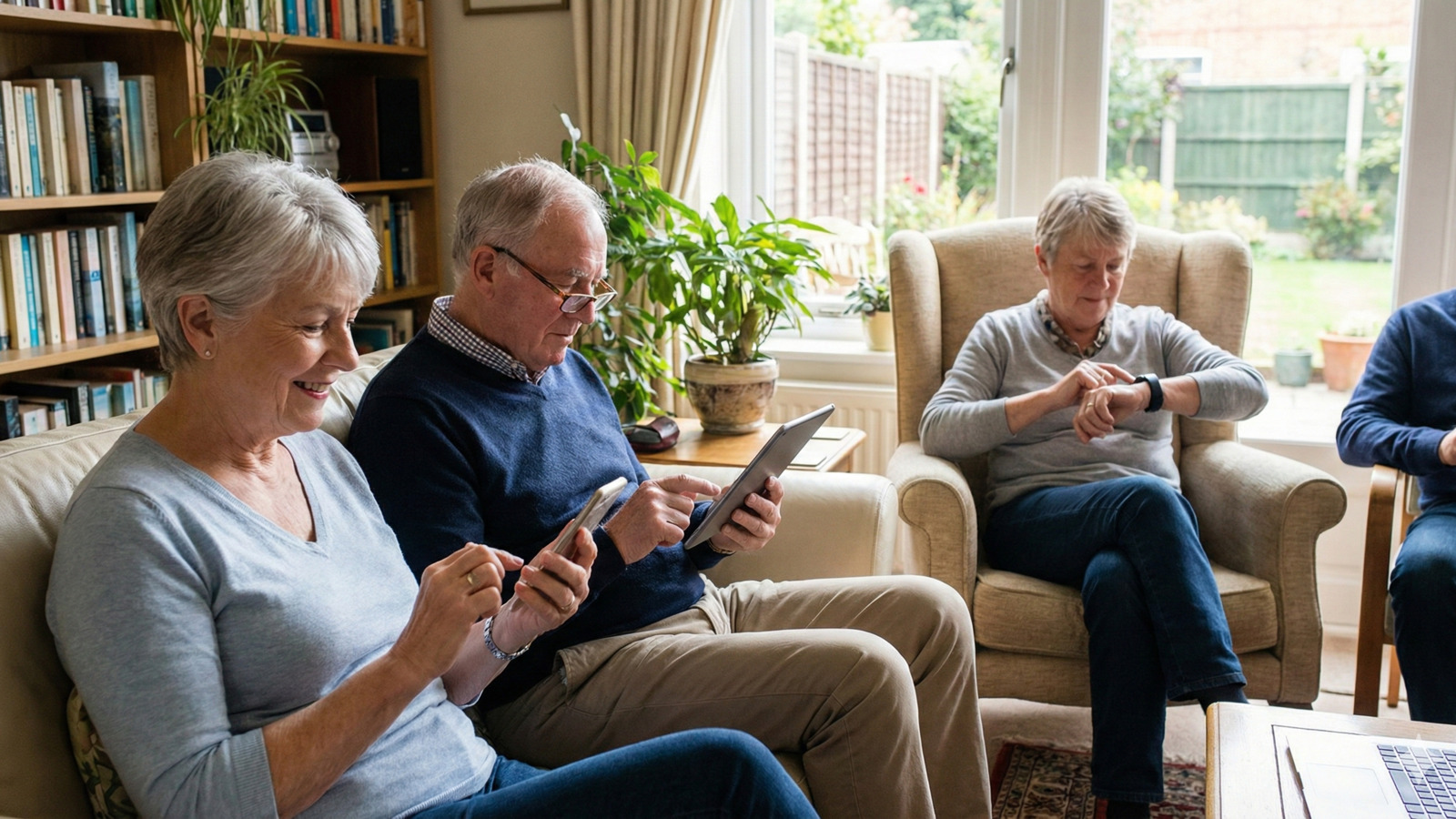
However, while the world rightly worries about the younger, another quiet change is taking place in the opposite demographic: those over 60, a category that is embracing technology with unexpected enthusiasm and, at times, without brakes.
The rise of the new digital retirees

Far from the spotlight that illuminates youth issues, there is an explosion in the use of tech products among those reaching retirement age.
Contrary to the stereotypes of the past, which pictured the elderly as technologically excluded or inept, today's data paint a radically different picture.
According to Ipsit Vahia, head of the Technology and Ageing Laboratory at the McLean Hospital of the Harvard Medical School, many seniors are starting to live their life through the phone screen, replicating behavioral dynamics typical of teenagers.
The statistics confirm this trend in unequivocal terms: 59% of new retirees spends more than an hour a day on the Internet via smartphone, a percentage that rises above 66% when considering computer use. It's not just passive browsing; there is an active interest in the newer gadgets.
Almost a fifth of the 55-64 age group owns a game console and 17% of those over 65 wears a smartwatch. In Italy too the trend is rising sharply, as certified by Istat, which recorded a notable increase in Internet use between 2023 and 2024 among both the 65-74 age group and those over seventy-five.
The big tech companies, Apple leading, have sniffed out the opportunity, developing hybrid devices that act as health assistants, capable of performing electrocardiograms or calling for help, making technology not only a pastime but a perceived necessity for personal safety.
The pitfalls of the digital wallet and loneliness
If we combine the hours spent in front of the TV with those devoted to tablets and smartphones, retirees spend daily more time in front of a screen than young people. This hyperconnectivity exposes the elderly to specific and often underestimated risks, very different from the cyberbullying that affects adolescents.
The greater danger is economic: the devices of those over 60 are often directly linked to bank accounts or credit cards. This makes them vulnerable to “microtransactions” present in popular games such as Candy Crush, where so-called loot boxes can drain savings in a silent but inexorable way.
Even more alarming is the field of cybersecurity. Everyday platforms like WhatsApp, massively used by the elderly to communicate with relatives or make purchases, have become the scammers' preferred hunting ground and online scams.
Unlike young people, who are often subject to parental or school control, the elderly are masters of their own time and do not have to submit to social rules about screen exposure. This absolute freedom, paradoxically, becomes a risk factor: in case of addiction or difficulties, there is often no one ready to intervene or notice the problem.
Psychiatrist Vahia has highlighted how insomnia or anxiety in elderly patients are often symptoms arising precisely from fear of online scams or from the compulsive scrolling of social media feeds, phenomena rarely diagnosed as such.
Beyond addiction, technology as a bridge
Despite the evident risks, it would be an mistake to demonize the use of technology in advanced age. For those with motor difficulties or living in isolation, the smartphone represents a fundamental window onto the world.
Messaging apps shrink distance with distant family, video games provide mental recreation, and platforms like Spotify or YouTube act as powerful “nostalgia machines“, allowing to recover music and images from the past.
There is also a fundamental structural difference between a teenager and a seventy-year-old facing the screen. While young people are still building their social skills, risking that the phone interferes with this development, older adults already have a consolidated baggage of relationships and communication modalities.
In this context, as Vahia again emphasizes, the smartphone does not replace real life but can empower and enhance it. The new frontiers of virtual reality, for example, are starting to be explored to overcome mobility barriers, allowing the elderly to relive memories or experiences in an immersive way.
The future challenge will thus be to educate for mindful use, protecting this demographic group from the digital pitfalls without depriving them of the extraordinary opportunities for connection that technology offers.