


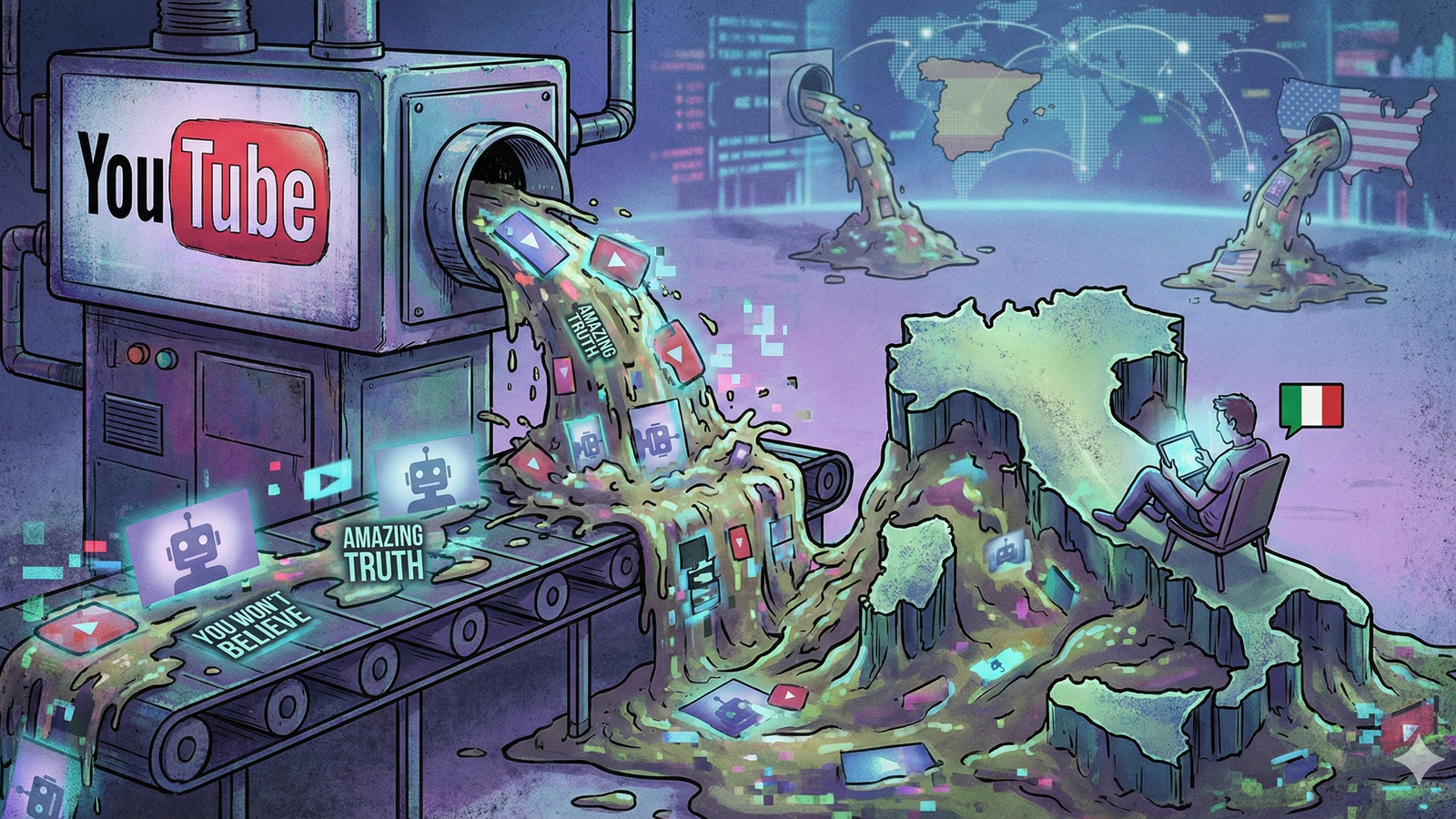
The era of mass-produced AI-generated content at scale seems to have reached a breaking point on the world’s largest video platform.
YouTube has apparently launched a broad cleanup operation, quietly removing some of the most popular channels dedicated to what is defined as “AI slop”, i.e., low-quality content mass-produced by artificial intelligence.
This is a huge change in how the platform is managed, where automation is starting to collide with new moderation policies.
Goodbye AI Slop? YouTube Begins Deleting Popular Accounts

According to a recent report by Kapwing, a well-known video editing platform, two of the most influential channels in this gray area have vanished into thin air.
The most striking case is that of CuentosFacianantes, a channel that until recently boasted over 5.9 million subscribers and a total of 1.2 billion views.
Identified in November 2025 as the leading exponent of the “AI slop” category, the channel produced a steady stream of low-quality Dragon Ball themed videos, leveraging the franchise’s popularity to rack up views through automation.
The platform’s sword also struck on Imperio de Jesus, the second channel on Kapwing’s list, which counted over 5.8 million subscribers.
The channel’s description, automatically translated, promised to strengthen faith through “fun interactive quizzes“, a seemingly harmless niche but exploited to generate massive engagement with minimal creative effort.
The disappearance of these giants suggests that YouTube is no longer just targeting small spammers, but is directly hitting the big beneficiaries of this business model.
Neal Mohan’s Strategy and the Battle Against Low Quality
These removals come just a few weeks after policy statements from YouTube’s CEO, Neal Mohan.
In a letter addressed to the community, Mohan directly addressed the issue of the prevalence of these materials, outlining a plan to reduce the spread of low-quality AI-generated content.
The company’s strategy is based on strengthening the existing systems to fight spam and clickbait, adapting them to recognize and penalize the serialized production assisted by artificial intelligence that does not add real value to the viewer.
It is not yet clear whether the channel removals occurred through a direct manual intervention or through an algorithmic update, and the exact timings remain shrouded in mystery.
However, the action is consistent with the promise to clean users’ feeds from material “inauthentic”, a crusade started last year with the removal of channels posting AI-generated fake film trailers.
The Army of Clones and the Case of Digital Cats
Kapwing’s investigation revealed that the purge is far broader than it appears. In addition to the two main cases, another sixteen channels have been canceled or emptied of their content. Among them are names like Heroes de Fantasía and Roupa25, which together counted millions of subscribers.
An emblematic example of what is happening is the channel Super Cat League. Although the channel remains technically accessible, its video library has been reset.
The surviving description offers a disturbing and surreal glimpse into this world: it describes itself as the world’s number one cat cinema, promising to merge the cats’ cuteness with advanced generative AI to create “hyper-realistic and emotional” adventures.
Google Pushes AI, and YouTube Fights Back
The current situation highlights a complex internal contradiction within YouTube.
On one hand, the company is acting decisively against machine-generated junk content; on the other, it continues to encourage legitimate creators to embrace artificial intelligence, pushing for the use of AI clips in Shorts and developing tools to generate the digital likenesses of YouTubers.
The challenge for the future will be to draw a clear line between the creative use of artificial intelligence, which the platform intends to support, and automated abuse that risks turning the platform into a dump of soulless content.