


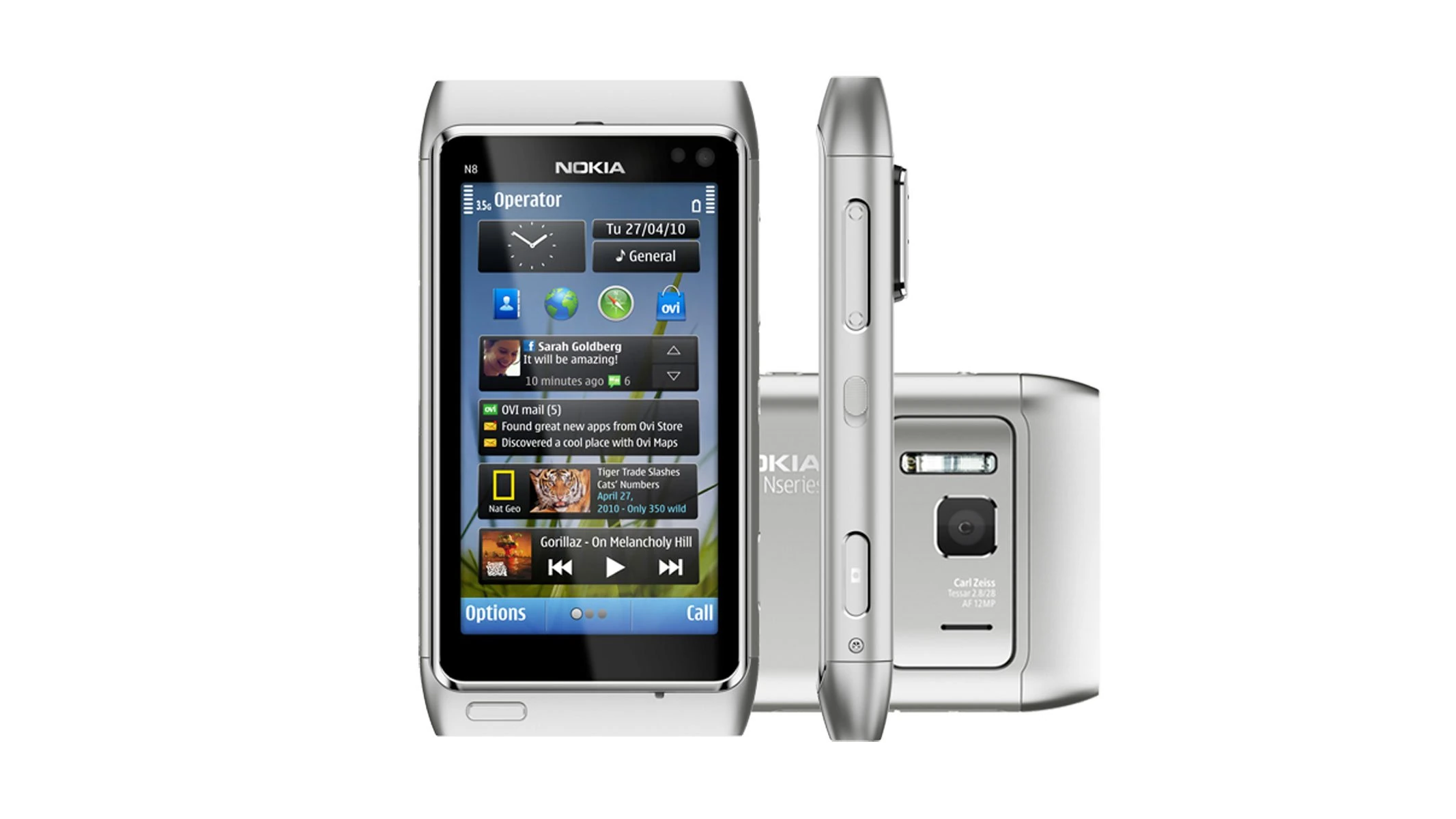
Most users have long since archived the Symbian era, relegating those devices to forgotten boxes in the attic or at the bottom of desk drawers. Yet, in the world of “modding” and collecting, nothing is ever truly obsolete.
A new custom firmware project, named “Reborn”, is offering a second life to one of the most iconic devices in the history of mobile telephony: the Nokia N8.
Nokia N8 is reborn in 2026 thanks to an ambitious project

At the time of its debut, in 2010, the Nokia N8 represented absolute excellence in terms of hardware construction.
It was a solid monoblock touchscreen, equipped with a 12-megapixel camera with Carl Zeiss lenses and a Xenon flash, a technical combination capable, even today, of embarrassing several smartphones for the quality of its shots.
However, this engineering marvel faced an obvious limit: the operating system. Symbian, the platform it ran on, had been originally conceived for physical keyboards and numeric keypads, not for direct finger interaction.
While the iPhone and early Android devices began to dominate the market with smooth and intuitive interfaces, Nokia responded with the update Nokia Belle.
Unfortunately, when the software reached an acceptable maturity, the update servers were already close to being shut down, leaving the N8 in a limbo of obsolescence.
The Reborn project: new life for Nokia N8 software
Today, more than fifteen years later, the independent developers community has intervened to fill the gaps left by the original manufacturer.
The new customized ROM is built on the foundations of Nokia Belle, the last major iteration of Symbian ever released, but it fixes its structural flaws.
Installing this firmware transforms the device: the interface becomes responsive and smooth, finally allowing the underlying hardware to express its potential without bottlenecks.
The novelties are not limited to smoothness. The developers have integrated a working and up-to-date app store, making the phone usable in daily life.
An extremely important detail concerns updating HTTPS signing certificates. Without this intervention, browsing the modern web would be impossible due to current security protocols, which would reject connections from the old browser.
Furthermore, to the joy of enthusiasts, the firmware removes the strict Symbian signing rules, allowing the installation of third-party applications without the usual bureaucratic hassles of the original software.
Risks of the procedure and hardware maintenance
Anyone who decides to embark on this recovery operation must proceed with caution. As shown by recent experiments conducted by the creator Janus Cycle, the interaction between modern operating systems and the old Nokia flashing tools can be problematic.
Driver conflicts can cause the dreaded blue screen (BSOD) on the PC and temporarily render the phone unusable. It is an operation that requires patience and a certain familiarity with software recovery procedures.
Finally, there is the obstacle of physical wear. Many recovered N8s show inevitable signs of time, such as exhausted camera modules or bent SIM pins.
However, the manufacturing philosophy of the time plays to the user’s advantage: thanks to the use of standard Torx screws and an accessible battery, the device is surprisingly repairable. Often it is possible to assemble a perfectly functioning unit by cannibalizing parts from a second donor device, thereby restoring dignity to a piece of technology history.