


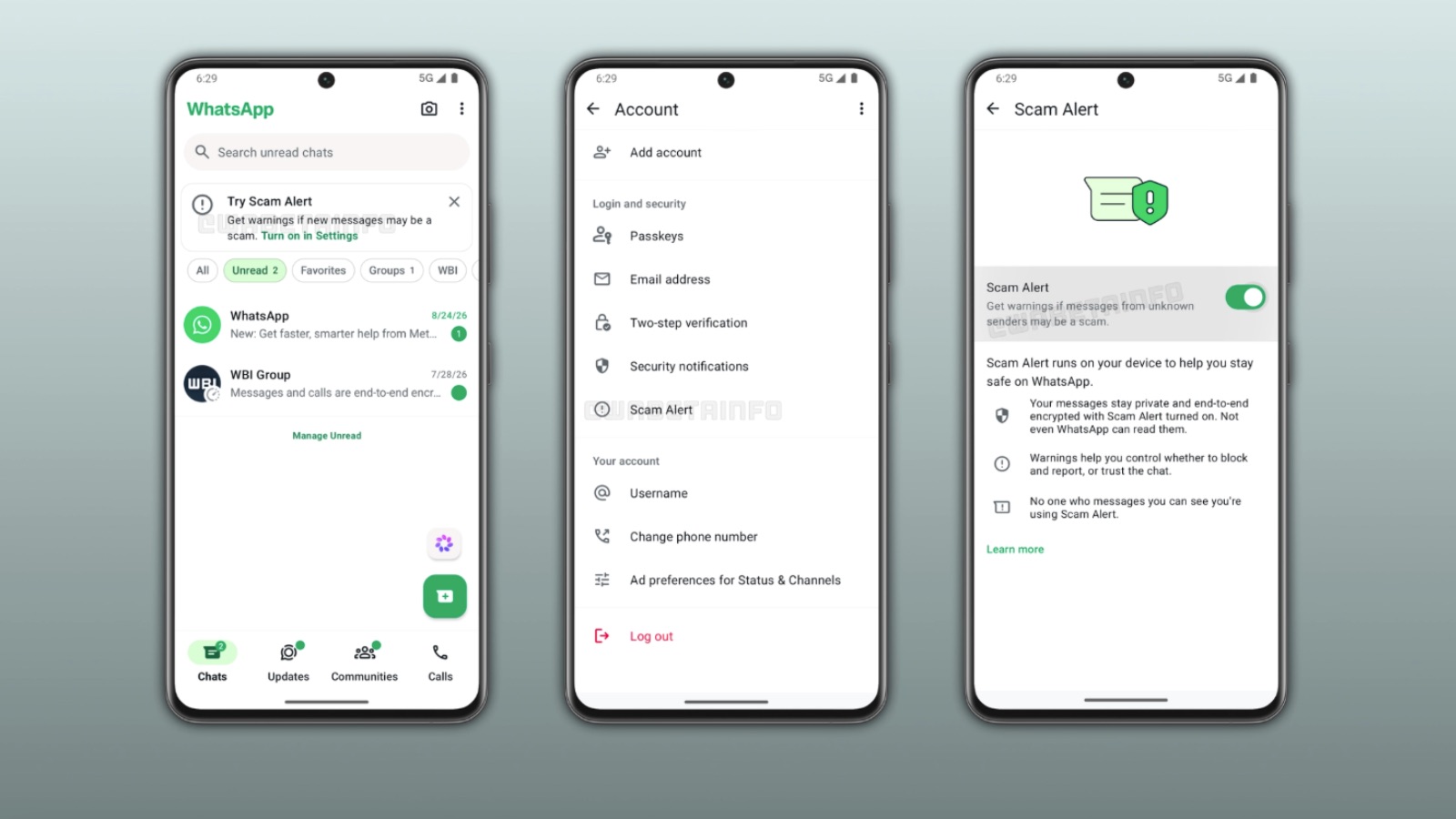
WhatsApp is testing in beta on Android a new feature designed to protect users from scam messages: it’s called Scam Alert and was identified in the beta version 2.26.34.1.
The feature uses an artificial intelligence model to analyze messages from unknown contacts and flag those that could hide a scam attempt, without compromising the end-to-end encryption of conversations.
WhatsApp Scam Alert: how the new protection against scams works

When a message arrives from an unknown contact, a machine learning model analyzes it locally on the device, comparing its content with known scam patterns.
If the message is deemed suspicious, WhatsApp shows a warning “This may be a scam” (“This could be a scam“), visible only to the recipient of the message.
The model behind the feature was trained on recurring patterns observed in dangerous conversations manually reported by users to WhatsApp over the years, and its updates are downloaded in the background, without the need to update the app.
The analysis takes place only on the device, not on servers
The central point of the feature is that the entire analysis stays on the client side: as clarified by Meta, the app does not send messages to WhatsApp, Meta or any external servers during this analysis.
To further strengthen privacy, all users share the same AI model, each version of the model is logged in a public transparency log before distribution, and when the device requests a model update, the request passes through a relay that removes the user’s IP address before it reaches the servers.
Meta has also expanded its Bug Bounty program to include the security of Scam Alert, in addition to publishing a technical article dedicated to the architecture of the solution.
Where it activates and when it will arrive for everyone
Currently the option to enable Scam Alert is located in the WhatsApp account screen, but only a limited number of beta profiles can activate it: the rollout is still in its early stages and the team has not yet announced when the feature will reach all Android users.
For iOS the company has stated that it will release this feature at a later time, without specifying a precise timeline.
For all the latest on the WhatsApp app and the Meta ecosystem, you can find our most recent articles in the WhatsApp section of GizChina.it.