


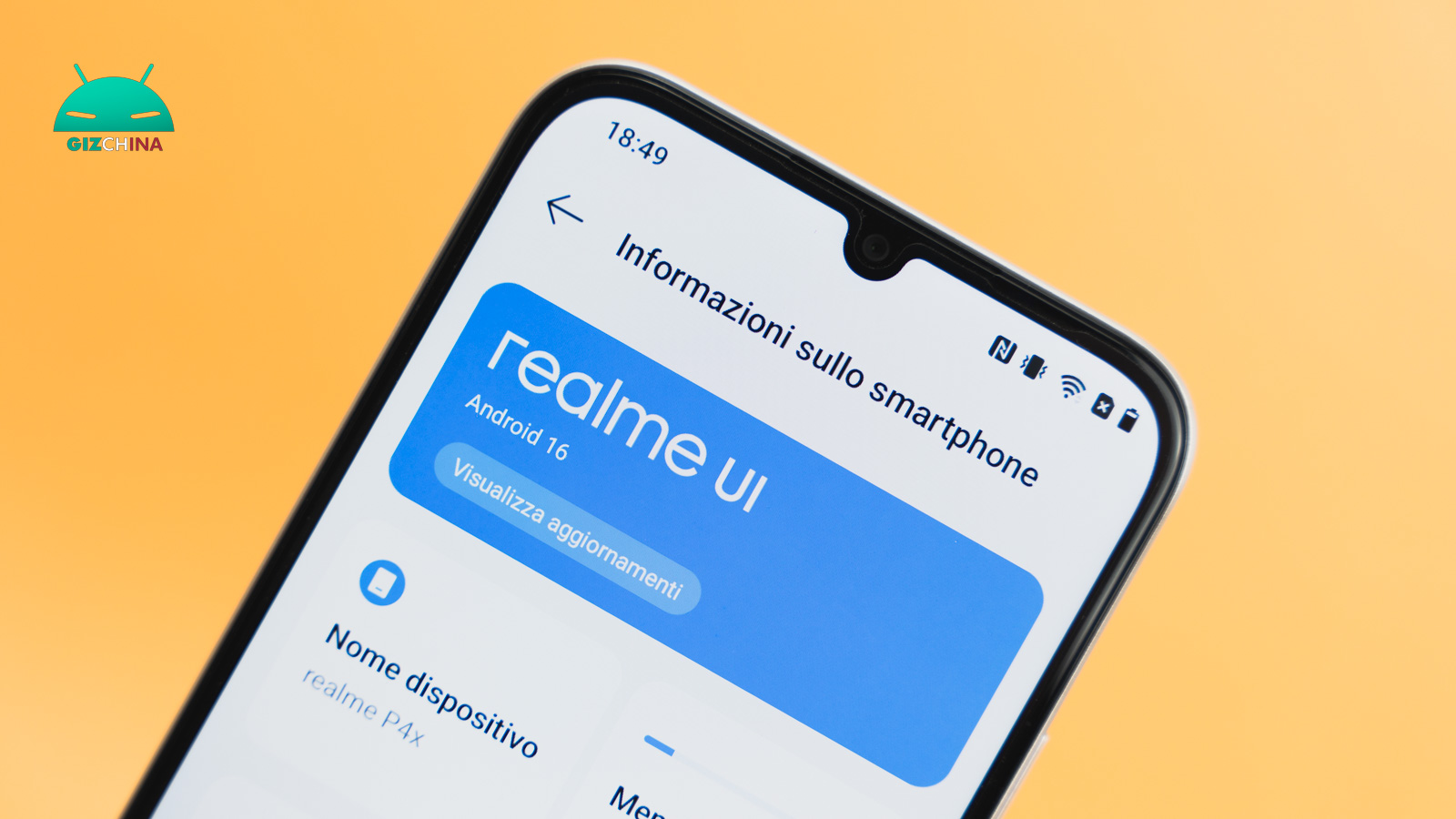
The official confirmation has finally arrived: the customized Realme UI will cease to exist to make way for ColorOS, the operating system developed by the parent company.
The company announced, via a post on Weibo from its Vice President Chase Xu, the start of a gradual transition that will bring the latest version of OPPO software to all brand devices, with a global rollout plan that will begin by the end of this year.
This marks the end of a unification journey that promises to optimize resources and ensure faster updates thanks to the integration of artificial intelligence features.
Realme confirms, its smartphones will transition to ColorOS

The transition to ColorOS does not represent a cancellation of the brand’s identity, but rather its evolution. The company has reassured users that the distinctive graphical traits and design elements that characterize the Realme experience will be preserved, ensuring differentiation while relying on OPPO’s solid architecture.
The transition will ensure higher system performance, greater smoothness, and access to advanced AI-based tools.
The detailed roadmap and list of compatible models will be announced soon. For smartphones that will not be included in this update program, technical support and security updates will remain active without interruption.
In this reorganization scenario, the Italian market remains of central importance, with confirmation of ongoing investments on the ground to consolidate the brand’s presence and offer increasingly advanced technologies. This stands in stark contrast to OPPO’s choices for the beloved sibling brand, OnePlus.
This announcement comes after a series of rumors suggesting a deep internal reorganization for the brands controlled by the Guangdong OPlus holding, the corporate entity born from the ashes of the historic BBK Electronics.
Until now, OPPO, OnePlus and Realme had maintained formal independence in terms of software and branding. However, the new industrial strategies aim for a strong consolidation of resources.
Parallel to the unification of the software, a geographical redistribution of activities is emerging.
The reasons for a union already written
The decision to retire historic brands such as OxygenOS and Realme UI responds to precise financial sustainability needs. Developing and supporting three different operating systems entails substantial investments in terms of research, development, and specialized personnel.
Concentrating efforts on a single platform enables us to reduce costs and accelerate the release of security patches and new Android versions.
From a purely technical point of view, after all, the transition had already occurred in 2021, when the unification of the source code was announced under the supervision of the group’s leadership.
Starting from Android 12-based versions, the graphical interfaces of the three brands had already become aesthetic variants of the same ColorOS. The decision today simply removes the remaining nominal barriers, formalizing a technological union that has long been established.