


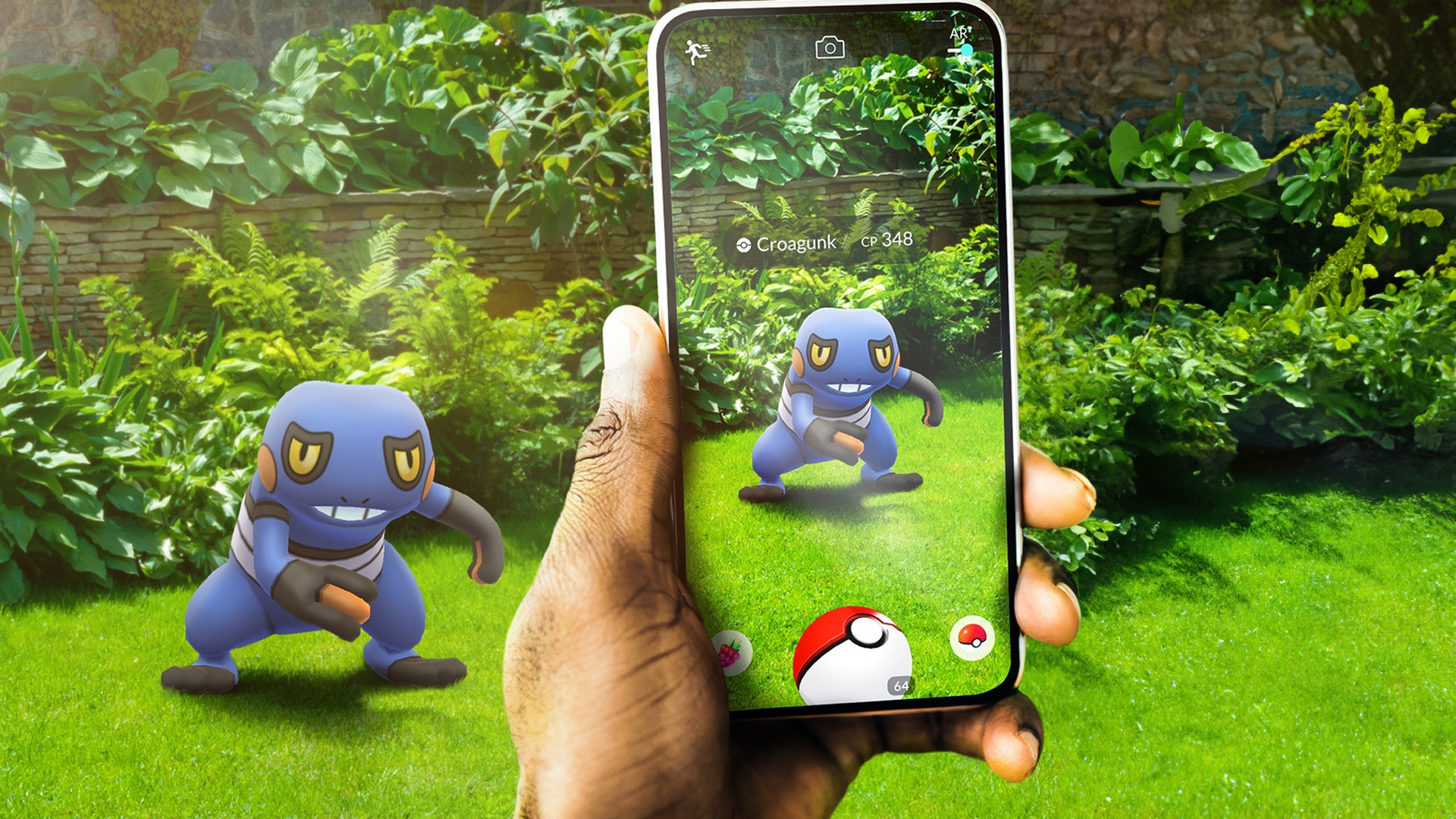
In 2016, millions of people around the world walked around with their smartphones in hand, intent on catching curious virtual creatures in Pokémon GO.
The original application developed by Niantic has driven users to explore and, as gameplay mechanics evolved, to actively film parks, squares, commercial activities and even their own private spaces.
Today, however, it emerges that that immense archive of images has a use far removed from mere entertainment.
According to an in-depth investigation by the Dutch newspaper Trouw, the environmental scans performed daily by players to obtain free rewards have become part of a joint technological project between Niantic Spatial and Vantor, a company active in the fields of defense and intelligence.
It is estimated that from 2021, the year of the introduction of this specific mapping feature, through 2025 nearly 30 billion detections have been collected in every corner of the planet.
Pokémon GO data used to train military AI

When in 2025 Niantic Labs sold the application and other titles to Scopely for a sum of 3.5 billion dollars, the transaction excluded the division originally dedicated to augmented reality, which later became an independent company named Niantic Spatial.
This very entity formalized the agreement with Vantor to train advanced AI models based on cameras. Through the enormous amount of visual data captured by users, a highly detailed three-dimensional map has been generated.
This complex data structure enables a machine to determine its exact position in the world solely through visual analysis of the surrounding space. It is an integrated positioning system designed to provide a navigation reserve crucial to drones used in military operations should the conventional satellite signal be disrupted.
Consent, privacy and denials
This convergence between a gaming application and military technologies raises urgent questions about the public’s real awareness.
The vast majority of users accepted the terms of service hastily, convinced of participating only in an interactive game. The reportage by Trouw cites the testimony of a Dutch citizen enrolled since 2016, who admitted mapping the interior of their own apartment with the phone’s camera, completely unaware of how those recordings could end up in databases of this kind.
In light of the news, Vantor denied the direct use of the app’s specific data for training the final model installed on the drones. Many industry analysts, however, remain sceptical, arguing that the milestones achieved by the visual positioning system would hardly have been possible without the help of a global network of amateur cameras.
Beyond the company’s reassurances, there remains, in any case, a legal consideration: through various updates to the terms of use, players have voluntarily provided the necessary permissions to ensure that the company records and permanently stores the spatial data generated by their devices.