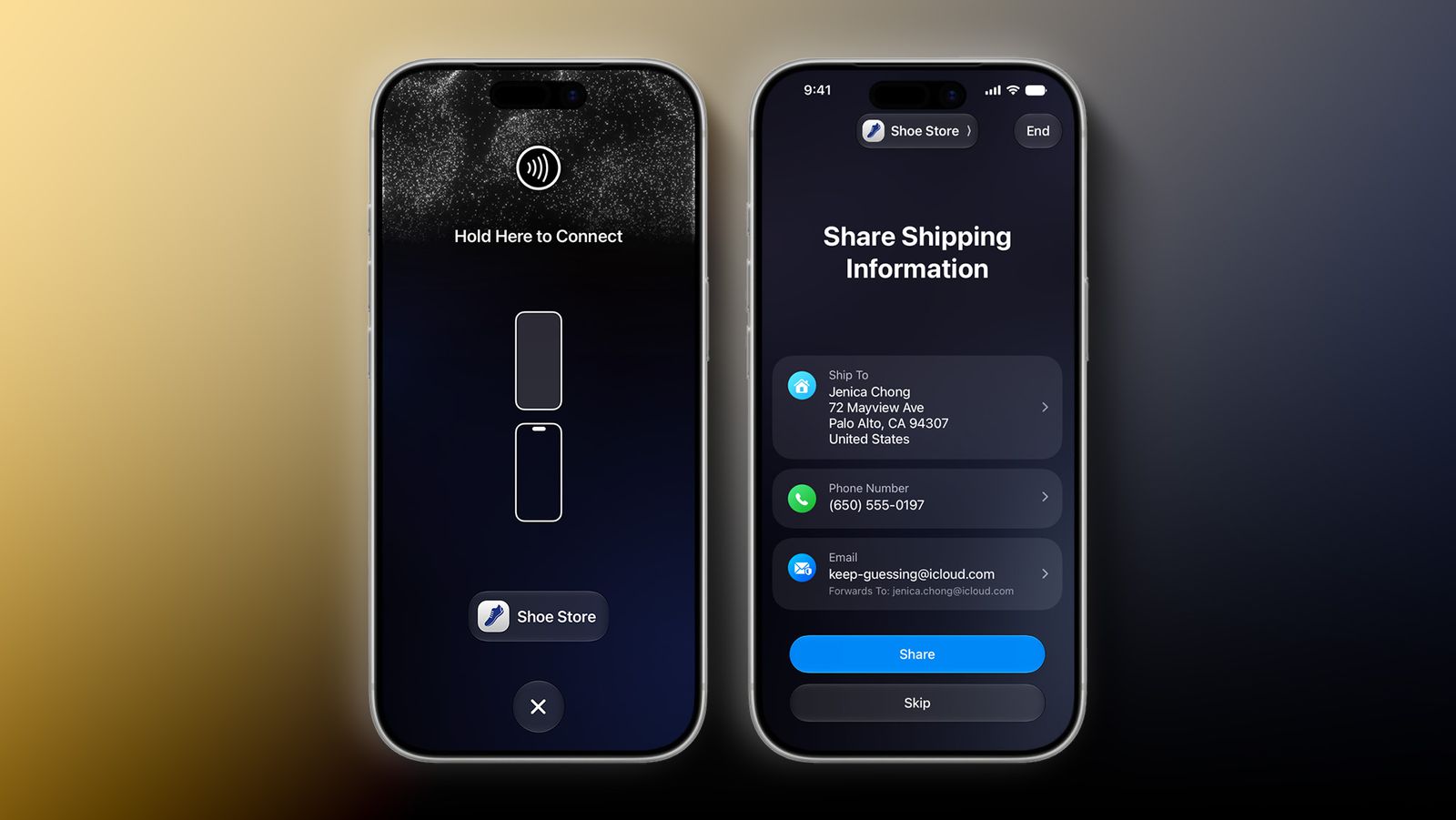
The debut of the first iOS 27 beta brings with it a series of features designed to simplify daily interactions, but European users will have to deal with yet another geographic limitation.
Apple has indeed unveiled the feature “Tap to Share“, a tool designed to facilitate data exchange via NFC technology.
However, the European Economic Area (EEA), which includes all the countries of the European Union together with Iceland, Liechtenstein and Norway, has remained excluded from the initial rollout of this technology.
Unlike what recently happened with other features blocked in the old continent, this time artificial intelligence is not at the center of the debate.
“Tap to Share” on iOS 27, Europe is excluded again

The new option represents a direct extension of “Tap to Pay“, the tool that allows merchants to accept contactless payments directly on their iPhone, eliminating the need to own a physical POS terminal.
With “Tap to Share“, the Cupertino company expands this interaction turning it into a bidirectional communication channel.
During an active payment session, small business owners, vendors in local markets, or artisans can connect to the customer’s device with a simple tap.
This system allows instantly transferring the contact details for enrollment in loyalty programs, sharing shipping addresses or email addresses for sending the digital receipts, viewing the cart contents and even adding or sharing passes directly within the Apple Wallet app, finally completing the transaction securely.
From a hardware standpoint, the feature requires the use of an iPhone 12 or newer model to operate correctly, leveraging the proximity chips built into Apple devices.
Despite the clear practical benefits for commerce, the multinational has not made “Tap to Share” available in European markets and has chosen not to provide official explanations about the reasons for this partial exclusion.
Company executives have not released details or precise timelines on when European merchants will actually be able to benefit from this update, leaving industry stakeholders and users awaiting further clarification.