


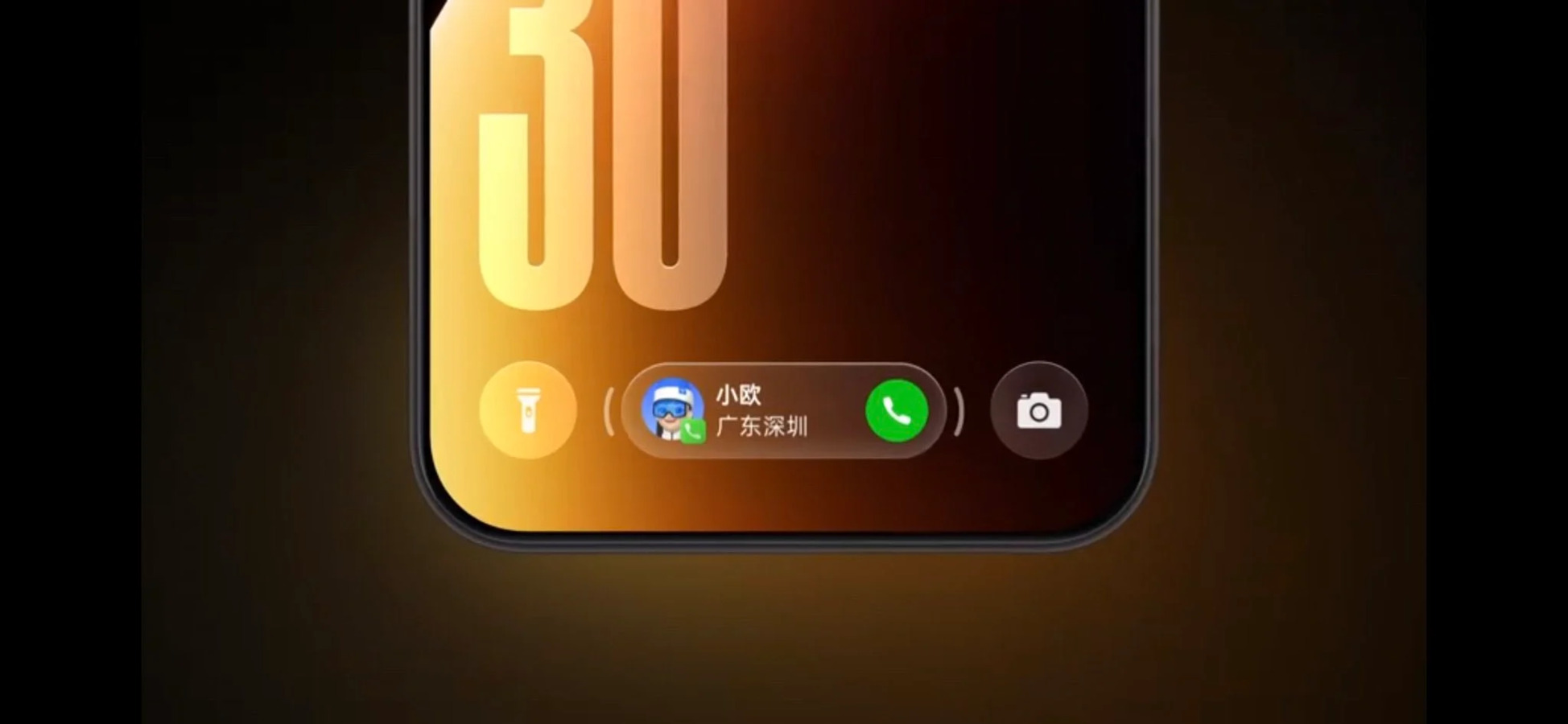
Rumors about OPPO’s upcoming software update suggest a notable aesthetic change. If version 16 had already introduced transparent and luminous elements, the upcoming ColorOS 17 will further elevate the design’s quality.
According to the well-known leaker Digital Chat Station on the platform Weibo, the user interface will significantly approach the style introduced by Apple with the Liquid Glass of iOS 26
This evolution marks an important step for the Asian company, which seems to want to refine its graphical presentation ahead of the release based on the future Android 17.
ColorOS 17 Will Focus More on Transparencies and Light Effects

The new design language, however, will not be an exact copy of the Californian one. Sources indicate that OPPO will adopt an approach definable as “liquid acrylic” rather than a true glass effect.
This choice results in less pronounced light refraction on UI elements. The decision brings tangible benefits for the end user, foremost reduced energy consumption to the battery and significantly improved text readability.
On the other hand, the overall visual impact will be slightly more subdued than Apple’s counterpart, while preserving a clear and recognizable underlying inspiration.
Alongside these light effects, ColorOS 17’s graphical architecture will incorporate real-time lighting, a particularly refined feature. These dynamic effects will be visible mainly in the notification popup windows, during music playback, and within the Live Alert, the system feature that handles Dynamic Island-style notifications.
Accompanying these light plays will be a renewed geometry, characterized by rounded corners and harmonious distribution evenly across all menus and on-screen overlays.
It is a direct evolution of the “Luminous Design” framework used in ColorOS 16, which aimed to fuse satin glass and illumination in system applications, as well as in the quick-access dropdown.
A Shared Strategy in the Mobile Market
The move toward Cupertino’s style isn’t an isolated initiative in the smartphone sector. Other Asian manufacturers, such as Vivo with its OriginOS 6 and Xiaomi with the interface HyperOS 3, have recently integrated transparent elements and animations visually close to those of the iPhone in their respective operating systems.
This stylistic direction clearly aims to make users accustomed to the Apple system feel comfortable when moving to the Android world.
Beyond the purely graphical aspect, OPPO will continue to perfect the system’s fluidity and AI-related features, elements that have already proven to be strengths on the latest software versions on the Find X9 Ultra and Find X9s models. In the coming months, with the official release approaching of Android 17 from Google, the company should begin officially revealing the first concrete details of this long-awaited interface.