


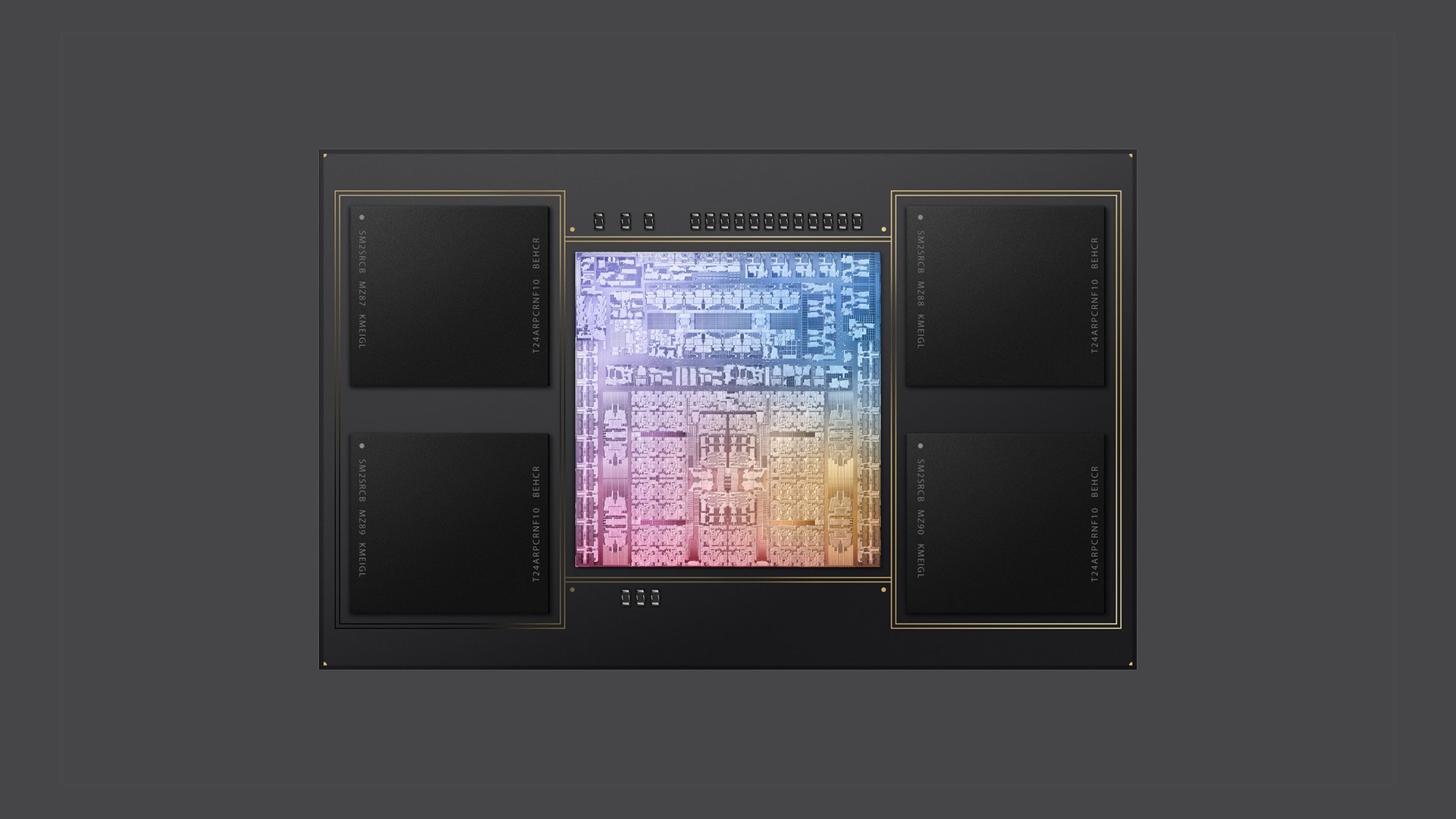
Rumors about the next processors developed by Apple suggest an unexpected acceleration in the company’s roadmap.
According to Mark Gurman of Bloomberg, the transition to the M7 generation could occur as early as the first half of next year.
This timeline raises questions about the commercial longevity of the Apple M6 chip. The latter, expected on board the future 14-inch MacBook Pros, risks remaining on the market as a flagship model for an extremely short period, estimated at only six months or even less, before being replaced.
Apple M7 to Hit the Market by Mid-2027

AI inference performance depends crucially on the bandwidth and the amount of unified memory. Up to now, base versions of Apple Silicon processors have not received a high priority in this specific area, forcing many professionals to opt for higher-end machines, such as the MacBook Pro with M5 Max boasting as much as 128 GB of memory.
With the arrival of the M7, the situation will undergo a notable improvement. The data indicate that the new base processor will offer a unified memory bandwidth of 240 GB/s. This is a substantial increase over the current M5’s 153 GB/s, which is moreover limited to a maximum of 24 GB of RAM.
Although there remains a certain gap compared to the 307 GB/s reached by the M5 Pro, the leap forward compared to previous standard versions will be immediately perceptible in the execution of complex calculations locally.
TSMC’s 2-nanometer Process
The real generational leap will be guaranteed by the new manufacturing processes. The M7 will likely be built using 2 nm nodes from TSMC, a detail that will allow Apple to reach significantly higher clock speeds. This will translate into higher performance in both single-core and multi-core.
While exact details on the number of cores dedicated to performance and power efficiency of the M7 have not yet leaked, it is known that the upcoming M6 should debut with a maximum graphics configuration of 12 cores. The true gap between the two generations will be measured by the capabilities of the neural engines.
In the face of such rapid evolutionary pace, users might find themselves carefully considering the best time for a hardware upgrade.
Those seeking uncompromising performance will have direct options available next year. It seems Apple intends to discontinue production of the M6 Pro and M6 Max variants, moving directly to the M7 Pro and M7 Max.