


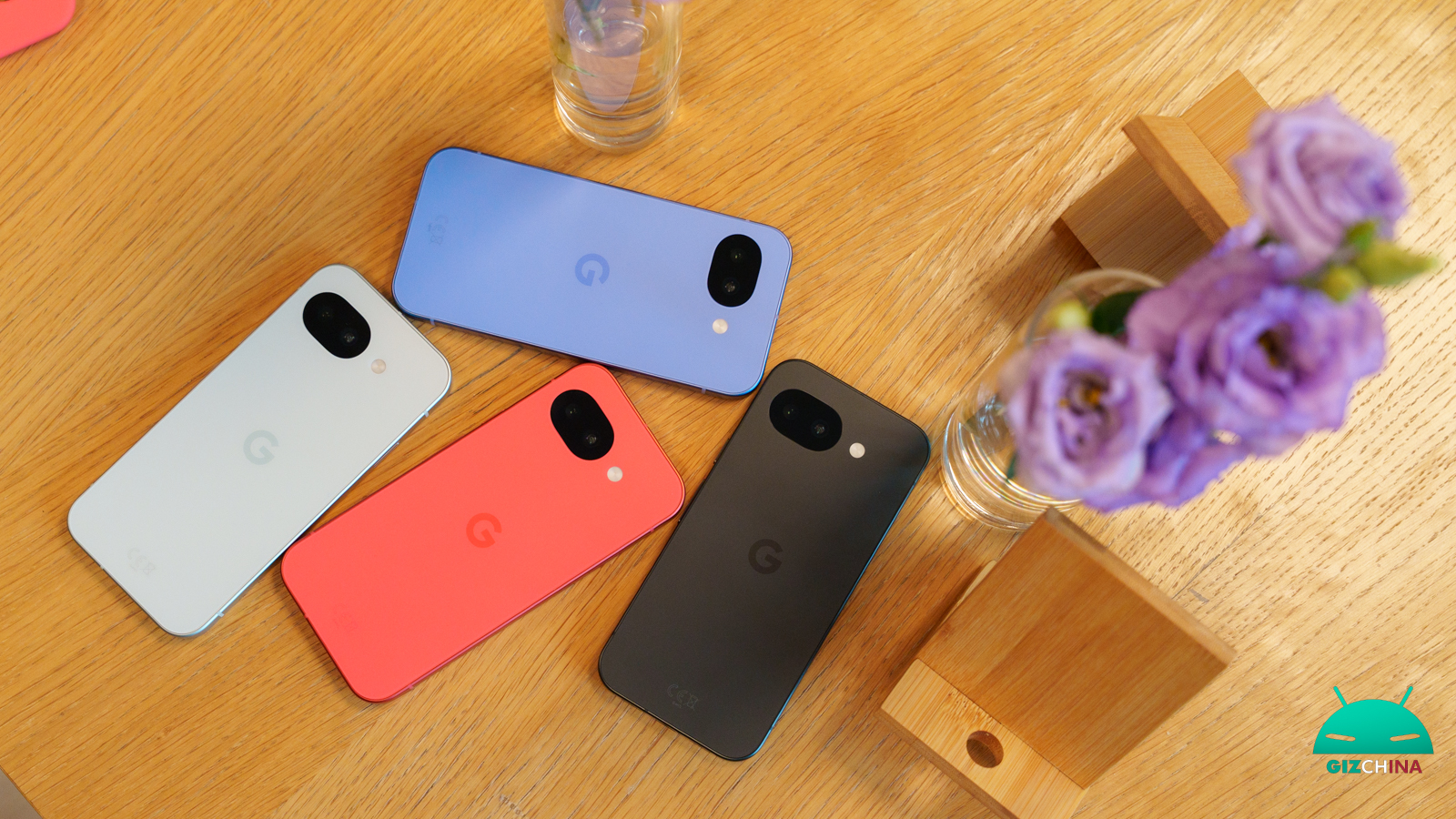
Every four years, on average, consumers replace their own smartphones. The old devices often end up forgotten in a drawer, reintroduced into the used market, or sent to disposal centers.
However, traditional recycling, does not always represent the optimal option from an environmental standpoint, especially considering that the motherboard alone accounts for about half of the carbon emissions associated with the product’s entire lifecycle.
To counter this waste of resources, researchers at the University of California, San Diego (UCSD), in close collaboration with Google, have developed an initiative aimed at transforming smartphones withdrawn from the market into a low-cost, low-environmental-impact computing platform.
The original idea comes from Jennifer Switzer, a former UCSD PhD student and currently a researcher at the Mountain View-based company, who foresaw and tested the still untapped computing potential of these devices.
2,000 Pixel become a server, the idea for recovering old smartphones

The plan envisions using 2,000 Pixel Fold provided directly by Google. To make the smartphones suitable for the data center environment, engineers had to tackle significant challenges.
Preliminary tests conducted on intact devices revealed immediate safety risks to the infrastructure: lithium-ion batteries, in fact, pose a serious fire hazard in case of continued overheating. Consequently, a specialized third-party company was engaged to safely extract the motherboards from the enclosures.
The integrated Google Tensor G2 processors include 2 Cortex-X1 cores at 2.85 GHz, 2 Cortex-A78 cores at 2.35 GHz and 4 Cortex-A55 cores at 1.80 GHz, paired with a Mali-G710 MP7 GPU and 12 GB of RAM.
According to measurements taken with the SPEC benchmark suite, aggregating between 25 and 50 of these components yields performance that is entirely comparable to that of a conventional server.

To ensure stable, secure, and scalable connections, the team is designing dedicated printed circuit boards capable of handling power and providing network connectivity through a traditional Ethernet cable, excluding cellular networks and Wi‑Fi.
Software adaptation and workload management
The architecture of a smartphone is not designed to operate continuously as a server node. Android integrates automated defenses programmed to close applications that saturate memory or drain too much energy. To bypass such obstacles, researchers are equipping the motherboards with a custom Linux system.
This is a technically complex operation that has already ensured support for integrated GPUs, while still facing difficulties in enabling access to NPUs.
Under the guidance of Professor Ryan Kastner, the team is tackling the complex distribution of calculations across multiple devices along two parallel tracks.
The first involves directing the system toward tasks capable of operating comfortably within the capacity of a single device. The second involves using the Kubernetes orchestration system to distribute software containers across groups composed of dozens of motherboards connected to one another.
Practical applications and availability
The infrastructure is perfectly suited for numerous education and university research workloads, such as remote assessment management.
Simulations confirm that an aggregate of only 20 smartphones can process simultaneously the requests of a class of over 75 students. Such systems are ideal for low-power workloads, where compute requests are fragmented and do not require prolonged peak power.
The cluster will also be used to study parallel computing methodologies, drawing on the Beowulf systems of the 1990s in which researchers built high-performance computers by connecting off-the-shelf components.
UCSD will make the resources available to groups at the San Diego Supercomputing Center. The final release of the system is expected this fall and, if performance confirms the preliminary data, the installation could expand to include an even larger number of recovered smartphones.