


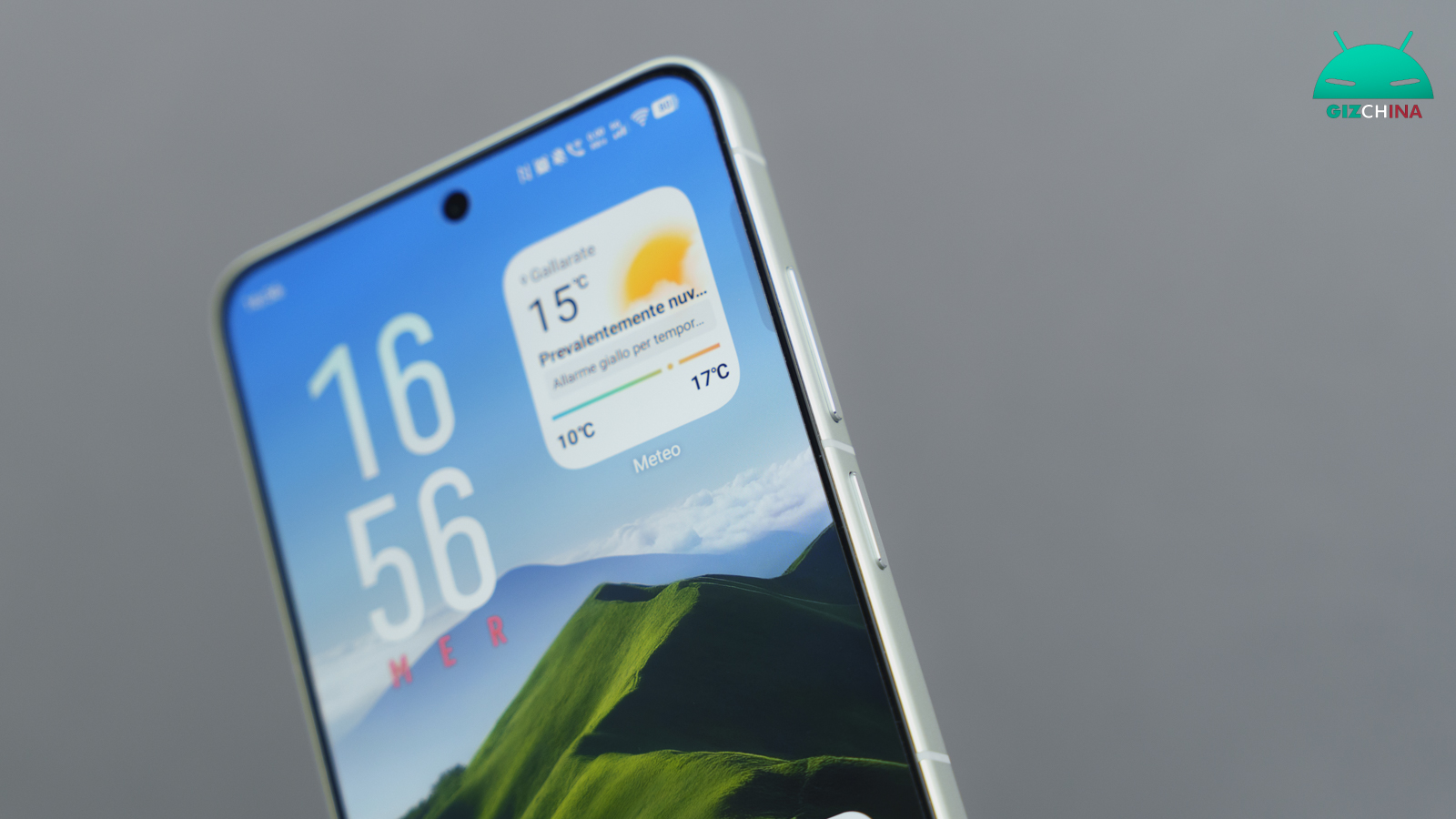
A recent leak shared by the leaker Ice Universe on the X platform has drawn attention to a new panel developed by the Chinese company Tianma.
It is a screen that pushes construction limits to an unprecedented level, reducing the thickness around the illuminated area to fractions of a millimeter.
We are talking about bezels measuring just 0.35 mm at panel level, reaching 0.60 mm when considering the entire embedded module.
The bezels around the display drop below a single millimeter

To put a comparison, the iPhone 17 Pro and Pro Max, for example, feature bezels of around 1.44 mm. The AMOLED display made by Tianma boasts a diagonal of 6.32″ and guarantees an impressive screen-to-body ratio of 98.5%.
These construction characteristics are complemented by notable visual fluidity, guaranteed by a 240 Hz refresh rate. A value exactly double the 120 Hz used today on many smartphones.
The question now remains which manufacturer will have the opportunity to use this exclusive component first. The leaks strongly point toward OPPO.
This probability stems from a longstanding strategic agreement and the opening of a joint research laboratory inaugurated last September. Moreover, the collaboration between the two tech entities has already brought to market the OPPO Find X9 series, which holds the lead for integrating the Tiangong screen signed by the same manufacturer of this new engineering breakthrough.
The bezel war of 2017
The gradual disappearance of inactive surfaces inevitably takes us back in time. At the dawn of the touch era, the black space around the glass posed no aesthetic obstacle: Apple’s very first smartphone featured side margins of over 4 mm and large top and bottom bezels near 20 mm, offering a screen-to-body ratio of 52.35%.
Market expectations changed markedly in 2017, the year when a real competition on design erupted. Devices like the Essential Phone, Andy Rubin’s creation, raised the standards by reaching 85% of usable area.
Immediately behind were the Samsung Galaxy S8 and Galaxy Note 8. Parallelly, Apple redesigned its lineup by introducing iPhone X, removing the fingerprint sensor in favor of facial recognition and offering a coverage of 82%, a notable leap compared to the sub-70% percentages of the contemporaneous iPhone 8 and 8 Plus.
Towards the future of design
The current sizes continue to shrink gradually, bringing manufacturers closer to the dream of a device perceived as a single transparent block. Rumors about the upcoming iPhone XX (or iPhone 20), planned to celebrate the brand’s 20th anniversary, speak of a project based on a glass curved on all four sides, completely free of holes or aesthetic interruptions.
To realize such a result, biometric and photographic sensors will have to be placed entirely beneath the illuminated pixels.
Meanwhile, in this 2026, the lead will go to the device that can harness and optimize Tianma’s technology. However, a practical question remains as to how much such a specific element affects real buyer preferences, and whether the near-total absence of bezels around the display can truly push a user to prefer one model over another with slightly more pronounced bezels.