


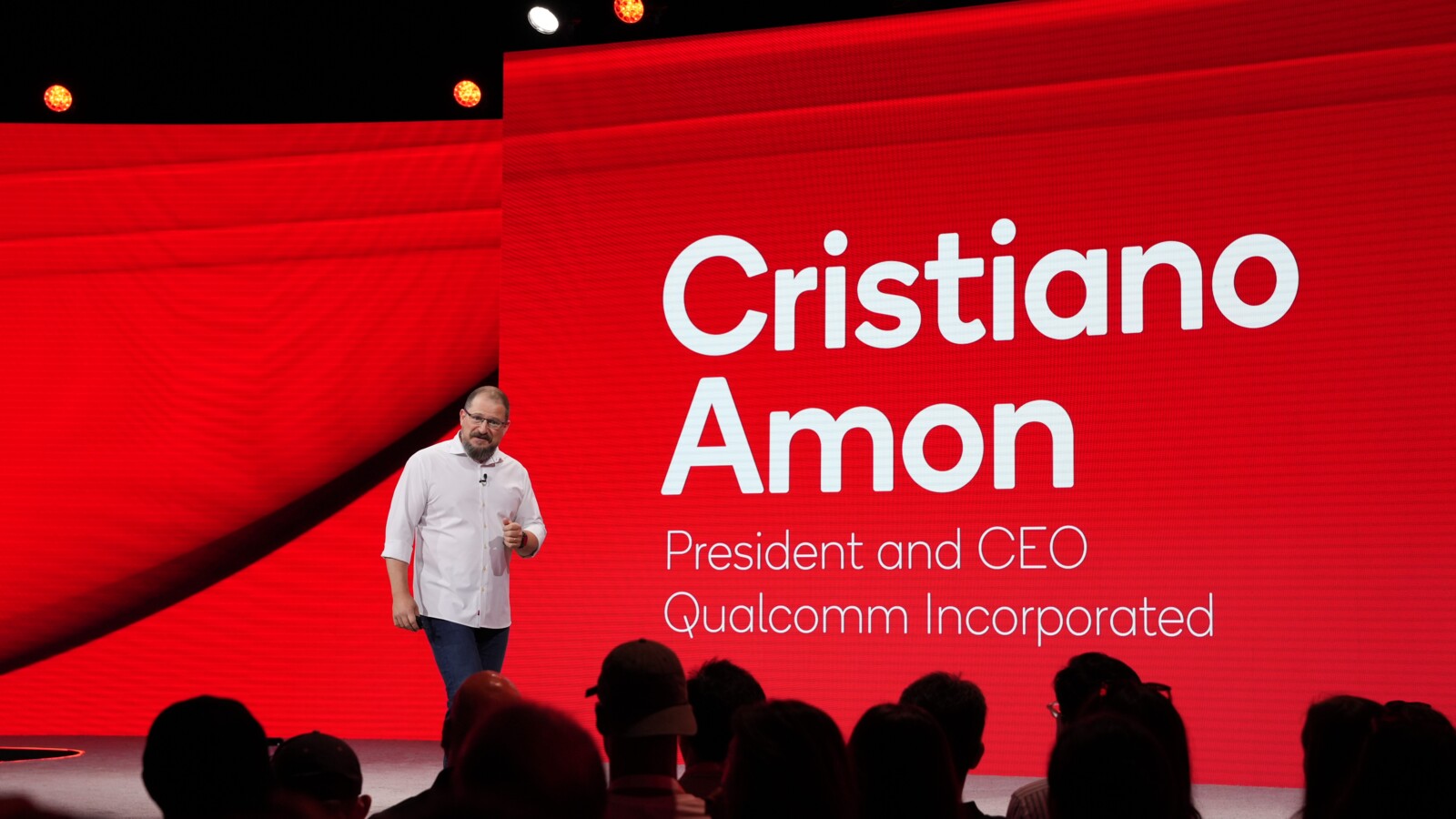
In the latest fiscal year, Qualcomm’s leadership made a clear decision about the value of their CEO: Cristiano Amon is worth almost $30 million a year.
Despite an apparently contradictory economic context, characterized by a collapse in the company’s net profits, the board approved a compensation package for the CEO that reached $29.7 million for fiscal year 2025.
This figure is a significant increase compared with the $25.91 million earned the previous year, signaling unwavering confidence in the long-term strategy of the executive, even in the face of accounting turbulence that could have suggested greater prudence.
The Qualcomm CEO Cristiano Amon’s pay, in detail

To understand the logic behind this imposing figure, it is necessary to dissect Amon’s compensation structure, which perfectly reflects the pay model of modern Silicon Valley.
The base salary, i.e., the fixed guaranteed portion, remained at $1.35 million. This data confirms that the overall 15% increase was not tied to the monthly pay, but was driven almost exclusively by stock performance and incentives.
The lion’s share in Amon’s portfolio consists of the stock awards, which alone amount to a substantial $24.16 million. In addition, there are non-equity incentives for $3.19 million and a range of other varying compensations that barely exceed a million dollars.
It almost seems that the CEO’s wealth must move in lockstep with the company’s stock-market valuation, binding the manager’s fate to that of investors rather than to ordinary management.
It’s no accident that the rest of the leadership has enjoyed similar packages: the CFO Akash Palkhiwala and other senior executives such as Alexander Rogers have cashed multimillion-dollar checks, painting the picture of a leadership group compensated as a bloc.
Sales growth despite profits being down
The real issue lies in the discrepancy between revenues and net profits. Under Amon’s leadership, Qualcomm generated an annual revenue of $44.3 billion, marking a healthy 14% growth. However, the net income fell by 45%, stopping at $5.5 billion.
In a superficial analysis, rewarding a CEO while profits shrink might seem a bold move. The reality is more nuanced: the profit decline is largely due to a heavy non-cash tax burden, stemming from changes in U.S. tax legislation.
In effect, the business has worked: revenues have risen, but an extraordinary accounting item knocked down the bottom line. The board chose to reward revenue growth and strategic direction, ignoring the impact of a tax that does not reflect the company’s industrial health.
The bets won: from automotive to Samsung
To further justify the salary increase are the operating results Amon has delivered, showing that the diversification strategy is starting to pay real dividends.
The fourth quarter saw revenues of $11.27 billion, driven by an automotive sector in top form. Auto chip sales reached a record of $1.1 billion in a single quarter, turning Qualcomm into a crucial partner for the connected-car industry.
Moreover, Amon reassured analysts about the strength of the core business. He emphasized the partnership with Samsung, announcing that Qualcomm will provide around 75% of the processors for the future Galaxy S26.
This move is vital, especially given the ambitions of the Korean giant to develop proprietary chips; keeping such a high share in Samsung’s flagship supply is a political and commercial victory bearing the CEO’s signature.
A look at the future and the pay gap
Looking beyond the current results, Amon is positioning the company for the next wave of technology in data centers, focusing on inference for artificial intelligence rather than mere training.
Although material revenues from this sector are not expected before 2027, the vision has been enough to maintain investors’ optimism.
In this scenario of large financial and strategic moves, the comparison with the workforce appears almost as a footnote in official documents, while remaining an impressive statistical figure.
With an average employee earning around $101,000 per year, the pay ratio stands at 292 to 1.
However, in the eyes of shareholders preparing for the advisory say-on-pay vote, this gap matters far less than Amon’s ability to navigate unforeseen tax burdens and new market challenges, ensuring Qualcomm’s stock remains an asset to bet on.