


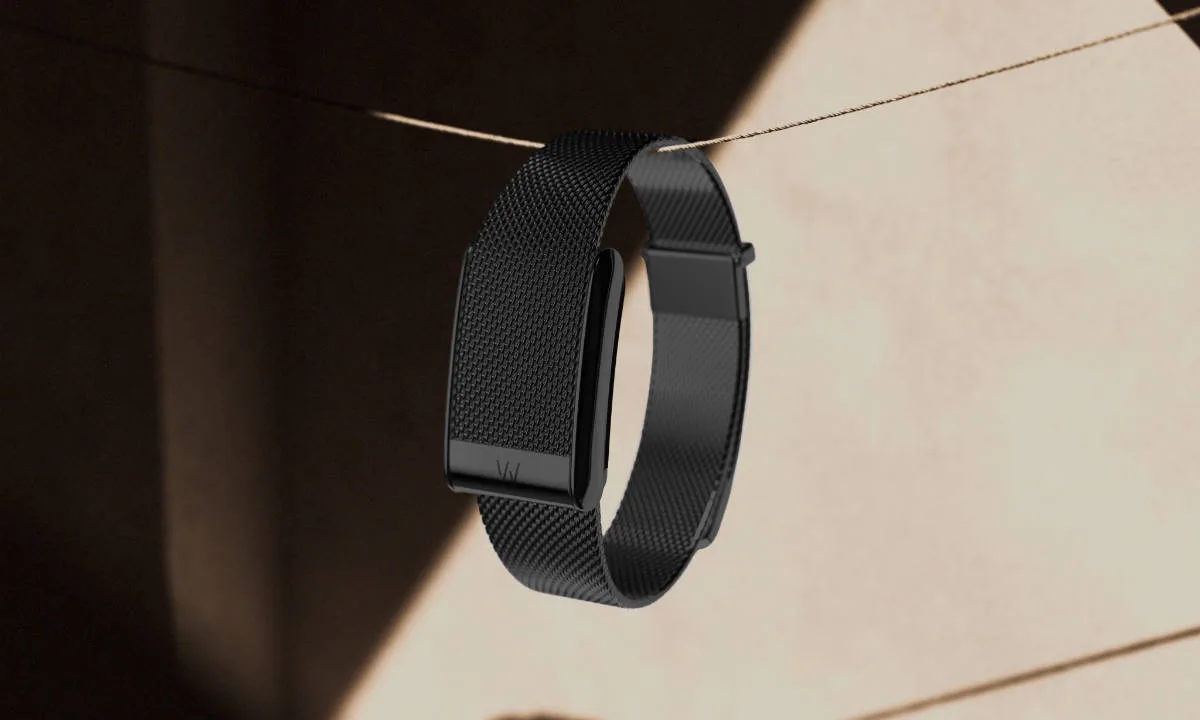
Apple is exploring new avenues in the health and physical activity monitoring sector. According to the latest rumors spread by Bloomberg, the Cupertino company has started development of a screenless wearable, designed specifically to compete with the well-known fitness bracelets produced by WHOOP.
Internal tests have been carried out in great secrecy for several months and focus on a deliberately minimalist design. The prototypes currently undergoing testing consist of a comfortable fabric strap connected to a compact computing module, which sits in direct contact with the user’s wrist.
The lack of a display is a deliberate choice to reduce distractions and to focus the entire experience on the constant, silent collection of biometric data.
Just as with the traditional Apple Watch models, the new accessory integrates a range of advanced sensors capable of monitoring heart rate and a variety of other vital metrics, operating continuously for the entire 24-hour period without any interruption.
The push toward this type of essential products comes directly from the higher-ups in California. Both former CEO Tim Cook and the head of Services Eddy Cue are closely monitoring the evolution of the work. Cue’s involvement is particularly noteworthy in light of his recent appointment to lead the company’s teams dedicated to developing medical and sports features.
It is him who promotes the creation of wearables with simplified user interfaces, looking closely at successful screenless models like WHOOP bracelets, the Fitbit Air and the Oura Ring.
The aim is to offer a discreet and comfortable wearable in any context, without the usual complexities of a full smartwatch.
Software integration and release
The software side is already adapting accordingly. The latest versions of Apple Watch have begun integrating features very similar to those offered by the competition, introducing new overall physical readiness scores and specific calculations of users’ biological age.
Meanwhile, the company is testing a renewed version of the Health application, currently in testing within iOS 27.2. This updated variant features a much more intuitive interface and provides clear and direct guidance, facilitating the reading of daily reports.
Despite rapid technical progress, the path to commercialization of the bracelet still takes time: should the executives decide to approve mass production, the market launch would occur only starting from 2028.
Before that date, consumers will witness the debut of other highly anticipated technologies, including new smart glasses powered by AI and new generations of AirPods equipped with integrated cameras.