


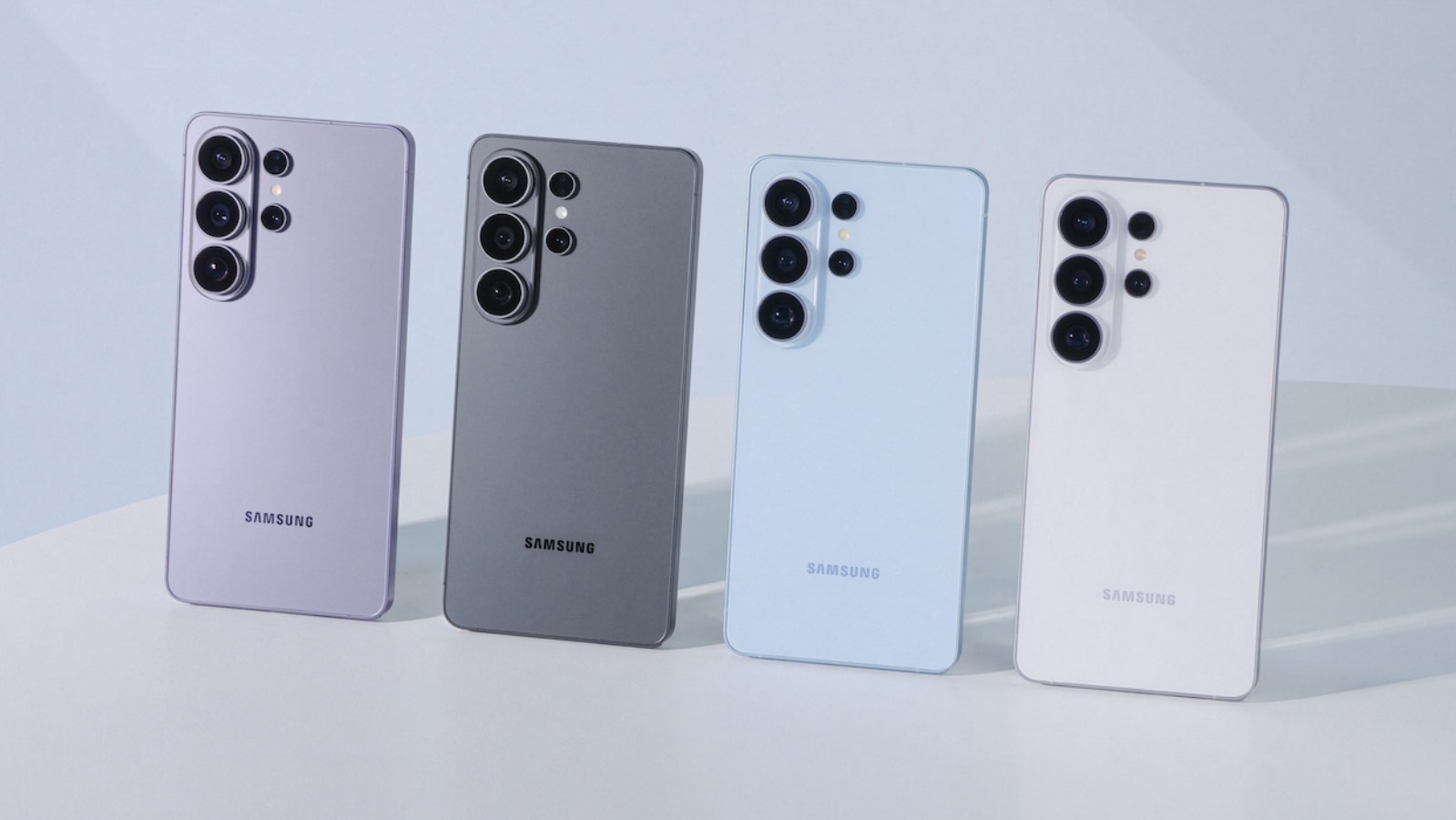
The month of July will mark the debut of Samsung’s new foldables (the company has already started teasing fans with the first teasers with the first teasers) but in the meantime rumors look far ahead. There is already talk of future flagships in the regular series, and the latest news could please users waiting for a change in the battery of the top model.
For years Ultra variants have been limited to 5,000 mAh but now things should change with the future Samsung Galaxy S27 Ultra, the first in the lineup to surpass this barrier with a significant increase.
Samsung Galaxy S27 Ultra would be in testing phase with batteries higher than 5,500 mAh: here's how it could change

According to what has recently emerged, Samsung is reportedly working on a larger battery for the Galaxy S27 Ultra. Specifically, the tests would involve a 5,600 mAh unit and a higher one, up to 5,800 mAh. Certainly a significant step forward compared to the current capacity and the initial rumors, which pointed to a 5,200 mAh unit.
However, it should be noted that the new batteries would still use lithium-ion technology: no silicon-carbon, therefore, and consequently it remains to be seen what the impact on the flagship’s thickness will be.
In our in-depth look dedicated to the new SiC batteries, we explain all the details of this novelty widely used by Chinese manufacturers and the reason for the hesitation from giants such as Samsung and Apple.
However, using lithium-ion batteries could have a positive impact: not using new materials and technologies could help contain costs, in order to avoid further price increases (beyond those “expected” by the memory crisis).
For now, it’s all about testing, so there’s still no certainty that the Samsung Galaxy S27 Ultra will have a battery above 5,500 mAh. Let’s keep our fingers crossed, because even without SiC it would be an important step forward for the flagship.
Cosa aspettarsi dalla serie Galaxy S27
There are still several months until the Galaxy S27 family debuts, but rumors are plentiful, including official certifications, indirect confirmations, patents, and new components.
The most important update probably concerns the lineup composition. Everything suggests that Samsung is ready to definitively abandon the Plus model to introduce the new Galaxy S27 Pro, a designation that would not only represent a change of name, but also a different positioning within the family.
In fact, rumors point to a smartphone very close to the Ultra, especially in terms of the display. The goal would be to reduce the gap between the two premium models, offering users a complete device without necessarily having to opt for the Ultra variant.
Among the most interesting innovations, Privacy Display stands out, a technology already seen with the S26 Ultra that allows limiting the viewing angle of the panel so as to prevent people on the sides from reading the content of the screen.
Initially the feature seemed destined exclusively for the Galaxy S27 Pro, but the most recent rumors describe a different scenario. Samsung would indeed be considering extending the Privacy Display to the entire Galaxy S27 lineup, including the base model, turning it into one of the main novelties of the entire series.
Even the hardware sector could make a significant generational leap thanks to the arrival of the new UFS 5.0 memories, which promise significantly higher speeds than the current generation, lower power consumption and a better management of workloads related to artificial intelligence running directly on the device.
Parallel development of the new Exynos 2700 processor also continues, likely to accompany at least part of the Galaxy S27 lineup. Rumors suggest a chip designed to improve both performance and energy efficiency, although at the moment it is not yet clear whether Samsung will continue differentiating markets by using Snapdragon in some regions and Exynos in others.
The most recent rumors finally concern the front-facing camera. According to the latest information, Galaxy S27 Pro and Galaxy S27 Ultra could adopt a new selfie sensor characterized by a particular 16 MP square-shaped structure. This solution would allow taking advantage of a larger surface area than traditional sensors, improving the handling of video calls, face tracking and the automatic cropping features during video recording.
Naturally it’s still early to talk about definitive specifications, and much of the information that has emerged could change in the coming months.