


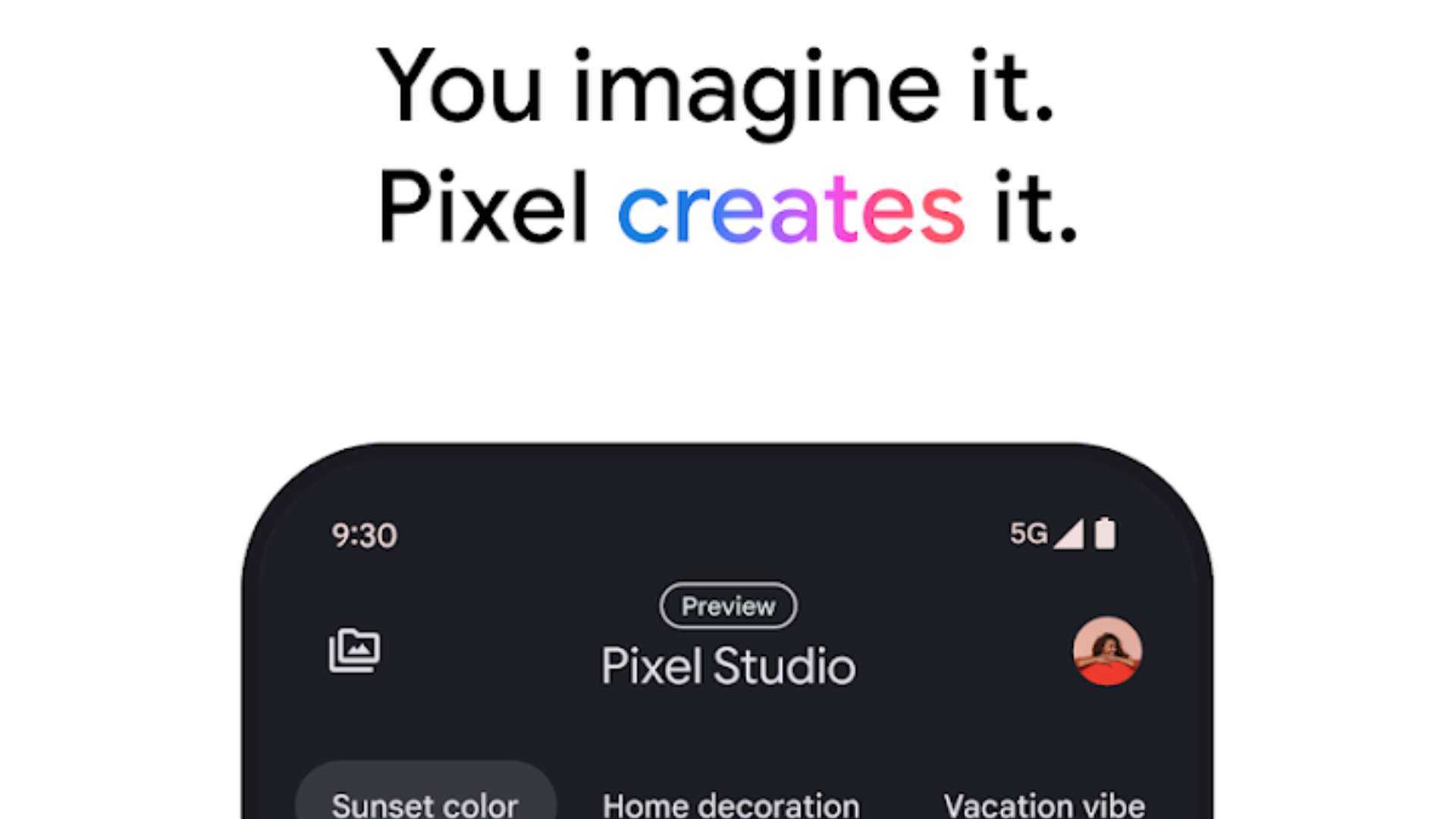
When Google introduced the Pixel 9 series during 2024, one of the most talked-about software features was represented by Pixel Studio.
This application, developed to showcase the capabilities of image generation based on artificial intelligence, was a dedicated exclusive.
Users could create digital art, backgrounds and stickers from scratch, in addition to having the possibility to modify existing photographs.
However, this specific feature has always remained off-limits to our market, and, in light of the latest developments, Italian consumers will never have the opportunity to try it.
The recent moves by the California company indeed confirm an almost definitive closure of the service, marking the end of a short-lived project.
Goodbye Pixel Studio, the exclusive app that never arrived here

The move toward the definitive shelving of the software became evident with the release of the update to version 2.3.001.911719150. Installing this package marks the effective shutdown of the AI-based generation features.
Opening the application after the update, users are faced with a single screen that explicitly suggests trying Nano Banana inside the Gemini app to continue creating images and animations.
A dedicated button, placed at the bottom of the screen, redirects directly to the new Google Home assistant; if this is not present on the device in use, the system will prompt to proceed promptly with the download.
The drive to unify creative efforts on the main Gemini ecosystem thus comes at the cost of a stand-alone program that had characterized last season’s offering.
What remains after removing the main features
Despite the impossibility of generating new visual content, the software will not stop functioning entirely. Those who previously used Pixel Studio will retain access to all stickers and saved images in the archive. Additionally, the interface dedicated to editing screenshots, equipped with the classic cropping and annotation tools, continues to be part of the package.
Nevertheless, these are now-standard options and easily replicable with any other photo gallery available. The explicit intention to discontinue the old generation tools has been further confirmed by a recent update to the Gboard keyboard, from which the dedicated sticker creation tab has been completely removed.
At the moment, the multinational has not yet clarified whether the application will be completely removed from smartphones through a future system update or if it will be kept to perform basic photo editing operations.
The update is currently being rolled out gradually through the Play Store, definitively closing the doors to an exclusivity that in Italy never saw the light of day.