


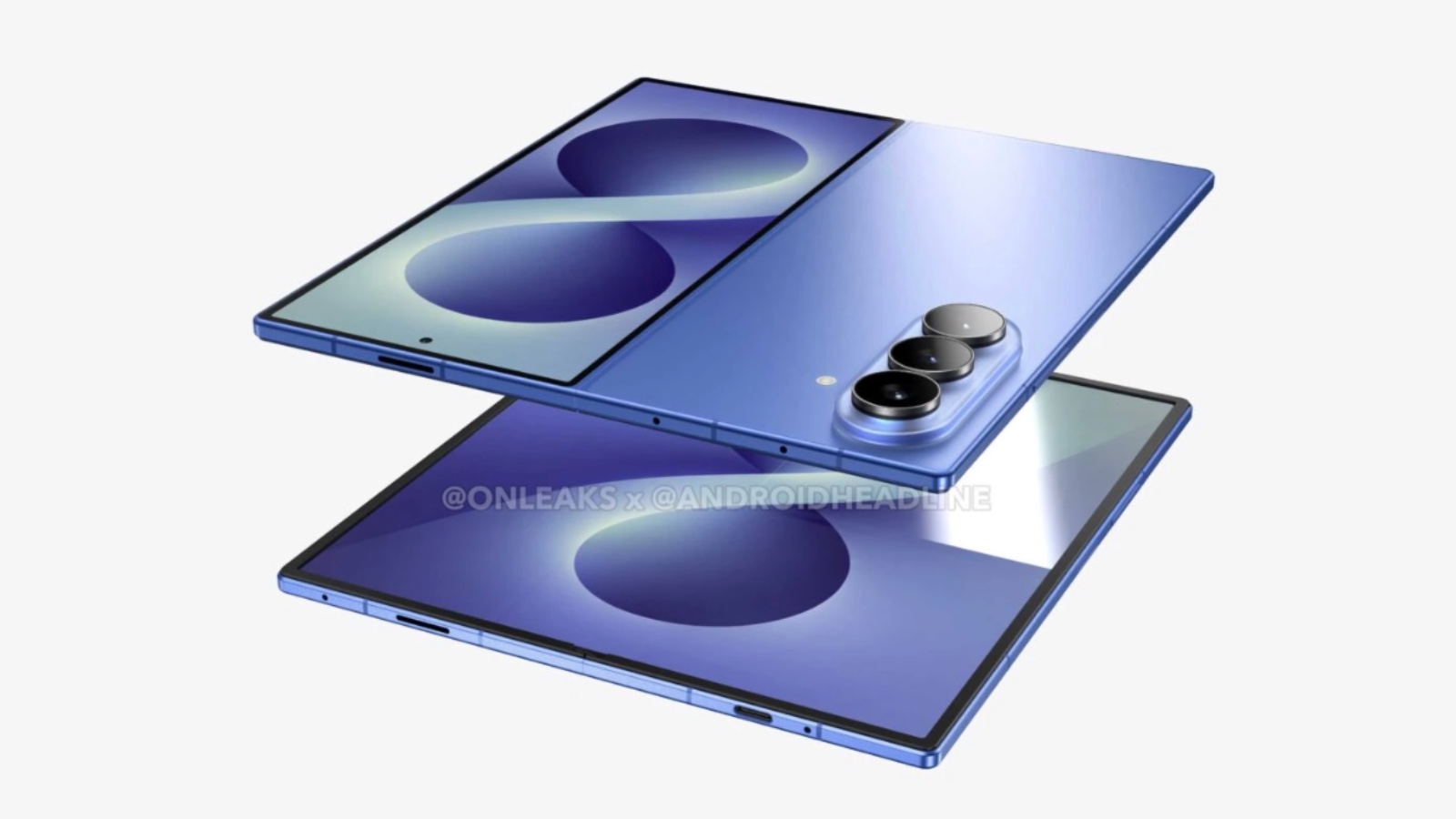
The official unveiling of the Samsung Galaxy Z Fold 8 is scheduled for July, and media attention is growing week by week.
So far, online rumors that have emerged have focused primarily on the design and on the technical specifications of the device, offering users a preview of its potential.
However, the real news in recent hours concerns the commercial aspect, a crucial element for the success of any high-end product.
Thanks to a recent leak, the probable list prices expected for the United States market have leaked, outlining a scenario decidedly favorable for future buyers.
Samsung Galaxy Z Fold 8, here are the leaked prices

The details were spread by user @TheGalox_ via X, providing very precise indications on what variants are expected to be available at launch.
According to reports, the South Korean company will maintain a strategy perfectly in line with the previous generation, offering three different memory cuts.
The starting version will offer 12 GB of RAM paired with 256 GB of storage, priced at $1,999.
Moving up a notch, users can opt for the model with 12 GB of RAM and 512 GB of internal storage at a price of $2,199.
Finally, for professionals and users who need the maximum space, an extreme configuration with as much as 16 GB of RAM and 1 TB of storage will be available, priced at $2,499.
The biggest reassurance lies precisely in maintaining the same exact figures requested for the variants of the current Galaxy Z Fold 7.
A move designed to boost sales volumes
This alleged Samsung decision takes on even more significance when considering the current economic moment of the tech sector.
On one hand, the Galaxy Z Fold 8 promises an improved design and higher-end specifications than its predecessor. On the other hand, memory production costs are rising globally.
Being able to offer an improved device while internally absorbing the rise in component costs, without passing them on to the end consumer, represents a smart business decision.
This decision could translate into a strong buying incentive, winning public support and significantly boosting international sales volumes.