


For years, sharing files between Android and iPhone devices has been hindered by a technological barrier that seemed insurmountable, forcing users to resort to cumbersome solutions to exchange photos and videos without sacrificing quality.
However, the landscape radically changed last November when Google surprised the market by announcing that the new Pixel 10 series would support direct file transfer to iPhones, emulating the fluidity of the AirDrop system.
Although this feature was initially presented as an exclusive of Google’s latest flagship series, new rumors suggest that Google is ready to extend this digital bridge to owners of the Pixel 9 series.
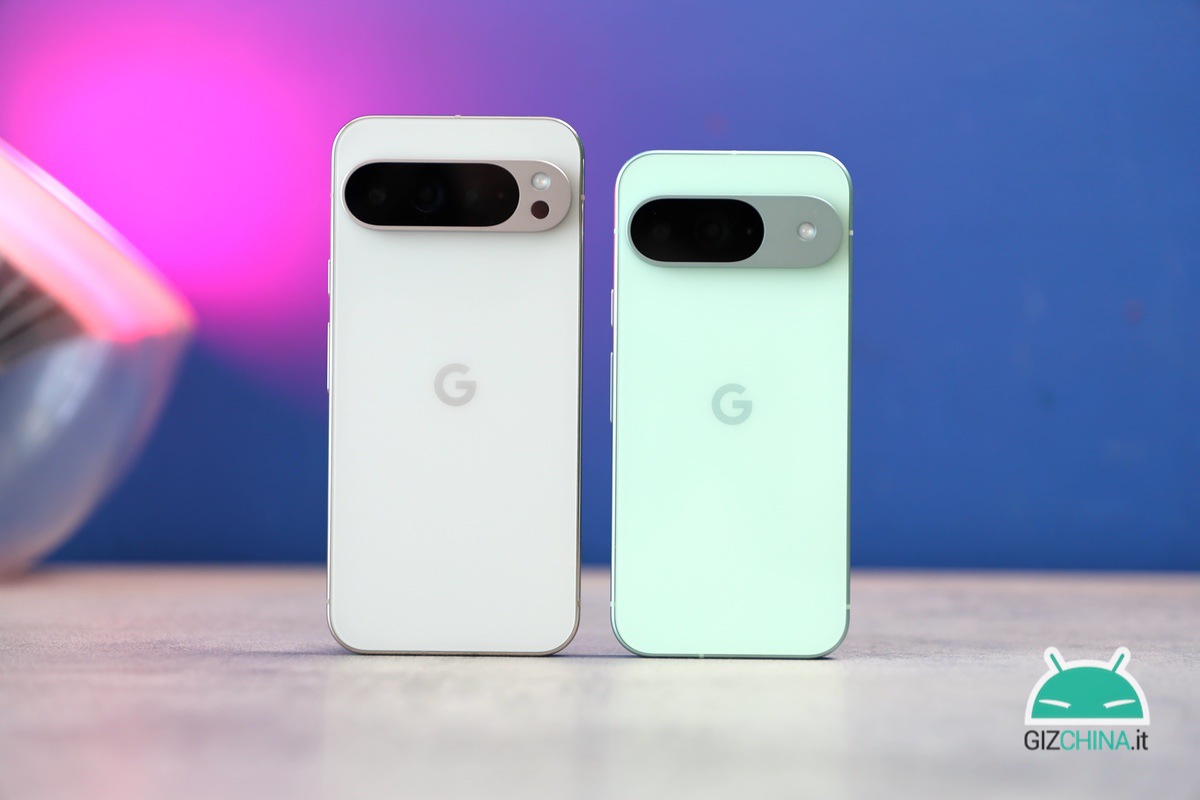
Google Pixel 9, AirDrop support coming to Quick Share

According to recent reports, Google is actively working to bring interoperability with Apple devices to the Pixel 9 family as well. The concrete proof of this intention lies in the analysis of the latest Android “Canary” build (identified with the code ZP11.251212.007), within which the system files necessary to enable cross-platform sharing have been identified.
The presence of these specific files in the firmware destined for the Pixel 9 series clearly indicates that Google intends to keep the promise of not leaving behind the previous models, offering to those who bought a flagship last year the same user experience as the new Pixel 10.
It is worth noting, however, an important distinction that emerged from the software analysis. The files necessary to activate the feature were not found in the firmware of the Pixel 9a, the most affordable model in the line, nor in older devices such as the Pixel 8 and Pixel 8 Pro.
At the moment, it seems that the expansion of the feature is aimed specifically at the premium models of last year’s generation, leaving an open question about the fate of mid-range or older less recent devices.
The role of the European Union and the end of proprietary protocols
Many users may wonder how the wall between Android and iOS was broken, considering that AirDrop has always been a hallmark of Apple’s closed ecosystem. The answer lies in a combination of technological evolution and regulatory pressure.
Until recently, Apple’s continuity features, including AirDrop, were based on a proprietary protocol known as Apple Wireless Direct Link (AWDL). Being a Cupertino-exclusive technology, no other manufacturer, Google included, could integrate it natively into their devices.
The turning point arrived in early 2025, thanks to a ruling by the European Union that forced Apple to adopt more open standards to promote interoperability. With the introduction of iOS 26 and iPadOS 26, Apple moved from the proprietary AWDL protocol to the Wi-Fi Aware standard.
This technical detail is fundamental: support for Wi-Fi Aware has been present in Android’s code since version 8.0. Consequently, most modern Android smartphones already have the hardware and basic software to communicate with this standard; the practical implementation was missing, which Google inaugurated with Pixel 10 and is now testing on Pixel 9.
Release timelines
Despite the excitement generated by the discovery of the system files, caution is mandatory regarding timings. Google has not yet released an official roadmap for the public release of this feature on older devices. The presence of the code in a Canary build suggests development is ongoing, but it does not guarantee an imminent arrival in the stable OS version.
The most credible theories among industry insiders suggest two possible launch windows: the feature could be introduced with the quarterly Android 16 QPR3 update, or Google could decide to reserve it as a major feature for the launch of Android 17.
It will also be interesting to watch the rollout strategy: the Mountain View giant could opt for a gradual release, initially limited to specific product lines, or surprise users with a cross-generational update that spans multiple Pixel generations at once.