


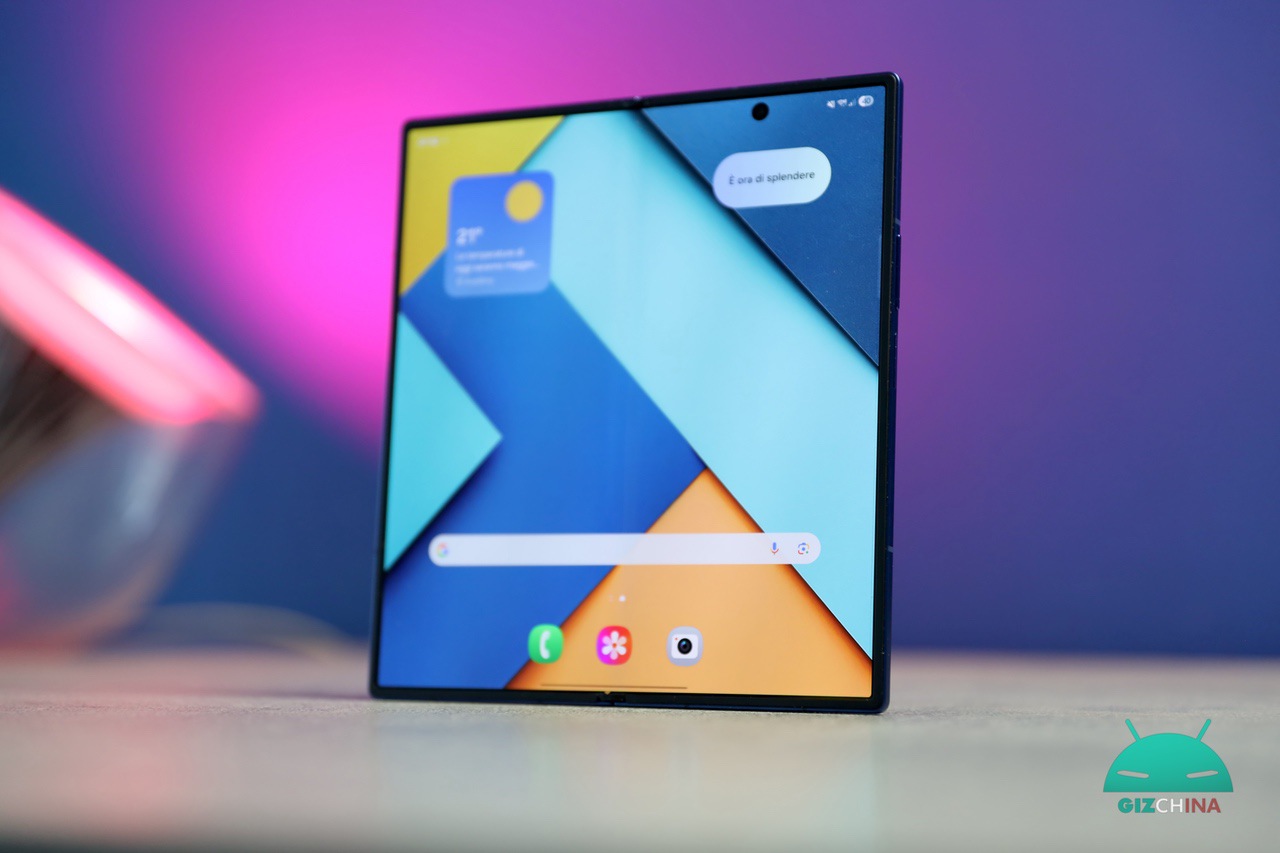
The foldable smartphones industry has reached a decisive turning point, clearly outlined during the CES 2026.
The event provided the perfect stage for one of the most anticipated innovations among users worldwide: the crease-free OLED panel that characterized previous generations.
Although initially it was hypothesized that this technology would be implemented in the same way on both the upcoming Galaxy Z Fold 8 and the first iPhone Fold, new reports indicate a substantial divergence between the two tech giants.
The paths of Samsung and Apple, while starting from the same display factory, diverge at the crucial moment of choosing the structural materials.
Samsung and Apple, two different philosophies for the same objective

According to reputable sources such as ZDNet Korea, the fundamental difference lies in how the two companies have decided to reinforce their panels.
If the base OLED layer will be the same for both devices, the supporting materials chosen to ensure rigidity and durability are radically different.
Traditionally, foldable panels relied on a polyethylene terephthalate (PET) film for structural support. However, Samsung MX, the Korean giant’s mobile division, opted to integrate a metal reinforcement plate for its Galaxy Z Fold 8.
Conversely, Apple appears to have taken a different direction for its debut in the sector, selecting glass as the supporting material for the panel of its first foldable iPhone. This distinction is not merely aesthetic but reflects different engineering approaches toward structural stability and long-term durability.
The complexity of these displays is remarkable: they consist of multiple layers, including a polyimide (PI) substrate, a back plate, the OLED element itself, touch sensors and the ultra-thin glass (UTG).
Yet the magic that enables removing the crease resides in a specific modification introduced by Samsung Display to the transparent optical adhesive (OCA). This new formulation reduces rigidity compared to previous generations, acting as a flexible cushion between the OLED layer and the UTG, thereby minimizing the visibility of creases.
The challenge won’t be limited to the display
Beyond display technology, the competition between the Galaxy Z Fold 8 and the first foldable iPhone will play out in the realm of hardware specifications and features.
Rumors suggest that Samsung will put everything into a hardware package that could include a main sensor of no less than 200 MP, accompanied by an ultra-wide 50 MP and a telephoto 10 MP.
Apple, faithful to its philosophy, could opt for a dual-camera configuration, likely focusing on software optimization and integration with the iOS ecosystem.
Both devices, however, seem to converge on a side-mounted fingerprint reader, a practical solution that avoids the complexities of under-display sensors.
The wait for these devices won’t be long, with a launch planned for both in the second half of this year. There are also rumors that Samsung is developing a variant of the Galaxy Z Fold 8 with a wider screen, a move likely designed to directly counter the Apple device’s form factor.
It will be fascinating to observe how the market will react to these two interpretations of the future of the smartphone: on one hand Samsung’s established hardware and fast charging, on the other the freshness Apple could bring to the UI design and app optimization.
With millions of iPhone users potentially ready to take the plunge into the foldable world, 2026 is shaping up to be the year when this product category will reach its definitive maturity.