Many people tend to think that Fujifilm’s commercial success primarily lies in the X-series cameras or in the GFX models, yet the reality of the numbers tells a different story.
The most profitable and widespread series is, in fact, Instax, capable of reaching impressive sales figures worldwide.
Instax mini Evo Cinema and mini Link+: everything you need to know

To consolidate this dominant position and continue expanding its user base in over 100 countries, the Japanese company has decided to inaugurate 2026 with two products that aim to revolutionize the concept of “instant memory”: the hybrid camera Instax mini Evo Cinema and the Instax mini Link+ printer.
These new releases show that the brand is not simply riding the vintage wave, but continually seeks to integrate digital technologies and modern connectivity into an analog ecosystem.
A tribute to history: Instax mini Evo Cinema
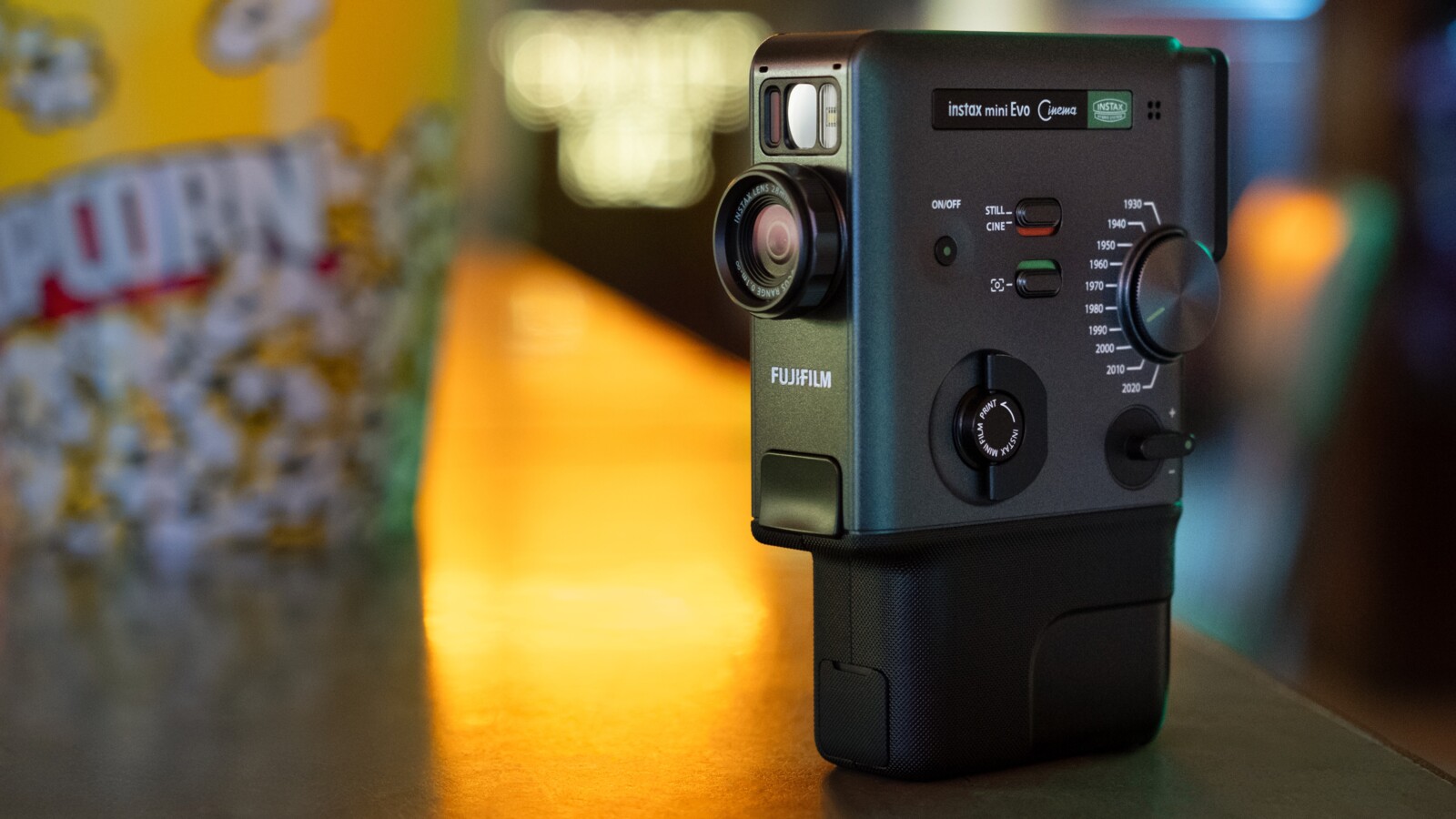
The main star of this launch is undoubtedly the Instax mini Evo Cinema, a 3-in-1 hybrid instant camera that serves as a camera, printer and video camera.
The device design is a clear love letter to the past: the vertical grip and the black coloring with green accents and analog touches are directly inspired by the Fujica Single-8, a historic cine camera launched in 1965.
However, beneath this nostalgic guise beats a technological heart designed for contemporary creatives. The most revolutionary aspect lies in the video mode: the camera can record clips up to 15 seconds and, even more interestingly, print a specific frame accompanied by a QR code.
By scanning this code with a smartphone, it is possible to replay the original video, turning the printed memory into a vivid multimedia experience.

Creativity is entrusted to physical controls. The Eras Dial knob allows you to travel through time by applying 10 effects inspired by different historical eras: from the grainy tones of the 1930s to the vibrant colors of the 1980s, up to the digital sharpness of the 2020s.
This control, combined with adjustable levels of color and contrast via the Degree Control Dial located on the lens, allows for up to 100 different creative expressions.
The user experience is completed by a high-resolution 1,54-inch LCD display for the preview and by an analog-style print lever that, with a satisfying click, starts the film development process.

Printing becomes smart and connected: Instax mini Link+
Alongside the camera, Fujifilm unveiled the Instax mini Link+, a premium evolution of its renowned smartphone printer.
This device stands out for a refined design, featuring a black body with orange accents and a metal hook that underscores its portable yet elegant nature.

The mini Link+ is not only designed to transfer images onto film but to serve as a bridge between the digital and physical worlds. One of the most notable innovations is direct integration with Pinterest through the new dedicated app: users can import and print their inspirations directly from the social platform, as well as from the phone’s gallery.
Technically, the printer introduces the Design Print mode, which, thanks to an upgraded image processor, can reproduce small text and complex textures with superior sharpness, making it ideal for decorative or professional purposes.


For those who enjoy experimenting with interior design, the Print Simulation feature offers an augmented reality preview of how the photo will look once placed in a frame or cover, allowing you to evaluate the final result before consuming the film.
There is also the possibility to print frames extracted from videos and the convenience of a fast recharge via USB-C port.
Prices and Availability
Both devices will be available on the market starting January 28, 2026.
The hybrid Instax mini Evo Cinema instant camera will be offered at a suggested public price of €389.99. As for the Instax mini Link+ smartphone printer, the launch price is set at €169.99.
To enrich the user experience, Fujifilm will also make available a range of coordinated accessories, including cases and frames designed to display the best prints.