


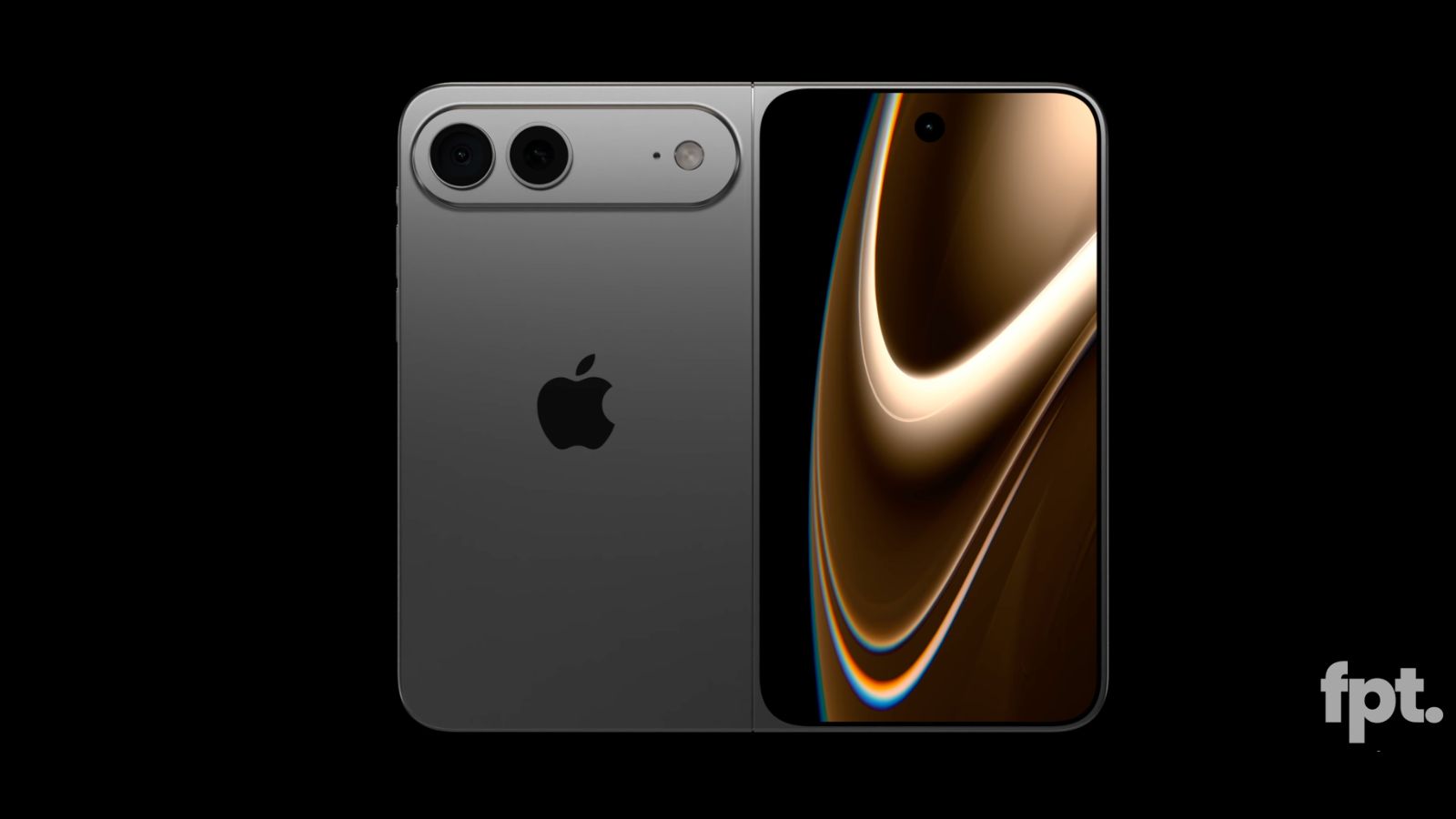
According to the latest analyses by Jeff Pu, a well-known analyst at GF Securities, the Cupertino giant is preparing to launch a new generation of devices that will introduce the highly anticipated iPhone Fold and will redefine power and efficiency standards thanks to the new A20 Pro chip.
In a context where the industry seems to be slowing down, Apple aims to ship 250 million iPhones, marking a 2% year-over-year growth, driven by radical engineering innovations intended for the models iPhone 18 Pro, iPhone 18 Pro Max and, naturally, the company’s first foldable.
iPhone 2026 lineup, all the expected novelties from Apple for premium models

Besides the A20 Pro processor, manufactured with the 2 nm process from TSMC, the real novelty lies in the chip packaging architecture. The analyst highlights a strategic shift from InFO technology to the packaging WMCM (Wafer-Level Multi-Chip Module).
This technological transition is fundamental because it allows to combine more dies (such as the CPU, the GPU and the Neural Engine) inside a single package.
This integration offers unprecedented flexibility in configuring the components, allowing engineers to optimize the internal space of the device.
Eliminating the need for a traditional substrate and using a filling process called Molding Underfill (MUF), Apple reduces material consumption and simplifies manufacturing processes.
The practical result of this miniaturization is the release of valuable space inside the chassis, which could be used to integrate larger-capacity batteries or other vital components, while also integrating the RAM directly into the module for greater efficiency.
Besides packaging, the A20 Pro chip will introduce a significant upgrade to the power delivery system. Apple has planned the adoption of new ultra-high-performing capacitors of the metal-insulator-metal type, named SHPMIM (Super-High-Performance Metal-Insulator-Metal).
In practical terms, this guarantees operational stability and significantly improved energy efficiency, essential to support the high performance required by the advanced features of future iPhones, especially in intensive-use scenarios.
The rest of the specs expected by the analyst
The rumors also outline the physical characteristics of the new devices precisely. The iPhone Fold, which will adopt a passport-style form factor, will feature a 5.3-inch external display and a large 7.8-inch internal foldable screen.
To ensure maximum durability, the foldable will use a hybrid aluminum and titanium case, likely supported by a liquid metal hinge, thus distinguishing itself from the 18 Pro and Pro Max models, which will maintain an aluminum chassis.
On the photography front, the iPhone Fold will feature a configuration with a dual rear camera consisting of a 48MP main sensor and a secondary sensor, also 48MP.
For selfies and video calls, there will be two 18MP cameras, one for the external display and one for the internal display.
Conversely, the iPhone 18 Pro and Pro Max models will offer an even more capable camera system, with a 48MP main sensor with a variable aperture, a 48MP periscope telephoto lens and a 48MP ultra-wide, in addition to the 18MP front camera.
Finally, while the Pro series will continue to rely on Face ID integrated into a smaller Dynamic Island, the iPhone Fold will opt for authentication via Touch ID. All devices will share the same base specs: 12GB of LPDDR5 RAM and the new modem C2.