


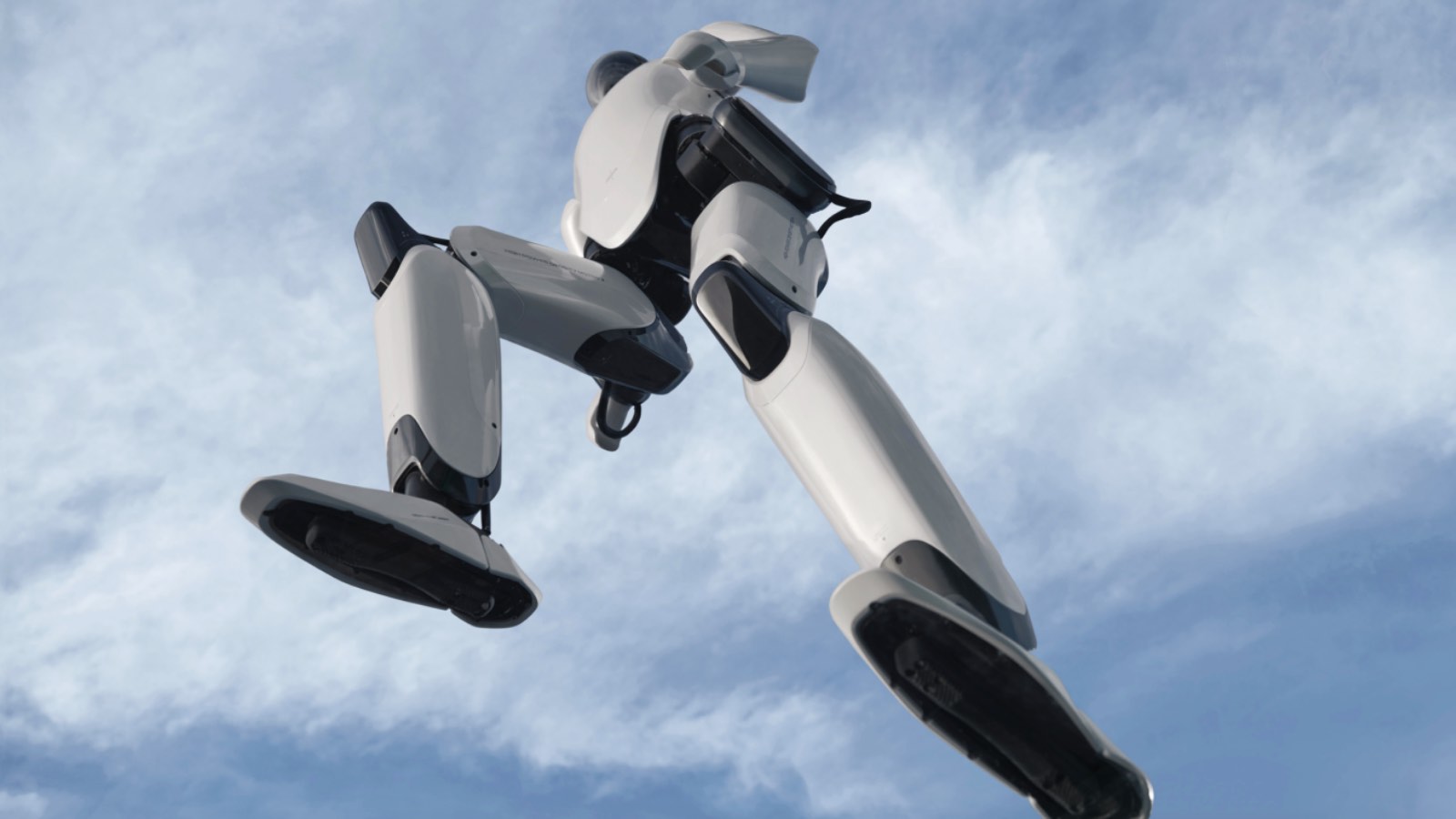
In Changping, in the northeastern district of Beijing, rises a facility of over 80,000 square meters that upends everything one might think about the industrial field.
Inside this vast complex, you don’t hear the workers’ chatter during shift changes, nor are the neon lights typical of assembly lines visible.
It’s the “dark factory”, a cutting-edge facility that operates in near-total darkness, 24 hours a day, without any need for direct human intervention.
Here, the production pace is relentless and almost inconceivable by traditional standards: at full capacity, one smartphone every second.
Xiaomi’s “dark factory” produces one smartphone every second
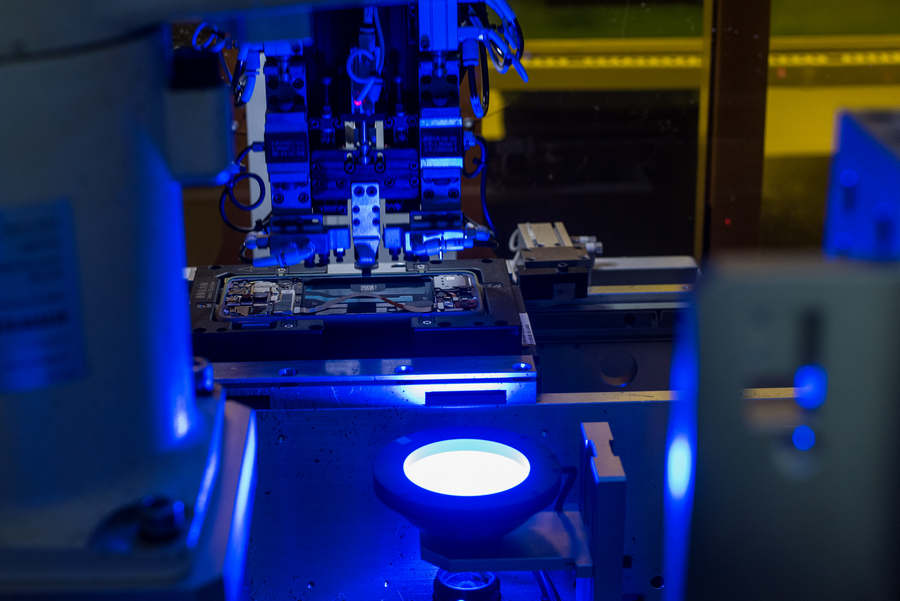
The term “dark factory” (fabbrica buia) is a literal description of operating conditions. Because the entire process is managed by advanced robotics and artificial intelligence, ambient lighting is superfluous. The machinery does not need to see how humans do it; they rely on precise sensors and computer vision systems that operate perfectly in the dark.
This design choice brings with it immediate economic and environmental advantages. By eliminating human presence from the production line, Xiaomi has been able to drastically cut overhead costs: there is no need for heating to keep the environment comfortable, no need for lights on around the clock, and all costs tied to on-site personnel management are eliminated.
The result is a production ecosystem where efficiency is the only parameter, unconstrained by biological limits such as fatigue, rest periods, or human error due to distraction.
HyperIMP: the brain of the factory
Behind this mechanical ballet there is a sophisticated platform named HyperIMP (Intelligent Manufacturing Platform). It is the real brain of the operation, an AI-guided system that coordinates thousands of sensors scattered across the plant.
HyperIMP does not stop at issuing orders to robotic arms; continuously monitors production quality, manages the logistics of materials and corrects in real time any deviations from the expected standards. From the assembly phase to the final inspection, up to monitoring the factory’s environmental conditions, every single step is automated.
With an estimated production capacity of 10 million smartphones per year, this plant perhaps represents the tangible realization of scenarios that until recently belonged to science fiction. Yet, unlike films where entire cities are run by machines, here reality is confined within the walls of Changping, serving as a pilot project for a new standard.
The human cost of progress
If on one hand Xiaomi’s “dark factory” is a promise of innovation and unprecedented precision, on the other it sounds like a wake-up call to the global social and economic fabric, and in particular to that of China.
China, which for decades built its economic ascent on the availability of low-cost labor for assembly, now finds itself leading a transition that could render millions of those jobs obsolete.
The mass adoption of industrial robots is changing the demand for workers. The need for generic laborers collapses, while the demand for highly specialized roles grows, capable of programming artificial intelligence or performing maintenance of complex robotic systems.
This gap risks exacerbating inequalities economic: without robust and immediate retraining programs, regions relying on traditional manufacturing could face a deep employment crisis.
The future of industrial production therefore seems destined for a hybrid model, where autonomous systems will take on repetitive and high-volume tasks, leaving humans with roles of strategic supervision.