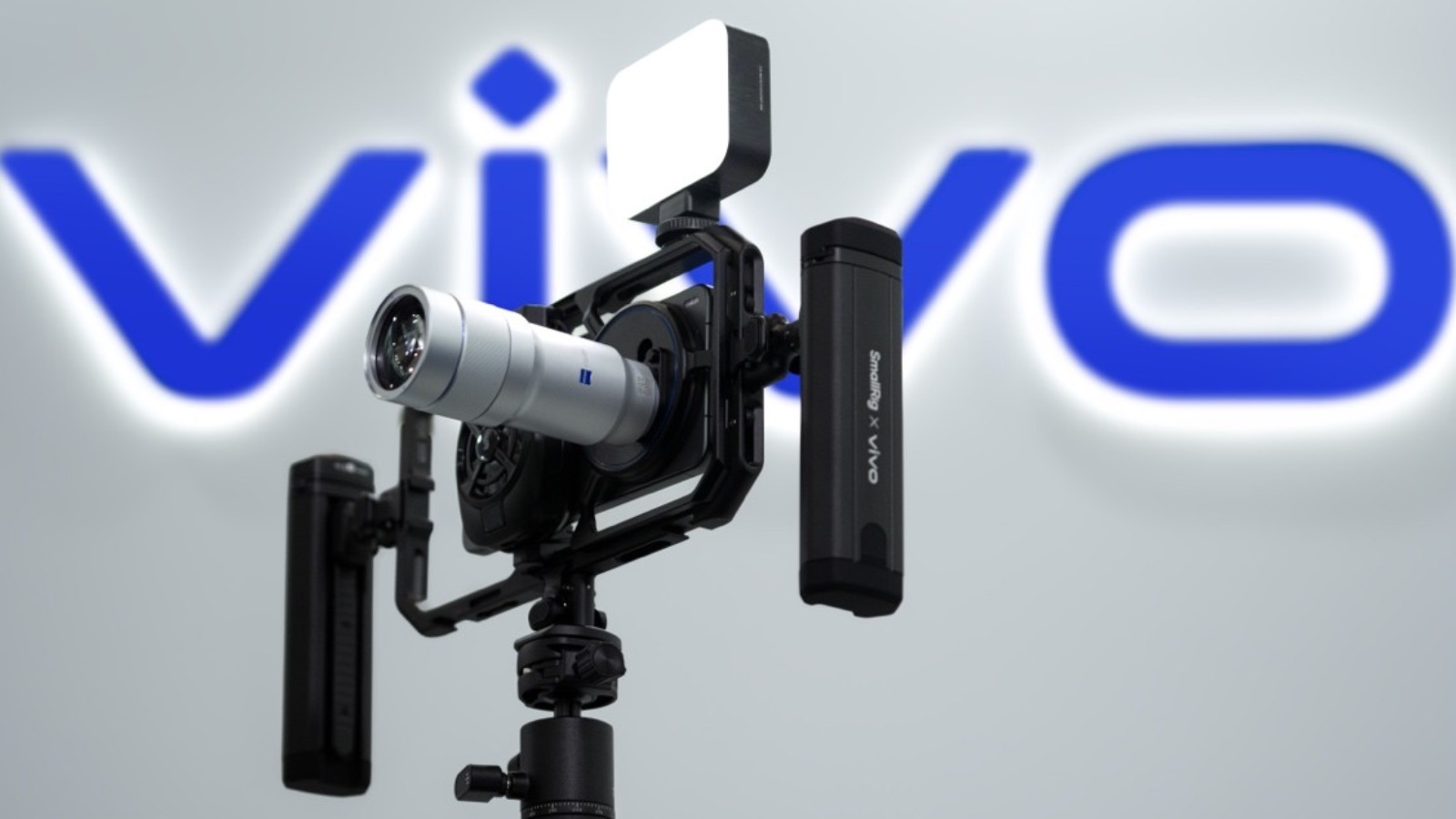
The product manager of Vivo, Han Boxiao, has recently attracted the attention of enthusiasts by sharing on the social network Weibo an image that reveals the interior of the company’s new flagship device.
While the overall specifications will certainly include top-tier components, such as the Snapdragon 8 Elite Gen 5 processor, a plentiful amount of RAM and a decidedly sizeable battery, what justifies the significant investment required for this device is the camera system.
Just as with direct competitors of the calibre of Oppo Find X9 Ultra and Xiaomi 17 Ultra, the term “Ultra” primarily identifies a device aimed at photographic excellence, capable of surpassing the performance of traditional models.
Vivo X300 Ultra, here are the cameras seen up close

Entering the hardware details, the information that has emerged so far outlines a rear configuration of absolutely notable significance. Below is the anticipated technical sheet for the camera module:
- Main camera of 200 MP with Sony LYT-901 sensor (1/1,12″) and a 35 mm focal length
- Ultra-wide camera of 50 MP with Sony LYT-818 sensor (1/1,28″) and a 14 mm focal length
- Telephoto camera of 200 MP with Samsung Isocell HP0 sensor (1/1,4″) and a 85 mm focal length
- Multispectral sensor of 5 MP for a more accurate color reproduction (covered by the sunglasses emoji in the image above)
The statements from the executive particularly emphasize the quality of the ultra-wide camera, defined as the most capable currently available, boasting a sensor of substantial size.
To put it in perspective, consider that a very high-end device like the iPhone 17 Pro Max uses a similarly sized sensor for its main 48 MP camera, and not for the secondary lenses.
Why is the Sony LYT-818 sensor so important?
A wider camera is also fundamental for video recording. A broader field of view greatly facilitates image stabilization, reducing jerky movements and delivering handheld footage that is noticeably smoother and more natural.
Moreover, it allows content creators to capture a larger portion of the scene without repeatedly adjusting the framing, ensuring optimal results during movement-focused filming.
Analyzing the 50-megapixel Sony LYT-818, it is engineered to ensure sharp shots and high performance in challenging lighting conditions. The most significant technical advancement lies in the drastic reduction of random noise, achieving a signal-to-noise ratio of around 0.95e.
This result is made possible by the Ultra High Conversion Gain circuitry. Sony’s technology optimizes the conversion of light signals into electrical signals, refining color gradations and enabling the capture of precise details in low-light environments.
Finally, a sophisticated HDR system completes the picture, capable of delivering a dynamic range of around 86 dB. The sensor processes the captured image by applying three different gain settings from a single exposure, then blends them to perfectly balance highlights and dark areas.
Additionally, reduced energy consumption allows the smartphone to keep HDR processing always on, providing the user with a precise, real-time preview directly on the screen before pressing the shutter button.