


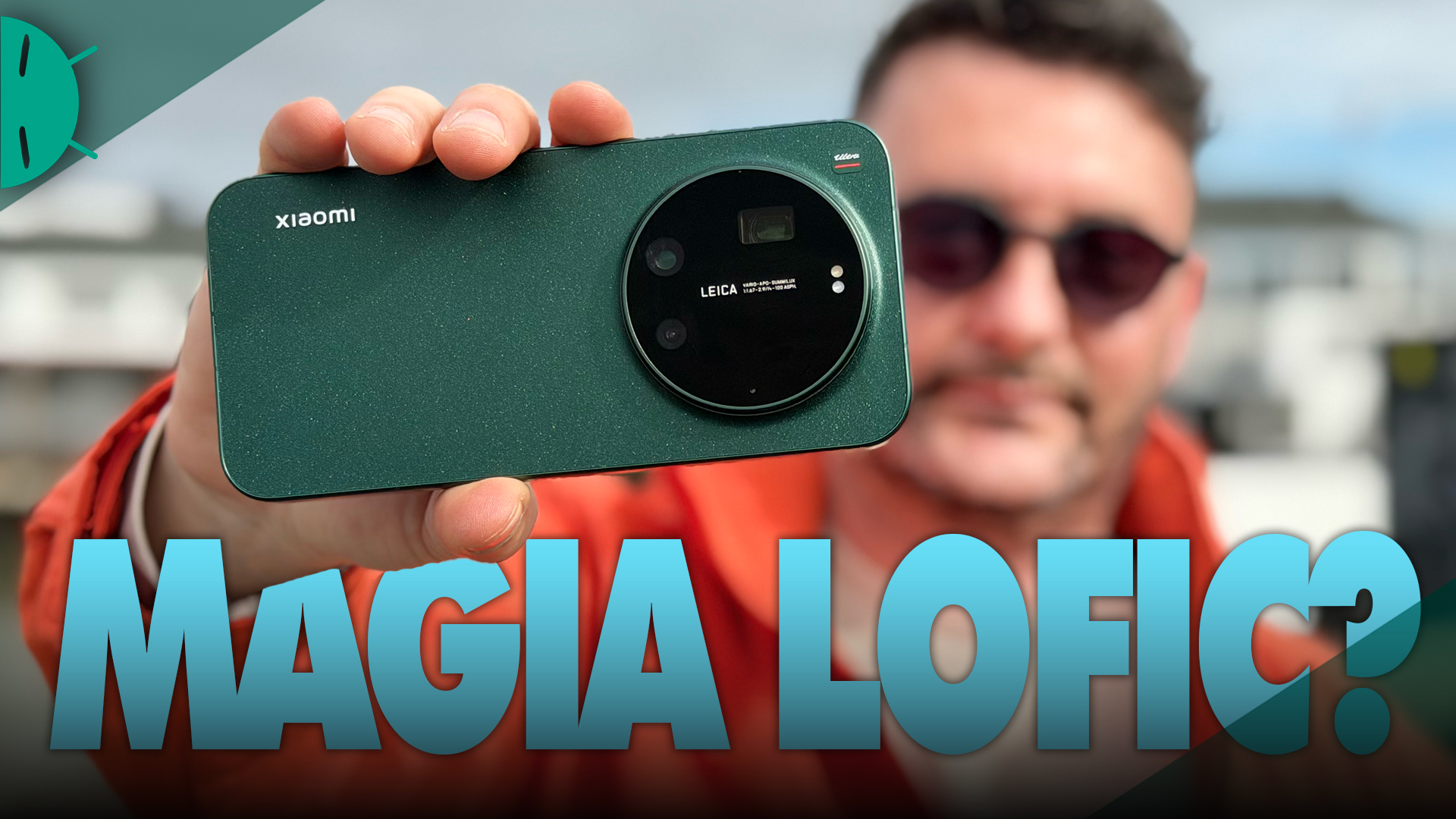
When it comes to a camera phone, the line between a smartphone capable of taking great photos and a true professional camera embedded in a compact body becomes thinner each year. Yet, after spending the last month with the Xiaomi 17 Ultra, taking it with me in every possible situation across the streets of San Francisco, Barcelona, Avellino, and Florence, I can tell you with absolute certainty that this device marks a turning point for the entire mobile sector.
We are not talking about the usual, boring incremental upgrade the market has grown used to lately, composed of a few extra megapixels tossed in there to satisfy marketing. We are talking about a hardware generational leap that radically changes the rules of the game in computational photography and optics. If you have followed my reviews, you know well how demanding, I would dare say pedantic, I am when it comes to testing the camera hardware of a flagship. I don’t settle for the big numbers written in bold on the spec sheet; I want to understand how the hardware and software work together in the real world.
And believe me, especially when it comes to camera hardware, this smartphone has so much to tell that there’s material for hours of discussion.
The Secrets of Xiaomi 17 Ultra Cameras: Is It Really the Best Cameraphone of 2026?
Video Deep-Dive and Plenty (A Lot) of Photographic Samples
Camera System Features: Extreme Engineering and Top-Tier Sensors
To understand the real scope of this device, we must necessarily start from the heart of its ecosystem, laying out the details of what is, in effect, one of the best camera systems ever seen on a smartphone. Xiaomi did not spare any effort and integrated a setup that could make many high-end compact cameras blush, openly challenging the strict laws of optics in such a compact space. And that’s why the rear module is imposing, boasting a design that unmistakably echoes the aesthetics of old telemeter-rangefinder cameras.

This massive module houses a configuration designed to never leave any usable focal length uncovered. The main wide-angle camera is a 50-megapixel unit, featuring a 1-inch sensor and physically 1.6-micrometer pixels. The mounted optics have an aperture of f/1.7, equivalent to 23 millimeters, supported by a precise dual-pixel PDAF autofocus and the ever-present optical image stabilization. It is right here, and only on the Light Fusion 1050L sensor, that Xiaomi has integrated the LOFIC HDR technology which I will discuss in detail very soon.
Next to the 1” sensor we find a ultra-wide camera using a 50-megapixel sensor, with a slightly more compact 1/2.76 inch format and 0.64-micrometer pixels. The aperture is f/2.2 with a 14-millimeter focal length, delivering an incredibly wide field of view of 115 degrees, also managed by a dual-pixel PDAF autofocus. It’s important to note that on this lens the company opted for a traditional CMOS sensor, foregoing LOFIC’s complex architecture, but still delivering a very interesting overall performance.

To complete the circle, there is what I consider the real “revolution” of this setup: the periscope telephoto lens. Hidden under the chassis is a 200-megapixel sensor, with a 1/1.4-inch format and 0.56-micrometer pixels. This lens features a variable opening that ranges from f/2.4 to f/3.0, but the most interesting technical feature is the continuous optical zoom from 3.2x to 4.3x.
We’re talking about an equivalent focal length that “glides smoothly” from 75 to 100 millimeters, physically and smoothly controllable via a dedicated on-screen software dial. In addition to optical stabilization, it includes a multi-directional PDAF autofocus capable of focusing on subjects starting from just 30 centimeters away. Again, the sensor is a traditional CMOS without LOFIC.
And all this package has, of course, been co-engineered with Leica, a partnership that has become a guarantee in color science and micro-contrast, which this year has also influenced the physical quality of the optics more than ever.
The LOFIC Revolution: The Exclusive Light Fusion 1050L Main Sensor
Before seeing how the Xiaomi 17 Ultra shoots, I think it’s important to understand what LOFIC technology really is—LOFIC stands for Lateral Overflow Integration Capacitor—and why, especially in certain shooting scenarios, it genuinely changes the game.

In a conventional CMOS image sensor, as used by the wide and telephoto in this phone, incoming light generates electrical charge in the form of photoelectrons. These accumulate within a tiny storage region called a photodiode. Once that little well reaches its maximum physical capacity, any additional incoming light cannot be stored in any way. The pixel saturates irreparably and the highlights in the image are clipped, resulting in white skies and unreadable reflections.

LOFIC physically modifies this structure at the hardware level by adding a real extra capacitor linked laterally to every single photodiode. When the latter reaches the extreme charge limit, the excess electrons are not lost irretrievably; they overflow and are stored comfortably in this built-in reserve capacitor.

The practical and tangible result of this architecture is that the sensor greatly increases its total capacity, preserving highlights that would otherwise be destroyed, without relying solely on the artificially multi-frame HDR computational approach. In short, without LOFIC, smartphones are forced to take multiple photos at different exposures and merge them with software, often introducing visual artifacts, ghosting on moving subjects, and shooting delays.
With LOFIC technology combined with the enormous one-inch pixels—achieved via pixel binning to a native effective size of 3.2 micrometers—and at f/1.7, the Xiaomi 17 Ultra captures a much larger amount of raw data in a single, clean, and lightning-fast exposure. A wider native dynamic range is achieved right from the start, with data uncontaminated even before the AI begins its lengthy file development process.
The 200 MP Continuous Mechanical Optical Zoom System: Goodbye Digital Interpolation
Now we move to the zoom. Until now, smartphone telephotos have operated with fixed zoom steps. We had a fixed 3x optic and perhaps another at 5x, as we’ve seen for some time on the Samsung Galaxy S25 Ultra. If our ideal composition at that exact moment called for 4x, the phone would merely quietly upscale the 3x image digitally, effectively performing software interpolation. And that process typically compromises sharpness, muddles details, and can introduce chromatic noise.

Xiaomi, instead, did something entirely different, introducing lenses that physically move inside the narrow periscope module. Moving gradually from 3.2x to 4.3x, smoothly navigating between 75 and 100 millimeters via the on-screen rotary wheel, is the proof that the Chinese brand has decided to emphasize physical hardware rather than focusing solely on computational photography.
You can clearly perceive the extremely precise mechanical movement inside the phone’s chassis, and you can be absolutely sure you are always using physical lenses. The variable aperture of f/2.4-3.0 dynamically adapts to the focal length chosen, ensuring optical sharpness that is solid, razor-edged, and true in every single millimeter of this mechanical journey.
And being aware that you are not relying solely on software interpolation algorithms, I am convinced this will return to photography enthusiasts complete, absolute, and analog control over image composition, allowing you to elegantly separate the subject from the background with a natural, soft, creamy depth-of-field compression.
Field Test: Shot Analysis and Lens Behavior
To truly push the Xiaomi 17 Ultra to the limit, I stress-tested it under radically different lighting conditions, attempting to push it to the edge. From noonday brightness to the deep shadows of San Francisco at midnight, I analyzed the behavior of every single optic.
Let’s start with the 50-megapixel main camera. In daylight, color reproduction and brightness are simply embarrassing for the vast majority of its direct competitors. With the sun overhead, the contrast between the bright areas and the shadows was extremely hard to manage. This is precisely where LOFIC technology came into play. The Xiaomi 17 Ultra delivered a dynamic range that is unreal for such a small smartphone. The shadow details are incredibly rich and three-dimensional, while the highlights of clouds and glare on glass are perfectly preserved from the first and only capture, without the grayish, fake halo typical of aggressive HDR processing that we unfortunately see far too often elsewhere.
Night, however, changes things a bit, especially if you use the main camera as a reference. The zoom is not LOFIC-equipped and with a variable aperture of f/2.4-3.0, it’s less luminous, requiring much more technique, a steady hand, and patience from the user. The excellent optical stabilization performs miracles, but it still requires a steady hand and the manual activation of two precise shooting modes to avoid micro-mobbing of moving subjects. In short, if the subject is perfectly still, the captured atmosphere is truly excellent, with incredibly fine detail. If you try to shoot a rapidly moving subject at night, at the maximum extension of 100 millimeters, you must be skilled and especially enable the “Motion Capture” mode.
Pros and Cons of the Intense Daily-Use Experience
Summing up the ergonomics and real usability of this high-tech powerhouse, the balance tip certainly leans toward the pros, but the structural downsides are undeniable and must be faced. Absolute photographic reliability is the driving strength of the project. LOFIC eliminates the frustration of burnt-out shots in difficult backlit scenes, while the continuous optical zoom truly invites creativity, allowing you to crop the scene exactly as you imagine it without digital compromises. Leica’s impeccable color science does the rest, delivering JPEGs ready for publishing and RAW files rich in data to work with in post-production.

Among the downsides, which a thoughtful reviewer must never overlook, are the colossal size and weight of the device. The camera module could make prolonged one-handed use slightly tiring. Additionally, the heavy lifting of raw data from the LOFIC capacitors and the endless 200-megapixel telephoto demands enormous computational effort from the dedicated image processor. This translates to noticeable heat on the back panel, especially during long bursts of intense shooting or prolonged 4K recording. But I will tell you, it is a compromise more than fair to pay to carry around a true photographic workstation, tucked into the coat pocket.
Price and Final Considerations
Xiaomi 17 Ultra lands on the Italian market with an official price tag that comfortably exceeds 1,400 euros, before promotions on Amazon or on the official site.

My final, reasoned answer is a definite yes, but with a very important caveat. If you are a casual user who simply wants a fast, responsive phone with a bright display for scrolling social media, sending countless voice messages, and snapping a few easy pictures without much effort, then the Xiaomi 17 Ultra isn’t your smartphone: for those basic needs there are hundreds of devices on the market that are thinner, more manageable, and cheaper that will do an excellent job.
But if pure photography is your main expressive language, if you’re deeply moved by the stark quality difference between software interpolation and the real, fluid movement of glass lenses, if you understand the true engineering reach of a huge one-inch sensor with LOFIC that captures immense light in its side capacitors without ever burning a single pixel, then this Xiaomi 17 Ultra is the smartphone you’ve been waiting for years.
Xiaomi didn’t stop at slapping a great camera on the back of a flagship smartphone; it boldly attempted to turn it into a pure camera with few compromises. In short, the Chinese brand is the only one that has managed to push into territories where others pulled the handbrake, and the result is a truly exceptional tool that, despite its natural imperfections, delivers a level of shooting pleasure that is absolute, immersive, and unrivaled in the entire modern mobile landscape.


FAQ: The Most Frequently Asked Questions About Xiaomi 17 Ultra’s Camera System
What Exactly Is the LOFIC Technology Present on the Xiaomi 17 Ultra?
The LOFIC technology, which stands for Lateral Overflow Integration Capacitor, is a hardware innovation applied exclusively to the phone’s 1-inch main sensor. In simple terms, it adds a tiny reserve capacitor to every pixel of the sensor. When there is too much light and the pixel fills up, instead of burning the image and losing sky or reflection details, the excess energy is stored in this lateral capacitor. This allows the smartphone to shoot in extremely high-contrast situations while preserving both shadow details and the brightest highlights with a single quick shot and without the typical limits of HDR software.
Does the 200 MP Continuous Optical Zoom Really Improve Photo Quality?
Absolutely yes, and it’s the biggest difference compared to other smartphones on the market. Regular phones use digital zoom to move from, say, 3x to 5x, which inevitably degrades quality and makes the photo grainy. The Xiaomi 17 Ultra, instead, has physically moving glass lenses inside the phone, just like on professional camera lenses. Shifting from 3.2x to 4.3x involves no software interpolation: you’re always shooting with the pure optics of a 200-megapixel sensor, yielding perfect, incredibly sharp portraits.
Is the Xiaomi 17 Ultra the Ultimate Smartphone for Night Photography?
Undoubtedly one of the best devices in the world for night photography, but with important distinctions depending on which lens you choose to use. The main 1-inch LOFIC camera is monstrous in low light: it captures an incredible amount of light while suppressing noise. The ultra-wide and the periscope telephoto, while extremely high-level, rely on smaller sensors without LOFIC. This means they will perform well at night, but will require the photographer to have a very steady hand to avoid micro-movement due to longer exposure times.