


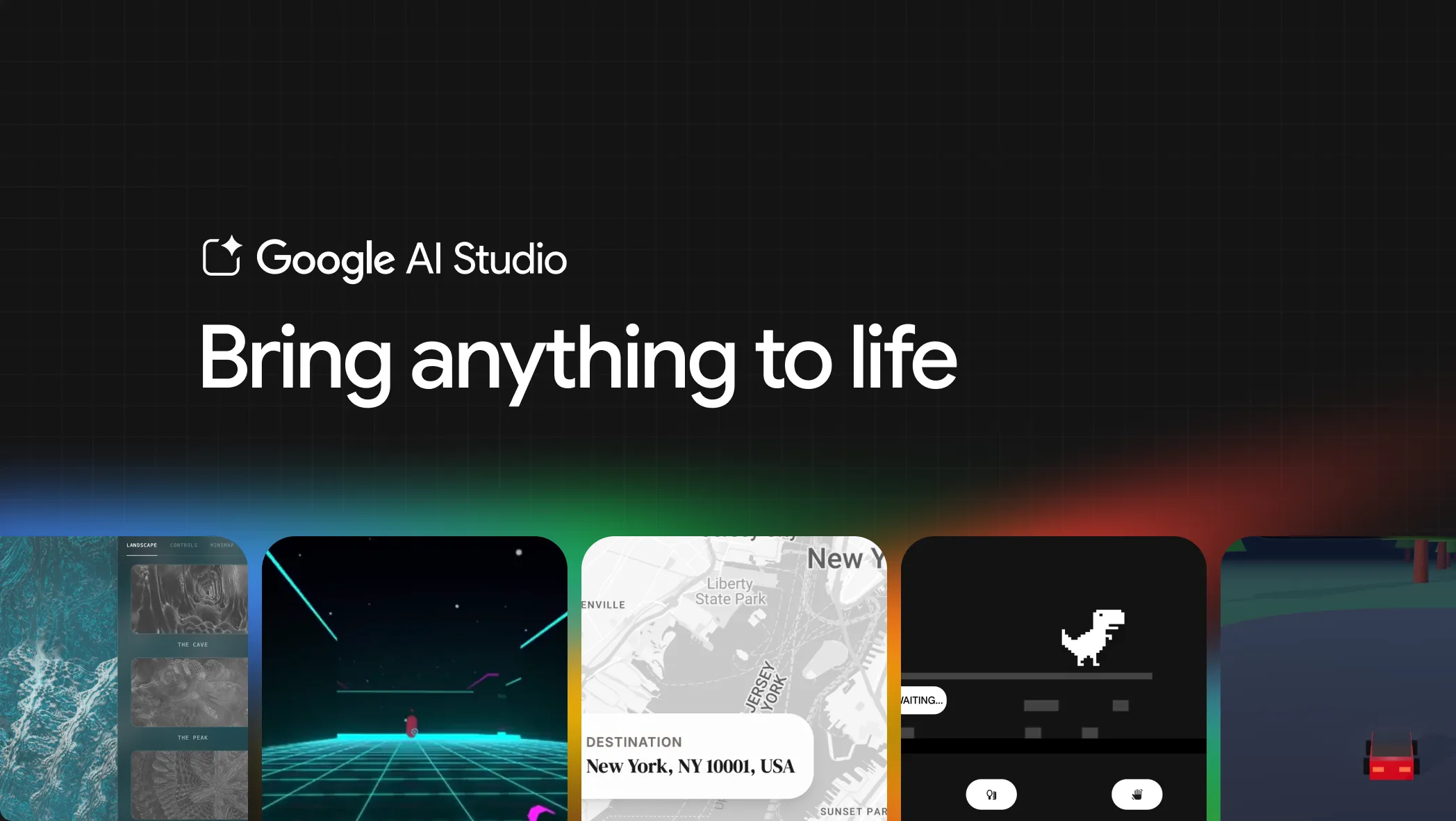
The American company has launched an innovative feature within Google AI Studio, designed to turn ideas into functioning applications using exclusively natural language.
The so-called “vibe coding” enables both experienced programmers and users with no coding experience to create complex software. The user simply has to describe what they want to achieve, and the model Gemini 3.1 Pro handles the entire technical implementation.
All operations take place directly within the web browser, eliminating the need to configure local development environments.
The generated applications are capable of handling payments, data storage, and messaging. The Mountain View company noted that it is even possible to create real-time multiplayer experiences, such as video games or corporate collaboration tools.
Google AI Studio: the Antigravity agent does the work for you

The centerpiece of this update is the new programming agent called Antigravity. This AI-powered assistant understands the full project structure and executes complex modifications with minimal human intervention.
Antigravity is capable of proactively detecting when an application needs a database or an authentication system. Once user approval is obtained, the agent automatically configures the necessary infrastructure through a deep integration with Firebase.
In particular, it enables Cloud Firestore for data management and Firebase Authentication to ensure secure access via Google accounts. In addition to backend handling, the agent understands the needs of the modern frontend, installing external libraries autonomously such as Framer Motion for animations or Shadcn for UI components.
Security, persistent sessions and modern frameworks
To support professional workloads, Google has introduced a secret management system for API connections. Developers can securely connect their applications to third-party services, such as payment processors or Google Maps, without embedding credentials directly in the source code.
The agent detects the need for an API key and stores it securely in the project settings. The platform also adds native support for Next.js, complementing established frameworks like React and Angular.
Another key novelty is the introduction of persistent sessions. Users can now close the browser or switch devices, moving from desktop to laptop, and resume work exactly where they left off, without losing any data or context.
Competition and the future on the horizon
This evolution positions Google AI Studio in direct competition with products offered by companies such as GitHub, Replit and OpenAI, all active in the development of assisted programming tools.
However, Google is betting on strong integration with its own cloud ecosystem to stand out. In recent months, this new development experience has already been used internally by employees to create hundreds of thousands of applications.
Looking ahead, the company plans to introduce even deeper connections with the Google Workspace products, allowing easy integration of Drive and Sheets into the created software.
There is also a function in development that will allow transferring an application from Google AI Studio to definitive production environments with a single click, reaffirming the intent to offer a complete tool from ideation to global deployment.