


The concept of onboard entertainment in a vehicle is taking on entirely new forms. During the Auto Show 2026 in Beijing, Huawei unveiled a remarkable evolution of its lighting system XPixel.
Headlights, historically designed only to cut through the darkness, transform into true color video projectors. This technology will debut on a forthcoming version of the SUV Aito M9, developed in collaboration with the Chinese manufacturer Seres.
Huawei XPixel, entertainment technology that improves road safety

The new generation of the XPixel system abandons monochrome display to embrace the full RGB output. By using individually controllable light elements, the car is able to direct and shape images to keep them perfectly in focus on walls or flat surfaces.
The numbers shared by the company reveal the project’s real proportions: the headlights can generate a 120-inch screen at a distance of about 7 meters, delivering a brightness of 1200 lumens.
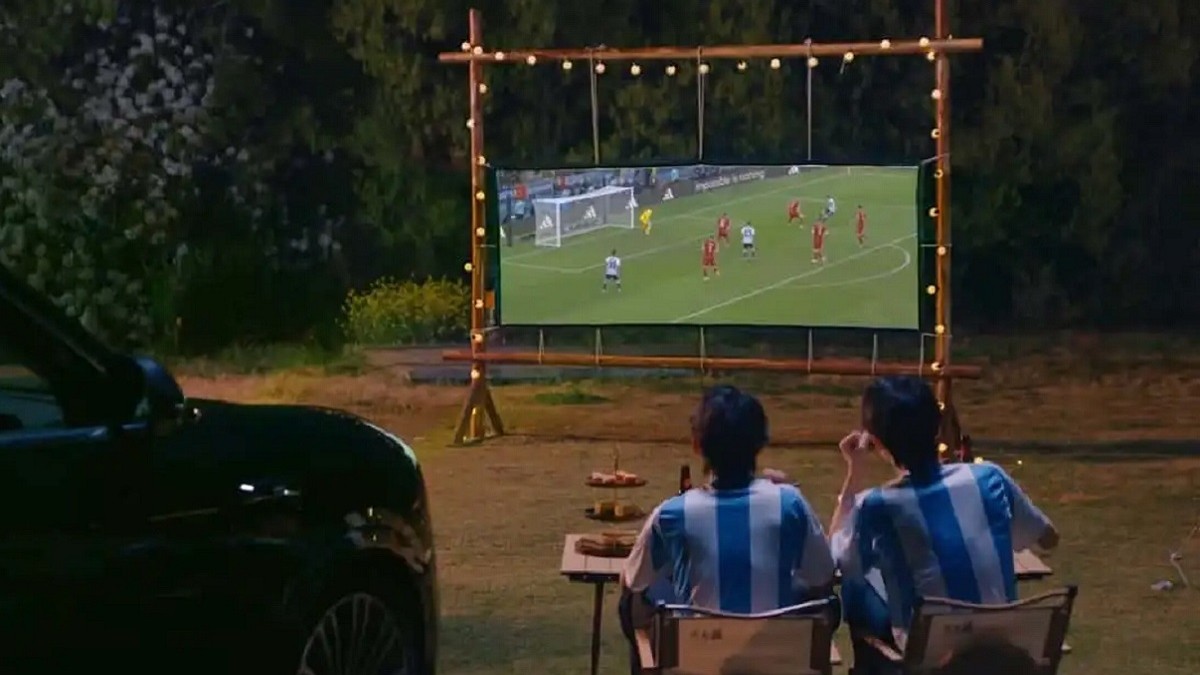
Thanks to a coverage of 125% of the color gamut Rec.709, the reproduced colors exceed the standards of ordinary high-definition televisions. With the car parked, drivers can enjoy movies, live sports or project video games directly onto any wall, recreating the magic of classic outdoor cinemas, perhaps during a camping stop or at a gathering.

Safety first
Beyond the purely playful aspect, the engineering component places great emphasis on protecting passengers and road users. The color implementation significantly enhances driving-assistance features already present in previous versions.
The system intelligently adjusts the headlights’ color temperature to penetrate dense fog or heavy rain more effectively, greatly increasing visibility in adverse weather conditions.
Moreover, the lights act as true active indicators, drawing navigation signals and timely warnings on the asphalt to protect pedestrians during crossings.
The Shenzhen giant’s foray into the automotive sector is becoming increasingly incisive, as shown by recent studies on electric-vehicle batteries capable of nearing 3,000 km of range with a charge time of as little as 5 minutes. Chinese flexible regulations on automotive lighting ease rapid integration of these innovations.
Conversely, Western motorists will have to wait a long time before they can organize an under-the-stars viewing from the hood of their own car, considering authorities have approved the use of adaptive headlights only recently.
The price of XPixel technology remains still to be disclosed, but its impact could soon transform headlights from functional tools to complete multimedia entertainment centers.