


The history of technology is dotted with rumors and leaks with often quirky dynamics. In recent years we have witnessed prototypes casually forgotten on bar tables, blurry photos taken covertly, and devices concealed by heavy anti-spy cases.
However, the story featuring the supposed Google Pixel Watch 5 goes well beyond the usual boundaries, probably setting a new record for the unusual circumstances in which an unannounced product makes its public appearance.
The next smart watch from Mountain View, in fact, did not emerge from the corridors of some production facility, but from the ocean depths, during a normal underwater dive in the Caribbean Sea.
Google Pixel Watch 5 recovered from a sub before the official launch

The story of this extraordinary discovery bears the signature of Randy Pitchford, known as the co-founder of the famous video game development studio Gearbox.
During the weekend, Pitchford shared on X a narrative as unusual as it is fascinating: an acquaintance of his, while diving near the picturesque island of St. Martin, came across a technological device submerged in the ocean.
Contrary to expectations, the recovered object not only turned out to be a prototype not yet official of the Google Pixel Watch 5, but also appeared fully functional, despite the unexpected underwater adventure.
The ending of this tale proved just as surprising. Pitchford subsequently announced that, in very short time and thanks to the resonance achieved through the internet, it was possible to trace the rightful owner of the device. The procedures for returning the smartwatch were organized shortly after, thus closing a case with surreal contours.
Specifications and design of a mature prototype
What makes this tech-news event particularly interesting for enthusiasts is not only the place of discovery, but the visible build quality in the images circulating online. The shots show a device with a remarkably high level of finish.
The rear shell of the device bears unmistakably the inscriptions “Google” and “Pixel Watch 5“, accompanied by a detailed list of integrated sensors. Among the legible silkscreens are references to blood oxygen saturation, marked by the acronym SpO2, to the EDA sensor for measuring electrodermal activity, to the detection of skin temperature, in addition to the classic heart rate and pulse sensors.
There is also mention of the Ultra-Wideband technology, abbreviated as UWB, and the IP68 certification, which guarantees resistance to water and dust ingress.


Release timelines and field-test security
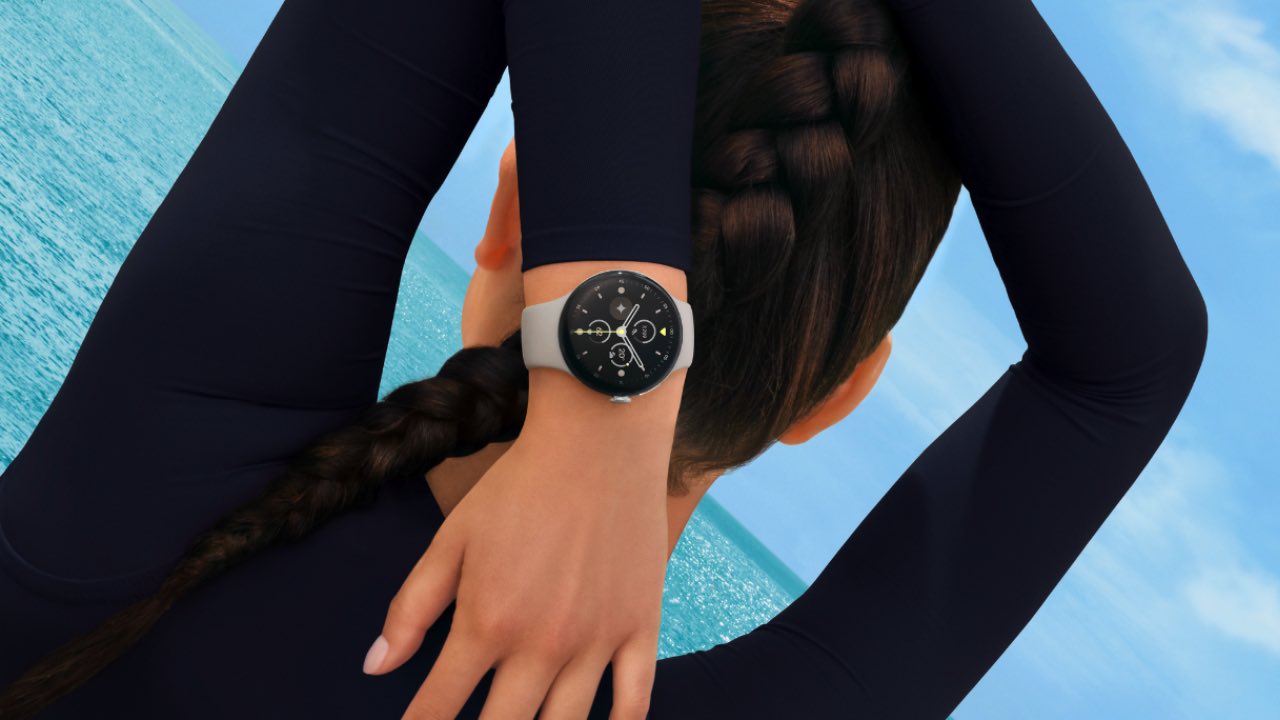
Even the front of the watch shows the typical circular design of the Pixel range, giving the impression of nearly final hardware and ready for broad commercial distribution. This degree of completeness is unusual when considering the usual market timelines.
The previous model, namely the Pixel Watch 4, was officially introduced only last October, indicating that many months still lie ahead of a potential launch window for the fifth generation.
It is absolutely normal practice for large tech companies to test their secret devices in real-world environments, far from controlled laboratories, to evaluate their performance in day-to-day use. It remains, in any case, bizarre that these tests included a dive into the Caribbean seabed culminating in the loss of the product.
If official confirmation should be found, the company could find itself forced to tighten security even further and to revise its tracking procedures for prototypes entrusted to testers.
Experiencing a news leak due to a stolen digital file is now a calculated risk, but losing track of a forthcoming device among the waves of the ocean represents a significant organizational flaw that’s much harder to justify.