


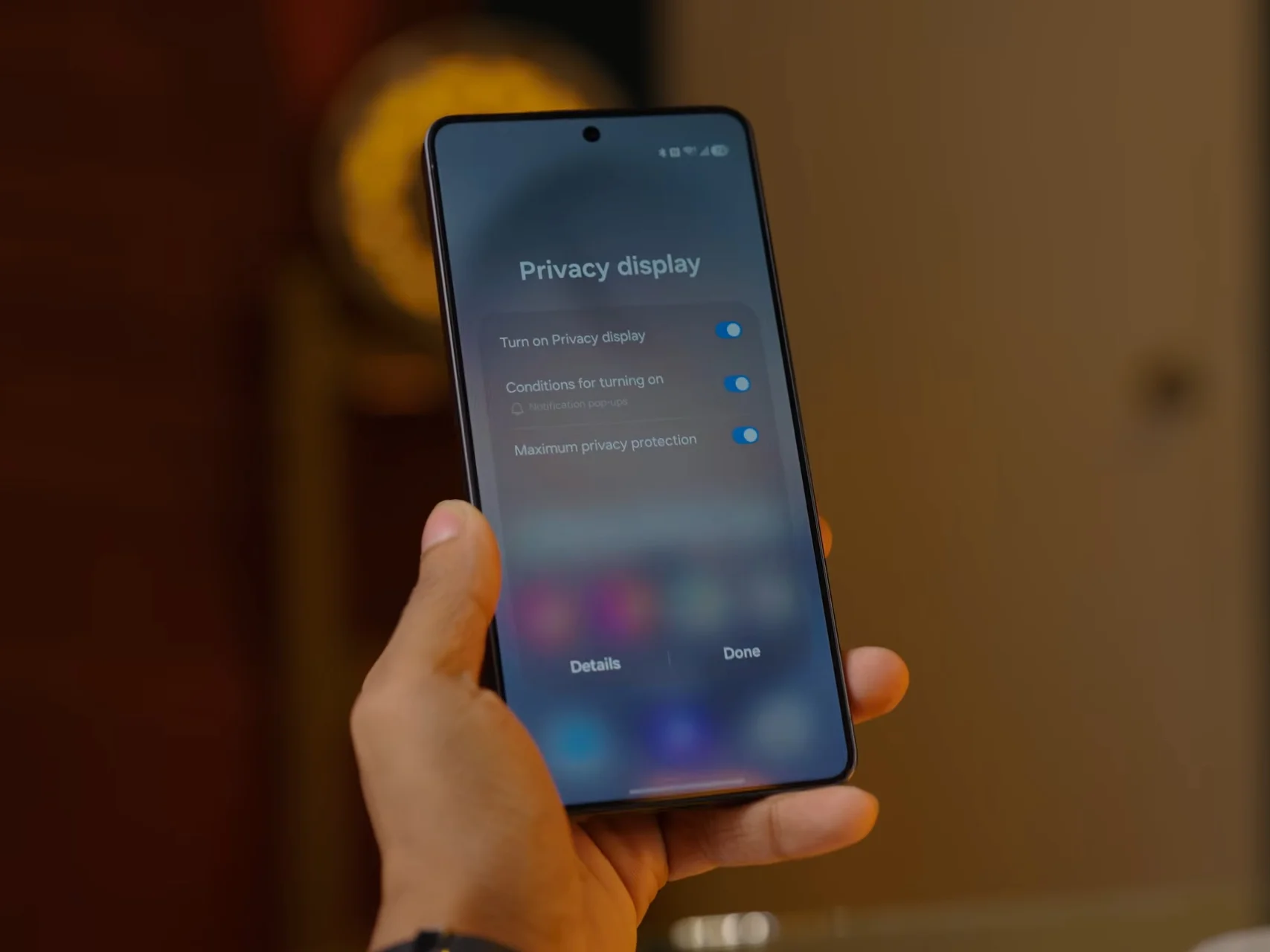
The Samsung Display division continues to offer cutting-edge solutions for the smartphone industry. During the recent SID Display Week 2026 event held in Los Angeles, the South Korean company unveiled a range of innovations that promise to significantly improve the visual and functional experience for our adventure companions.
Following the success of the Privacy Display technology that appeared on the Galaxy S26 Ultra, the company has developed further evolutions that fuse security, color quality and vital-sign monitoring, charting the course for the next generations of flagship devices.
Will the Galaxy S27 Ultra have this new Privacy Display?

The first step of this technical advancement manifests through the OLED panel named Flex Chroma Pixel. This unit was conceived to push visual performance far beyond traditional standards.
The brand has managed to achieve a peak brightness of 3,000 nits. Accompanying this figure is an impressive coverage of the 96% of the BT.2020 color space, a standard set by the International Telecommunication Union to define the wide color ranges of modern displays.
Thanks to the use of new materials and the proprietary LEAD technology, the company has managed to balance energy management and the lifespan of organic pixels. This approach allows displaying images with fidelity and color richness significantly higher than today’s average, sidestepping the classic trade-offs in terms of battery consumption.
A screen that listens to the body
The research has not stopped at image rendering alone. The second major novelty unveiled in Los Angeles is called Sensor OLED. It is a 6.8″ display designed specifically to serve as a true instrument for measuring vital parameters.
Thanks to the insertion of new photodiodes directly inside the screen matrix, this panel is capable of detecting parameters such as the heart rate and the blood pressure. The sensors use light emitted by the display itself to analyze blood flow, eliminating the need for separate hardware or relying exclusively on smartwatches.
Despite the complex overlap between pixels and receptors in the same layer, the resolution remains at an excellent value of 500 PPI, perfectly suited to the needs of premium devices.
Data privacy and imminent developments
The most interesting aspect of the entire package concerns the management and protection of personal data collected by the device. It is precisely in this area that the Flex Magic Pixel technology comes into play, the natural and sophisticated evolution of the system already seen and appreciated on board the Galaxy S26 Ultra.
This specific feature allows hiding sensitive information, such as the delicate medical readings of the Sensor OLED, darkening them to anyone attempting to observe the screen from the side. While the user reads their health data in total security looking at the smartphone straight on, onlookers will only see a black screen.
In light of features of this caliber, it is inevitable to wonder what the adoption timelines will be: all these features naturally position the Galaxy S27 Ultra as the perfect device to bring these innovations directly into the hands of the public.