


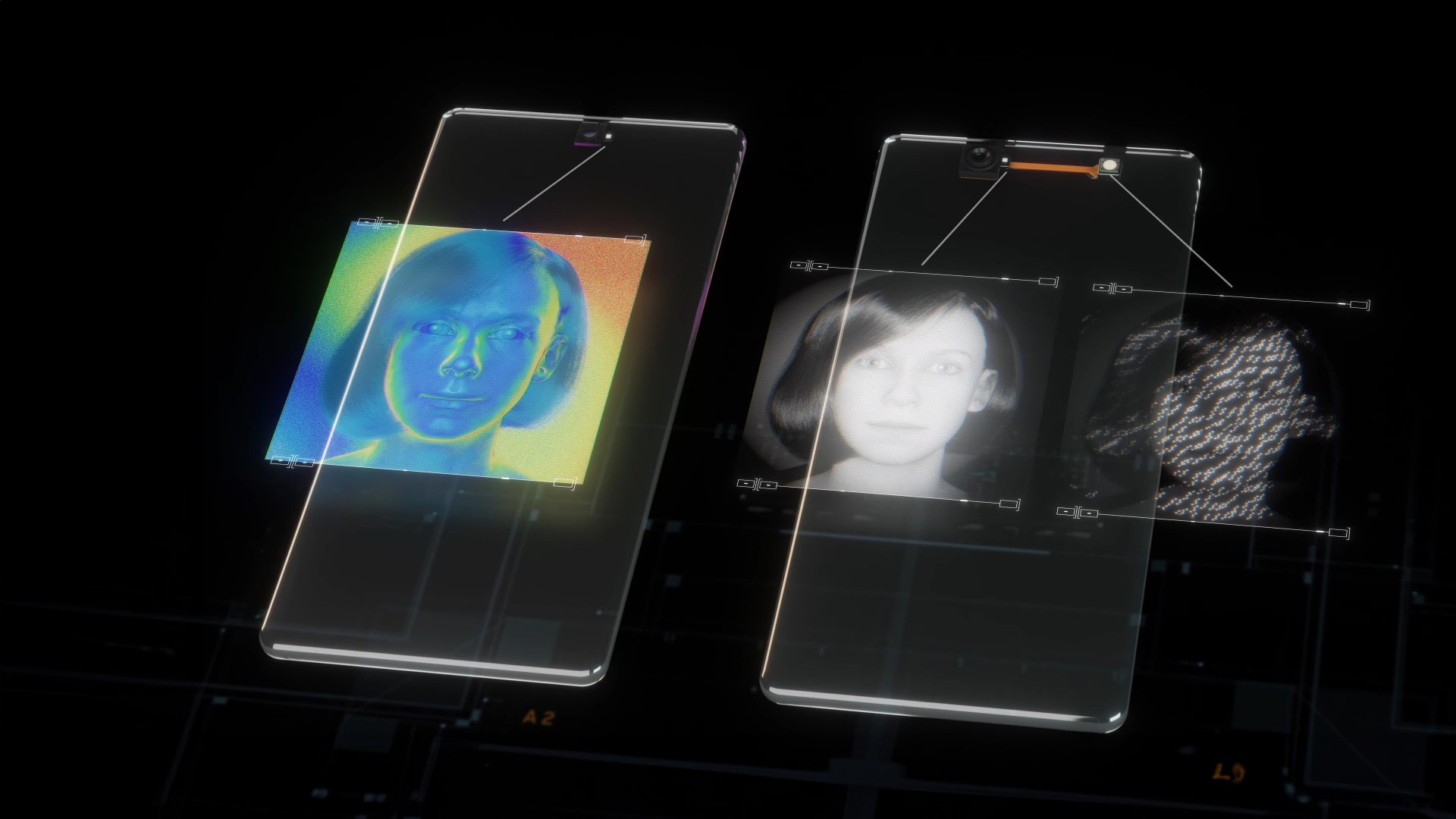
Metalenz, a Boston-based startup, unveiled at Display Week an innovative system of facial recognition integrated under active OLED displays.
Leveraging metasurfaces and polarized light, this technology eliminates notches and holes, ensuring the reliability required for digital payments and overcoming Apple’s and Android brands’ historic engineering limitations.
Secure face recognition under the display, Metalenz has done it

For several years the smartphone industry has pursued a technically complex milestone: hiding the sensors for facial recognition directly under the screen.
Apple has invested substantial resources to integrate its biometric system beneath the panels of its iPhones, but has faced physical obstacles that led to the introduction of the Dynamic Island.
Android device manufacturers have also avoided venturing in this direction, aware that current hardware under the display would compromise security protocols in an unacceptable way.
The under-display cameras currently available rely on bulky components and offer poor image quality, making them unsuitable for protecting users’ sensitive data or authorizing bank transactions.
During Display Week held in Los Angeles, a Boston-based optics company, Metalenz, unveiled a technology capable of overcoming these obstacles.
The system, named Polar ID Under Display, enables biometric authentication by placing the entire module under a fully active OLED panel.
The visual result is a seamless display, without any notch or hole, maintaining a reliability that allows digital payments to be made risk-free. Unlike conventional approaches, the American company has chosen to discard the traditional photographic sensors altogether.
How polarized light optics work
Metalenz’s technology relies on metasurfaces, i.e., flat and miniaturized optical components designed specifically to capture polarized light.
The key element resides precisely in this polarization signal, which can penetrate the light layer of an active OLED display without dispersing the visual information.
This feature guarantees a zero false acceptance rate in cases of fraud attempts. The ability of polarized light to travel through the display’s active pixels solves the main bottleneck that has held back the competition to date, eliminating the quality drops and optical distortions typical of older prototypes.
From theory to practice
The announcement is not limited to a lab confinement simulation. Inside the Display Week’s I-Zone, Metalenz technicians provided a live demonstration of the Polar ID Under Display.
The audience could observe authentication in operation on a real smartphone, with the screen on and active during the facial scan.
This step from theory to practice opens new prospects for the entire mobile phone sector. Android device manufacturers now have the opportunity to adopt a high-end authentication system, offering consumers a truly full-screen design.
Looking ahead to the coming months, it is highly likely that Android brands worldwide will adopt this technology rapidly. If Metalenz confirms expectations regarding supply costs and the mass production scalability, the physical interruptions on displays could soon disappear for good.