


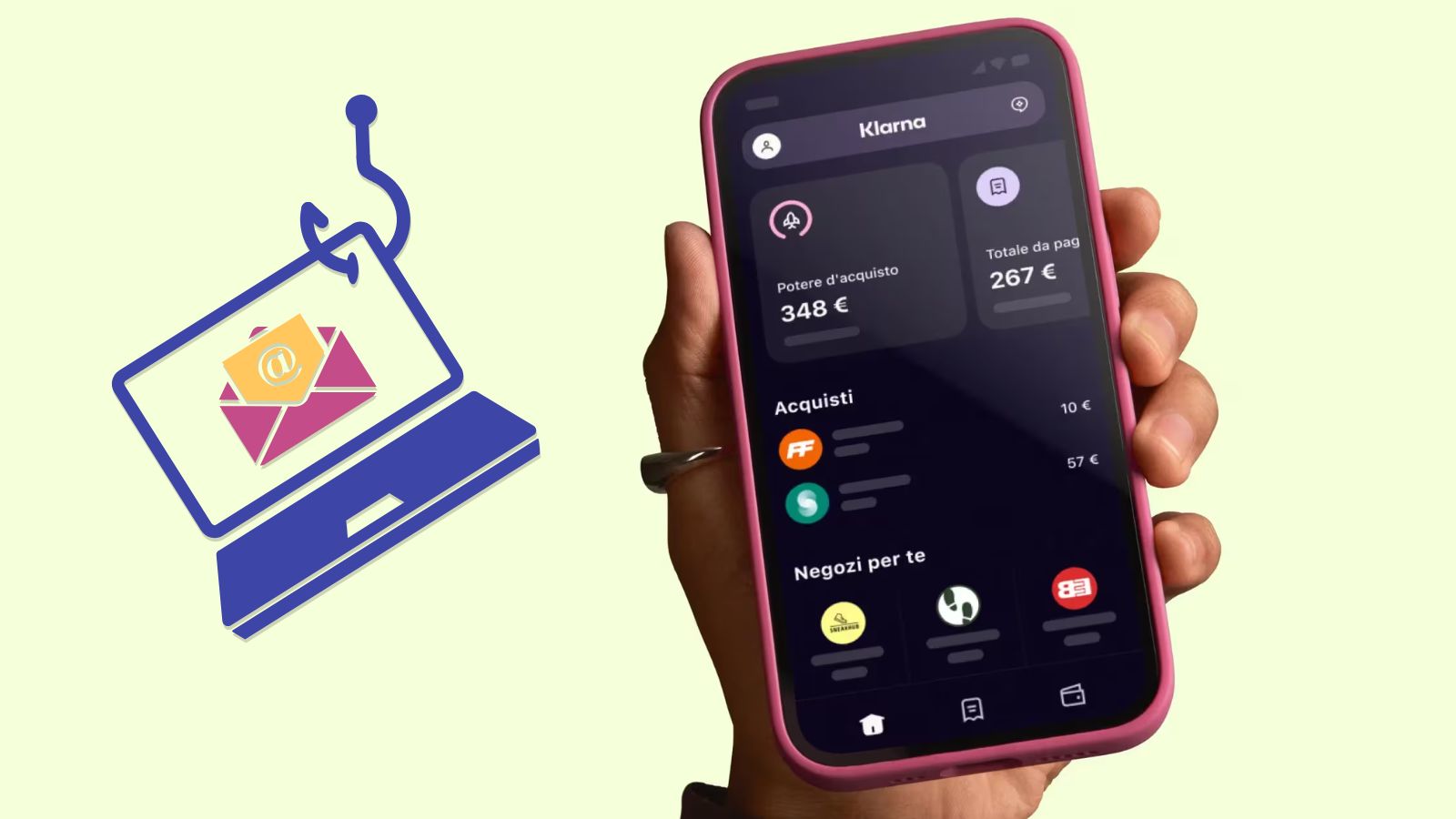
The landscape of cybersecurity is increasingly complex, and in this light phishing remains one of the most insidious threats for those navigating the web. Recently another fraud campaign has emerged that uses Klarna inappropriately to grab users’ sensitive data. The attacks are based on creating deceptive emails that simulate urgent security alerts: the objective is to push the potential victim to act impulsively by entering their data.
Klarna users in the crosshairs, new phishing scam attempt: what it is and how to defend yourself

The message we received in the past hours is the one you see above in reference to an alleged Klarna breach: “We have noticed a recent attempt to access your account from a new device. To guarantee the security of your account, please confirm that you are the rightful user by reviewing the recent activity on your account”.
Apart from the repetitions (with the word account appearing three times), the text is written in correct Italian and this alone could be misleading. Perhaps a quick read might lead someone to think of a security breach; this first clue (the repetitions) may not be noticed. In short, there are several warning signs that characterize an attempted scam.
The sender’s email address: often reveals the deception even though the displayed name appears legitimate. In our example, the email claims to come from Klarna, but the actual address associated is a domain completely unrelated to the company, highlighting a blatant discrepancy between the declared identity and the real one.
This is the first and most important security filter: a company like Klarna will always use official domains and certificates for communications related to the security of accounts.
As we highlighted above, the content of the message is structured to generate a sense of urgency and concern in the recipient. The text invites the user to confirm their identity by clicking the “Verify Account” button. However, the email shows slightly imprecise syntax and an unnatural tone.
Never click the links present in suspicious messages
It is essential not to click on these links, as they lead to counterfeit web pages designed to copy login credentials at the moment they are entered by an unsuspecting user. To defend yourself effectively against these threats, the golden rule is to avoid direct interaction with the links contained in emails of dubious provenance.
If you receive a security notification about your account, the correct procedure is to close the email and access the service exclusively via the official app or by manually typing the website address in the browser.
In this way, you can be sure you are operating in a protected and verified environment. Moreover, we recommend enabling two-factor authentication for any service: this countermeasure makes stealing the password alone useless.
In conclusion, protecting your online data involves critical scrutiny of every communication received. The case of the forged Klarna email shows that scammers rely on distraction and haste: therefore the user cannot be a passive observer but must necessarily approach every piece of information received with a critical mindset.
There is one last golden rule: always remember that banks, payment systems and any type of services will never ask you to enter sensitive data through a direct link in an email.