


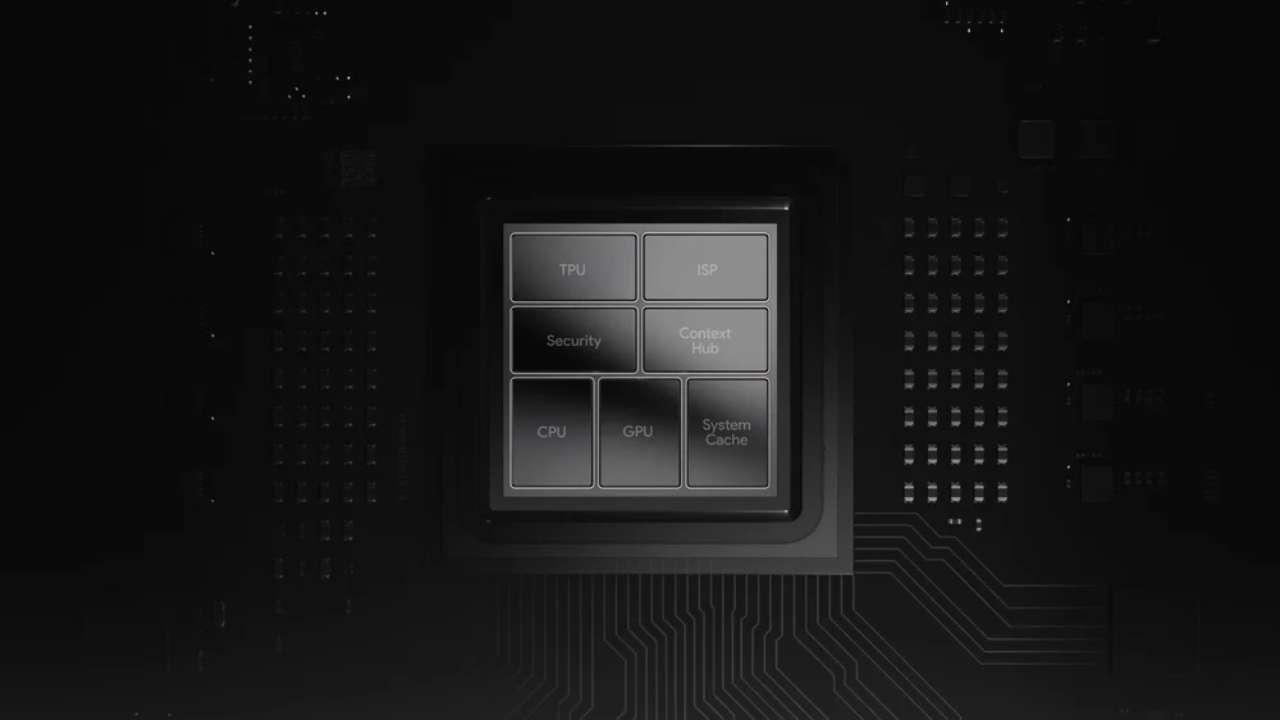
Although the devices in the Pixel lineup are widely appreciated for their advanced features, the proprietary Tensor processors have often represented a limiting factor in terms of raw power.
The switch to TSMC foundries with the Tensor G5 has marked a significant step forward, delivering reduced energy consumption and better thermal management. However, absolute performance continues to lag behind direct competitors, with the graphics subsystem standing out negatively as a real weak point of the hardware infrastructure.
The latest rumors suggest that the Mountain View company risks replicating this specific issue on the upcoming generation of smartphones, not delivering substantial improvements to the next Tensor G6‘s GPU.
Pixel 11, the Tensor G6 GPU is from 2021

The well-known leaker Mystic Leaks, who recently shared some previews of the processor specifications destined for the Pixel 11.
According to leaked information, the future chip will rely on a PowerVR CXTP-48-1536 GPU, i.e., a graphics architecture that debuted originally on the market in 2021.
This decision proves particularly limiting when considering that the graphics performance of the Tensor G5 is already hampered by not updated drivers, including the lack of Vulkan 1.4 support, a detail that heavily penalizes gaming performance.
Considering the results below the expectations offered by the PowerVR GPU integrated in the Pixel 10, it is discouraging to note that Google does not seem intent on reversing course. While potential increases in clock speeds and further driver-side software optimizations may offer a slight relief, these technical measures alone will not be enough to compensate for the intrinsic limitations of a project now dated.
New Arm cores for a performance relaunch
If the graphics side appears sacrificed, the central processing sector offers decidedly more encouraging prospects. The emerging data indicate that the Tensor G6 will adopt the latest Arm architectures for the CPU components.
Specifically, the processor should integrate a single high-performance core Arm C1 Ultra pushed up to the frequency of 4.11 GHz, accompanied by four Arm C1 Pro cores operating at 3.38 GHz and a further two Arm C1 Pro cores set at 2.65 GHz to handle lighter tasks.
This configuration should guarantee a notable leap over the Cortex-X4, A-725 and A520 cores used on the previous generation. The C1 Ultra module, designed to express maximum computational capacity, will be activated by the system to process the most intensive workloads that require an immediate push, an approach that we also see shared by MediaTek’s Dimensity 9500 chip.
A new seven-core CPU structure
An interesting detail that emerges from the rumor analysis is the probable transition to a seven-core overall architecture, marking a departure from the traditional eight-element configuration seen on the Tensor G5.
From the standpoint of pure central compute power, the Tensor G6 of the Pixel 11 appears thus quite promising. Even if its performance may not manage to match the market’s absolute top, such as the Snapdragon 8 Elite Gen 5, the hardware should still ensure a responsive and adequate experience for a 2026 device.
Graphics processing, on the other hand, risks turning out to be the Achilles’ heel of the entire platform.