


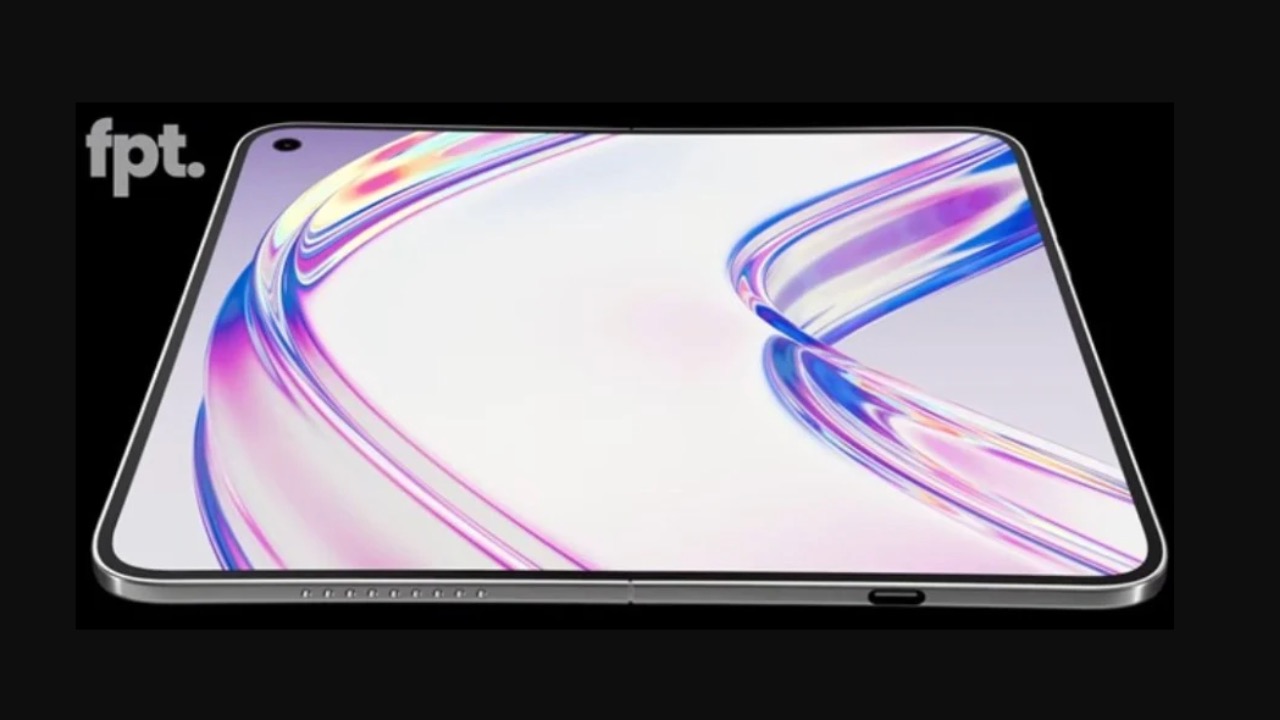
The entry of Apple into the field of foldable smartphones is taking an increasingly defined shape, bringing with it a strategic alliance between two giants historically in competition.
According to recent industry news, the Cupertino company has signed an exclusive 3-year agreement with Samsung Display.
iPhone Fold, for 3 years Samsung will supply the displays

This contract guarantees that the first three generations of the future iPhone Fold, or Ultra if rumors prove accurate, will be equipped exclusively with OLED panels produced by the South Korean company.
The proposal for this exclusivity would have originated directly from Samsung Display, an initiative that Apple executives decided to embrace. Within Samsung, the supply of such a critical component to a direct competitor in the mobile market has been justified precisely by the scope of the agreement and the economic importance of the project.
In an initial phase, estimates point to a supply of about 3 million foldable OLED panels. This is a figure lower than the 10 million units previously anticipated, a tangible sign that production will be calibrated with extreme care according to the actual consumer response.
The choice to rely entirely on Samsung Display is also driven by the difficulties encountered by alternative suppliers.
BOE, the well-known Chinese manufacturer, has not been able to meet Apple’s strict quality standards for its flexible displays. At the same time, another major tech market player such as LG Display does not yet have proven experience in large-scale production of foldable OLED panels intended for smartphones.
Consequently, Samsung has established itself as the only reliable option to guarantee the quality required by Cupertino.
High-quality technologies but delayed launch
Technically, the screens provided by Samsung will use the sophisticated technology Color Filter on Encapsulation, known by the acronym CoE. This approach allows eliminating traditional polarizers, integrating the color filters directly into the encapsulation layer.
The result translates into a drastic reduction in light loss, ensuring higher brightness levels and excellent color reproduction, features already widely appreciated on the current Galaxy Z series devices.
Moreover, reports indicate that these panels will be made using the M14 material, the same used on the very recent iPhone 17 Pro Max and the Samsung Galaxy S26 Ultra, now synonymous with extremely high visual fidelity.
While the agreement for the displays seems to be well established, Apple is facing various production challenges related to its first foldable device. These technical difficulties could push back the product’s debut, initially planned for September 2026, pushing it to December of the same year or even early 2027.
On the contrary, Samsung is moving ahead on its own schedule. The South Korean company is preparing to launch two new book-style models, the Galaxy Z Fold 8 and the new Galaxy Z Wide Fold, expected in the summer months.
An eventual prolonged delay by Apple will allow Samsung to further strengthen its presence in the market, offering even more mature hardware and a broader range of devices before the Californian competition can present its own commercial alternative.