


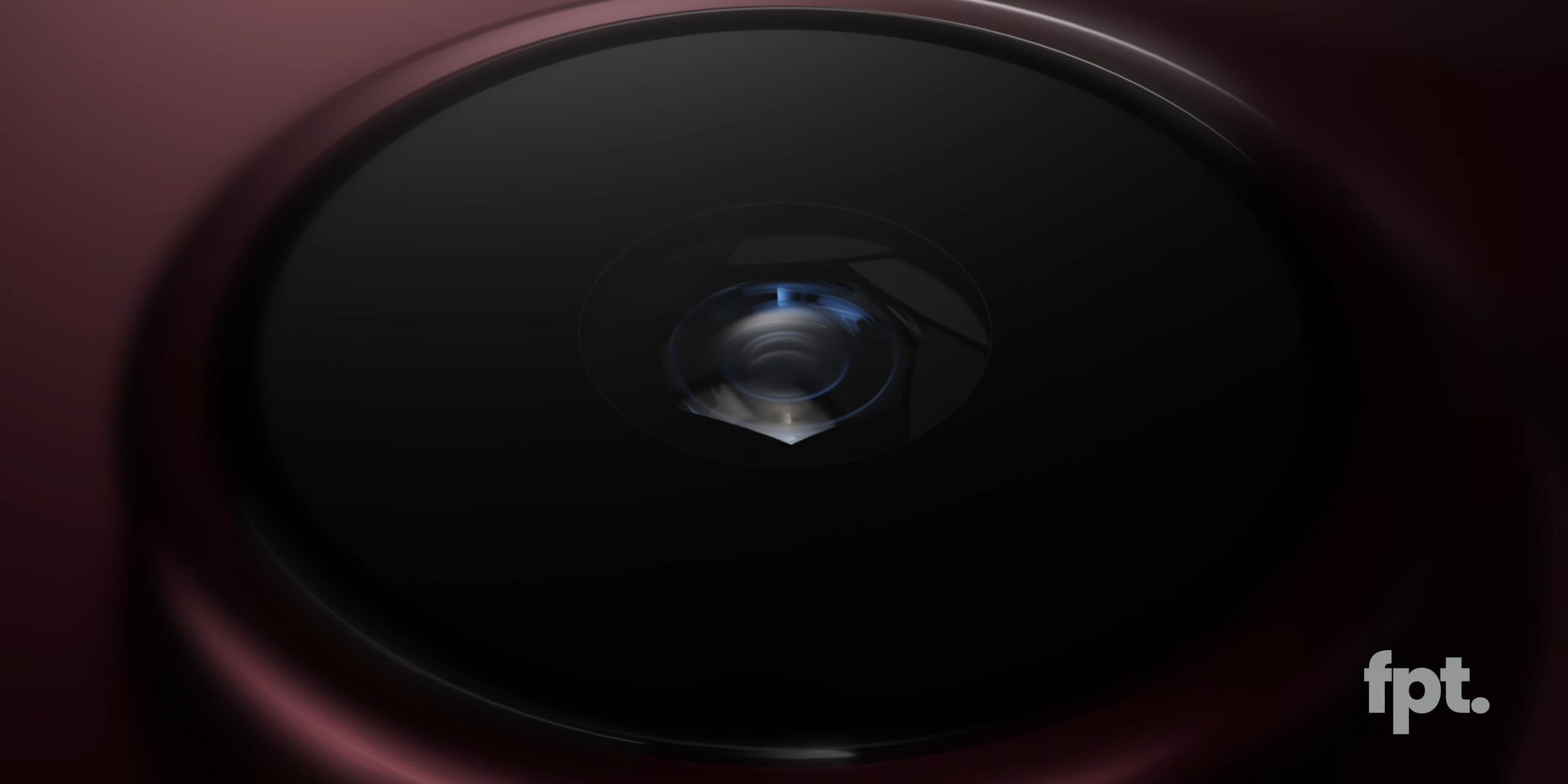
Although the launch of the next generation of smartphones Apple is still distant, the complex gears of the global assembly line are already in motion.
According to the latest rumors from Asian partners, the manufacturing phase of the components for iPhone 18 Pro has passed the starting blocks, focusing in particular on an element that promises to change Cupertino’s photography approach: the variable aperture system.
iPhone 18 Pro with variable aperture, module production underway

Before LG Innotech can assemble the finished camera modules, an operation planned between June and July, it is necessary that the individual mechanical components be ready and tested.
In this context, the Chinese company Sunny Optical has officially begun producing the actuators, the tiny precision motors responsible for the physical movement of the iris inside the lens. This early step is essential, because the complexity of a mechanical system requires precision standards and volumes that only advance planning can guarantee.
The most relevant aspect of this news lies in the ability to physically control the amount of light that passes through the lens and, consequently, the depth of field.
Until now, iPhones have used fixed-aperture lenses, relying a large part of the background blur (the bokeh effect) on software algorithms and the Portrait mode. With the integration of a variable aperture, the iPhone 18 Pro will allow users to directly intervene on the optics.
A wide opening will allow natural subject isolation, while a narrower opening will ensure that every plane of the image, from foreground details to the infinite of a landscape, remains sharp and in focus.
An additional tool in users’ hands
Although there is enthusiasm for surpassing a historic hardware limit for Apple, it is prudent to maintain a cautious approach regarding the real impact of this technology.
The physical size of smartphone sensors, while continually increasing, remains significantly smaller than that of professional cameras. Consequently, the depth of field range will not be comparable to that of a full-frame lens.
However, the move to a mechanical system represents progress that offers photographers and content creators a tool for creative control that has been absent until now, reducing reliance on artificial processing and improving overall optical performance in different lighting conditions.