


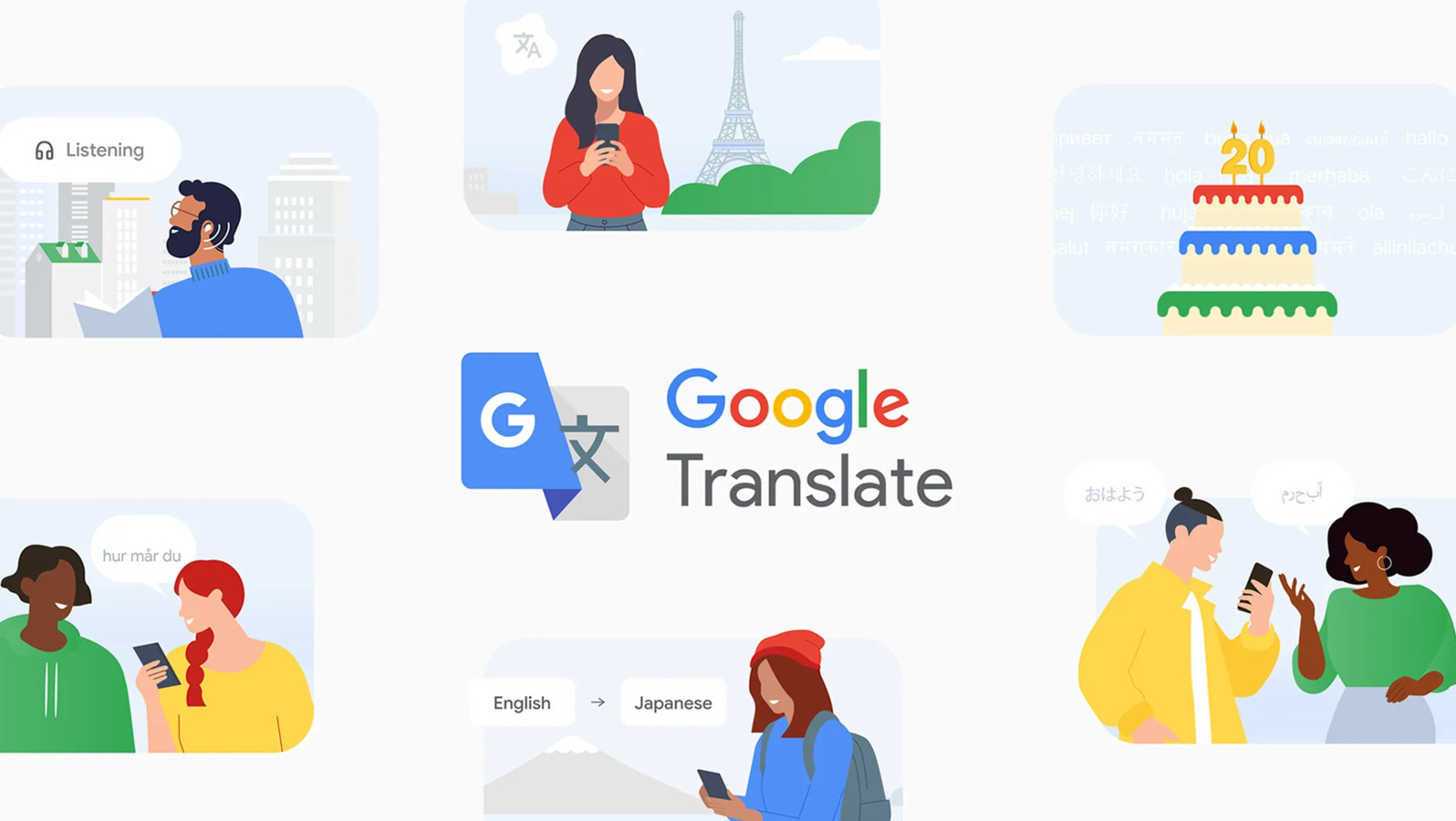
Two decades ago, Google Translate took its first steps in the Google Research laboratories as a simple experimental project based on machine learning.
Today, that tool has evolved into a global platform used by more than 1 billion people every month, meeting the linguistic needs of 95% of the world’s population through nearly 250 languages and 60,000 linguistic combinations.
The volume of text processed is impressive: about 1,000 billion words are translated each month, a quantity that would require 12,000 uninterrupted years to be read aloud.
Google Translate turns 20, the numbers behind its success

Since its early days in 2006, the service has been based on statistical machine learning to analyze immense amounts of data. 2016 marked a pivotal shift toward neural networks, allowing the system to overcome the limits of literal word-for-word translations.
Currently, the integration of Gemini models and the latest-generation TPUs has further refined the understanding of context and linguistic nuances. This architecture enables deciphering of complex expressions, idioms, and even the slang typical of Generation Alpha, such as the terms “clock it” or “mogging“, which show a strong rise in search trends.
The platform has progressively expanded its features to adapt to new communication needs. Audio experiences allow users to use their own earbuds as simultaneous translators.
Thanks to the Gemini models, it is possible to maintain real-time conversations, preserving the tone and natural rhythm of the interlocutor. Data confirms the effectiveness of these tools: more than a third of live translation sessions exceed 5 minutes, finding use in job interviews or structured cultural exchanges.
Meanwhile, the app has become a primary educational resource. About one-third of mobile users use Translate to study and practice with new languages.
To support this trend, a dedicated pronunciation practice feature has been introduced, currently available in the United States and India for English, Spanish, and Hindi, capable of analyzing speech to provide immediate feedback.
Everyday uses, accessibility and the value of connection
The integration with visual recognition tools like Google Lens has made camera-based translation an essential element for travelers, while the “Circle and Search” feature on Android facilitates instant understanding of content directly from the screen.
Even without connectivity, the software guarantees offline access to the most downloaded languages, including English, Arabic, Spanish, French, Japanese and Italian.
Beyond text, users explore new forms of communication by asking the AI to convert sentences into emojis or seeking support for the American Sign Language (ASL), whose search interest has reached historical highs in the past five years.
Despite this complex expansion and the broadening toward indigenous languages, the most frequent combinations, such as translating from English to Spanish or to Indonesian, reveal a universal relational need. The absolutely most requested expressions worldwide remain incredibly simple and deeply human: Thank you, How are you?, I love you and Please.