


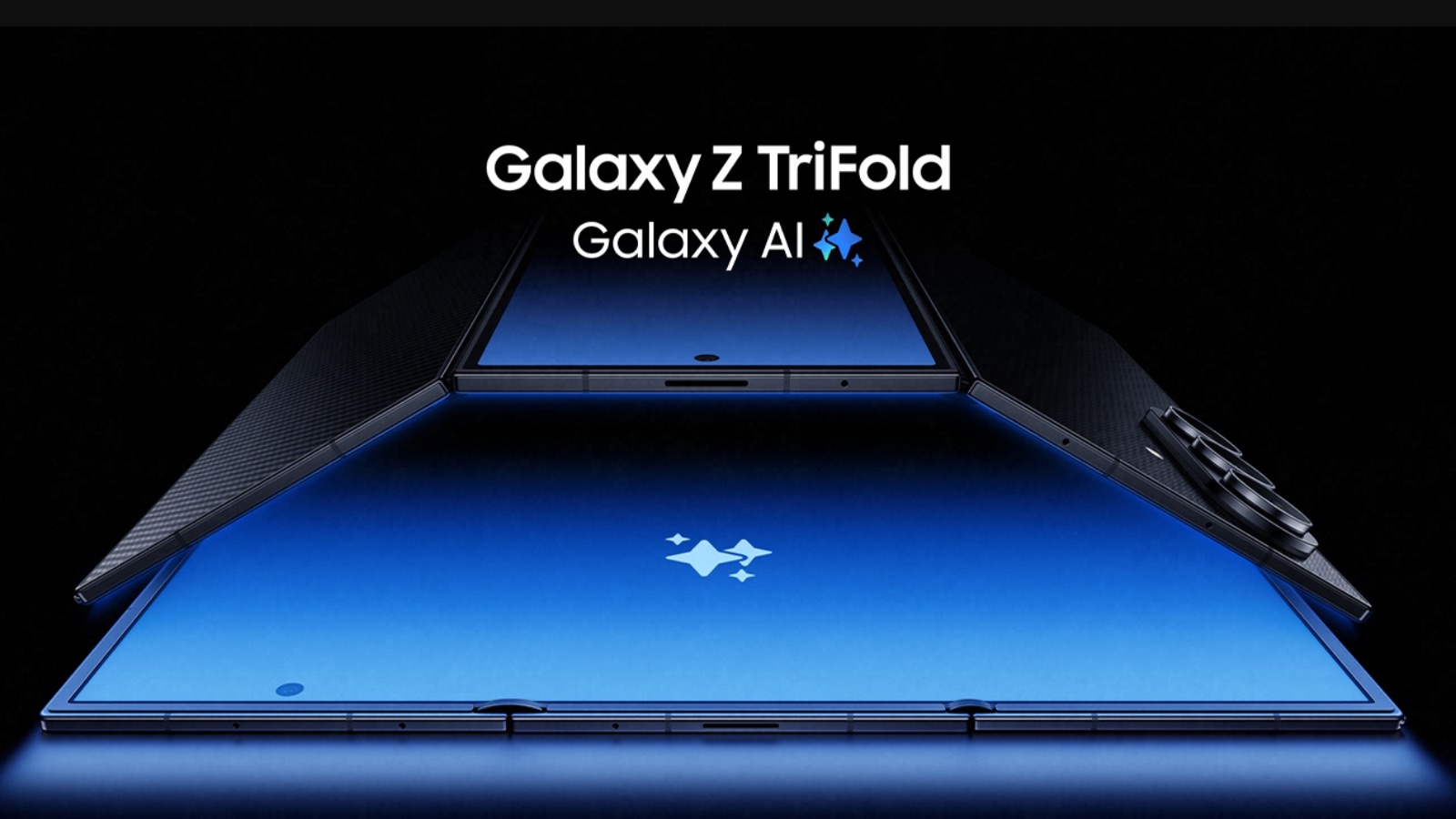
A tri-fold equipped with silicon-carbon batteries represents the dream of many users who are always on the move. Yet, a Samsung Galaxy Z TriFold with a capacity of 9,600 mAh is not currently available at any electronics store.
This did not stop a well-known YouTuber, who decided to do what the South Korean company could not manage.
A Samsung Galaxy Z TriFold with Honor batteries? There’s someone who managed it
A Delicate Surgical Procedure
In its factory configuration, the Galaxy Z TriFold houses a 5,600 mAh battery. The creator’s arduous test consisted of fitting inside the slim South Korean chassis energy cells originally designed for Honor Magic V6.
The procedure proved extremely mechanically complex. The cells supplied by Honor have slightly larger dimensions than the compartments designed for them by Samsung’s engineers, forcing the creator to intervene physically and irreversibly on the internal chassis.
The operation required milling and the removal of entire structural sections, also involving the forced removal of secondary hardware components, such as the bottom speaker, to make space for the new and more capacious cells.
As with any particularly aggressive experiment, the transplant involved evident compromises. Although the reassembled device powers on regularly and is largely functional, the delicate foldable screen shows a conspicuous dead horizontal stripe.
This permanent visual defect is the direct result of the mechanical stress endured by the flexible display during the complex disassembly and reassembly stages.
Despite the aesthetic and functional damage to the display, the technical milestone achieved remains notable: the overall capacity rose by 60%, going from the original 5,600 mAh to the extraordinary 9,600 mAh final.
This demonstration unmistakably highlights the enormous potential of silicon-carbon batteries.

The protagonist of this unusual tech undertaking is Scotty Allen, a familiar face on the YouTube channel Strange Parts, who decided to accept a singular challenge actively supported by Honor.
To realise the project, the creator had to tackle several logistical and technical steps, starting with obtaining the main device. As it is a product with prohibitive cost and limited geographic availability, Allen physically traveled to Hong Kong to purchase a Galaxy Z TriFold.
Once the precious terminal and all the necessary equipment were obtained, the transformation process began, leading to the complete disassembly of a luxury object for purely experimental purposes.
A Delicate Surgical Procedure
In its factory configuration, the Galaxy Z TriFold houses a 5,600 mAh battery. The creator’s arduous test consisted of fitting inside the slim South Korean chassis energy cells originally designed for Honor Magic V6.
The procedure proved extremely mechanically complex. The cells supplied by Honor have slightly larger dimensions than the compartments designed for them by Samsung’s engineers, forcing the creator to intervene physically and irreversibly on the internal chassis.
The operation required milling and the removal of entire structural sections, also involving the forced removal of secondary hardware components, such as the bottom speaker, to make space for the new and more capacious cells.
As with any particularly aggressive experiment, the transplant involved evident compromises. Although the reassembled device powers on regularly and is largely functional, the delicate foldable screen shows a conspicuous dead horizontal stripe.
This permanent visual defect is the direct result of the mechanical stress endured by the flexible display during the complex disassembly and reassembly stages.
Despite the aesthetic and functional damage to the display, the technical milestone achieved remains notable: the overall capacity rose by 60%, going from the original 5,600 mAh to the extraordinary 9,600 mAh final.
This demonstration unmistakably highlights the enormous potential of silicon-carbon batteries.