


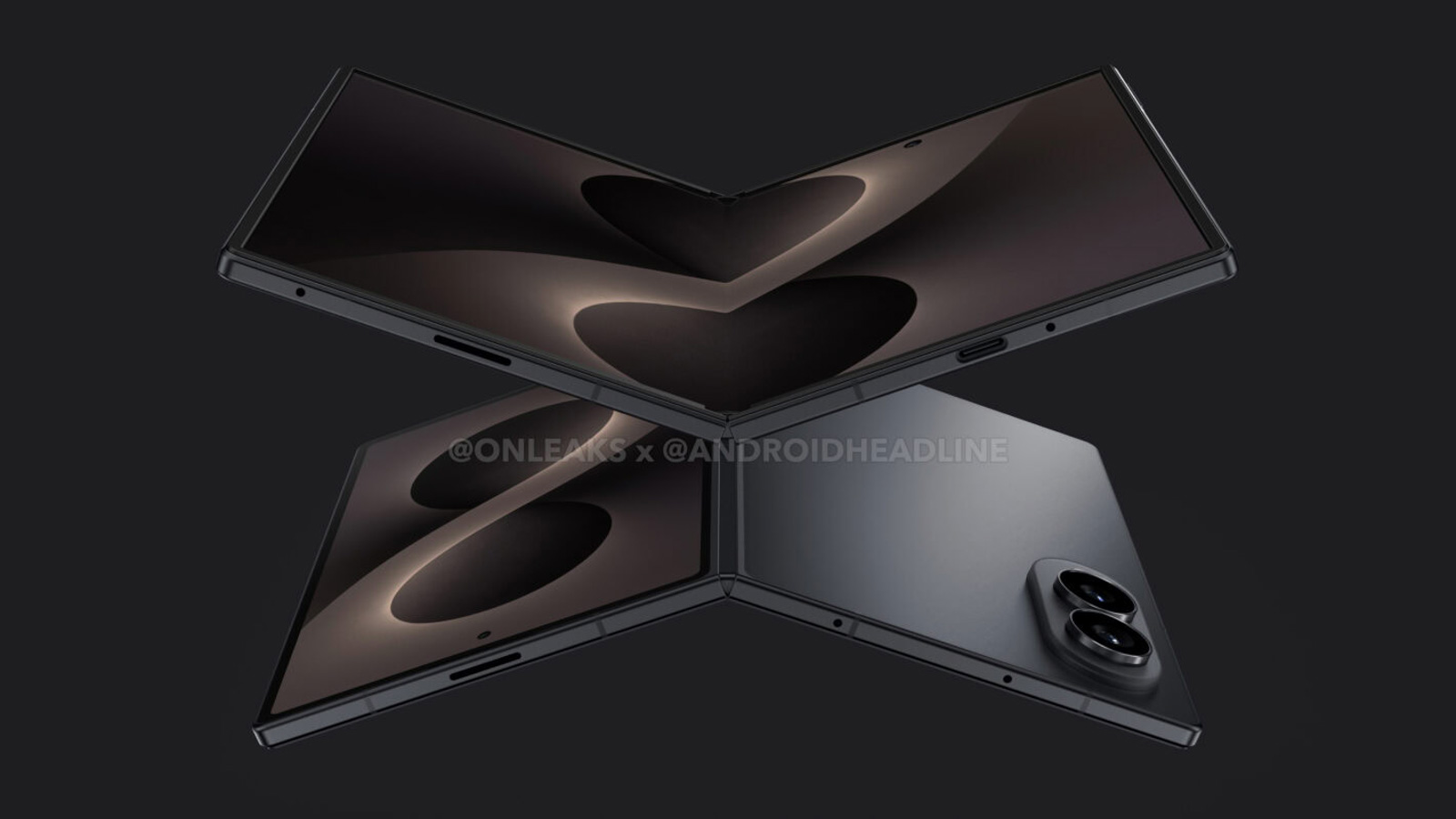
Samsung is preparing an unprecedented addition to its line of foldable smartphones planned for this year. The latest rumors reveal the existence of an additional variant, provisionally dubbed Galaxy Z Fold “Wide”, which markedly departs from what will be the future Galaxy Z Fold 8.
Recent renders leaked by the well-known leaker @OnLeaks and published by Android Headlines show a device with anomalous proportions, visually recalling Google’s very first Pixel Fold design.
This new iteration focuses on a visibly thicker chassis, altering the classic elongated lines that the South Korean company has accustomed us to in previous generations.
Samsung Galaxy Z Fold “Wide” shows up in new renders


The true nature of this atypical format becomes clear from the size analysis. The Galaxy Z Fold 8 will come in at 158.4 x 72.8 mm when closed, with a thickness of 9 mm. Once opened, it will reach 158.4 x 143.2 mm, reducing the thickness to 4.5 millimeters.
By contrast, the “Wide” variant will have completely different proportions. When closed, the device will measure 123.9 x 82.2 mm, maintaining a thickness of 9.8 mm, while when opened it will widen to 161.4 mm, with a profile of 4.9 mm.
Despite the name suggesting an unusually wide width, the real increase on this axis is not extreme: the new model is in fact wider by only 9.4 millimeters when closed and by 18.2 millimeters when opened compared to the standard Fold 8.
The true impact is entirely dictated by height. The Galaxy Z Fold 8 surpasses its companion “Wide” by over 34 mm vertically, and it is precisely this drastic top cut that pushes the form factor ratio of the new foldable toward a strongly horizontal stance.
What will the compromises be?
Oltre al form factor, un ulteriore dettaglio cattura l’attenzione: lo spessore complessivo. La versione “Wide” risulterà più spessa sia da chiusa che da aperta rispetto al Galaxy Z Fold 8, un dato interessante se si considera che lo stesso Fold 8 subirà già un lieve inspessimento rispetto al precedente Galaxy Z Fold 7, un intervento presumibilmente legato all’integrazione di una batteria più capiente.
Le scelte costruttive singolari si estendono anche al comparto fotografico. Secondo le informazioni trapelate, l’azienda asiatica avrebbe deciso di equipaggiare questo formato con una doppia fotocamera posteriore, perdendo dunque un sensore rispetto all’allestimento a tre ottiche atteso sul modello principale.
Le motivazioni tecniche dietro questa rinuncia non sono ancora del tutto chiare, ma si tratterà certamente di un fattore determinante per i consumatori chiamati a scegliere tra i due dispositivi.